Introduction
Our Anglesey Field office is based on the Bodorgan Estate, next to the Cefni Estuary in SW Anglesey, and our aim is to explore models for the involvement of local communities in the management of our coastal seas.
Much of the adjacent area of Caernarfon Bay is currently unprotected but is home to a variety of important marine species which rely on this area such as terns, auks, gannets, bottlenose dolphins, harbour porpoise, grey seals, and a diversity of fish and invertebrate species. We are working with local communities and stakeholders to explore options for greater community involvement in the management of this region. We are working with Bangor University and other partners to explore opportunities for habitat restoration within the area, including expansion of seagrass beds; wild oyster bed restoration and the removal of pressures such as ghost fishing gear and disturbance from personal watercraft.
The field office on the Bodorgan Estate hosts residential internships throughout the summer months, training the next generation of marine scientists in survey techniques, data handling, outreach and monitoring including top predator surveys, photo ID, water quality monitoring, shore surveys and catch data from local fisheries.
The project aims to build up an inventory of the species and habitats of the area, as well as those pressures that impact them and by using an experimental approach, determine whether restoration of habitats can lead to improvements in biodiversity across taxa from algae, invertebrates and fish all the way up the food chain to seabirds and marine mammals. We conduct our own research through land and boat-based surveys, and train local groups, communities and visitors to the area to collect their own data through our Sea Watcher recording app. We visit local schools and run field trips to connect children with their local marine environment as well as working with partners such as the North Wales Police to promote the marine code to recreational watercraft users to reduce wildlife disturbance. We work closely with Natural Resources Wales to support their work on local designated sites, specifically Newborough Warren National Nature Reserve, where we have supported two seasonal wardens who engage with the public to reduce litter, wildlife disturbance and fire risk on this ecologically sensitive and nationally important site.
The project is funded by the Bodorgan Estate, the National Heritage Fund, and the Landfill Disposals Tax Communities Scheme administered by the Wales Council for Voluntary Action (WCVA).
Habitats and Ecology of Caernarfon Bay and SW Anglesey
Caernarfon Bay’s gently curving coastline provides a shallow shelter from the Irish Sea’s harsh conditions, providing an ideal habitat for all sorts of flora and fauna. The bay includes a wide variety of different marine habitats including sand dunes, salt marshes, and rocky cliffs. The bay’s waters are very nutrient-rich, attracting an array of marine life from marine mammals to various species of fish. The importance of these habitats has been established by the implementation of Special Areas of Conservation (SAC) and several Sites of Special Scientific Interest (SSSI).
Caernarfon Bay is home to many different species from all different trophic levels. The various habitats and sediments make it an ideal place for a wide variety of species from your marine mammals, elasmobranchs, benthic species, and of course a plethora of seabirds. We aim to understand these communities by gathering existing data to explore options for community-led marine management and habitat restoration.
Photo Identification
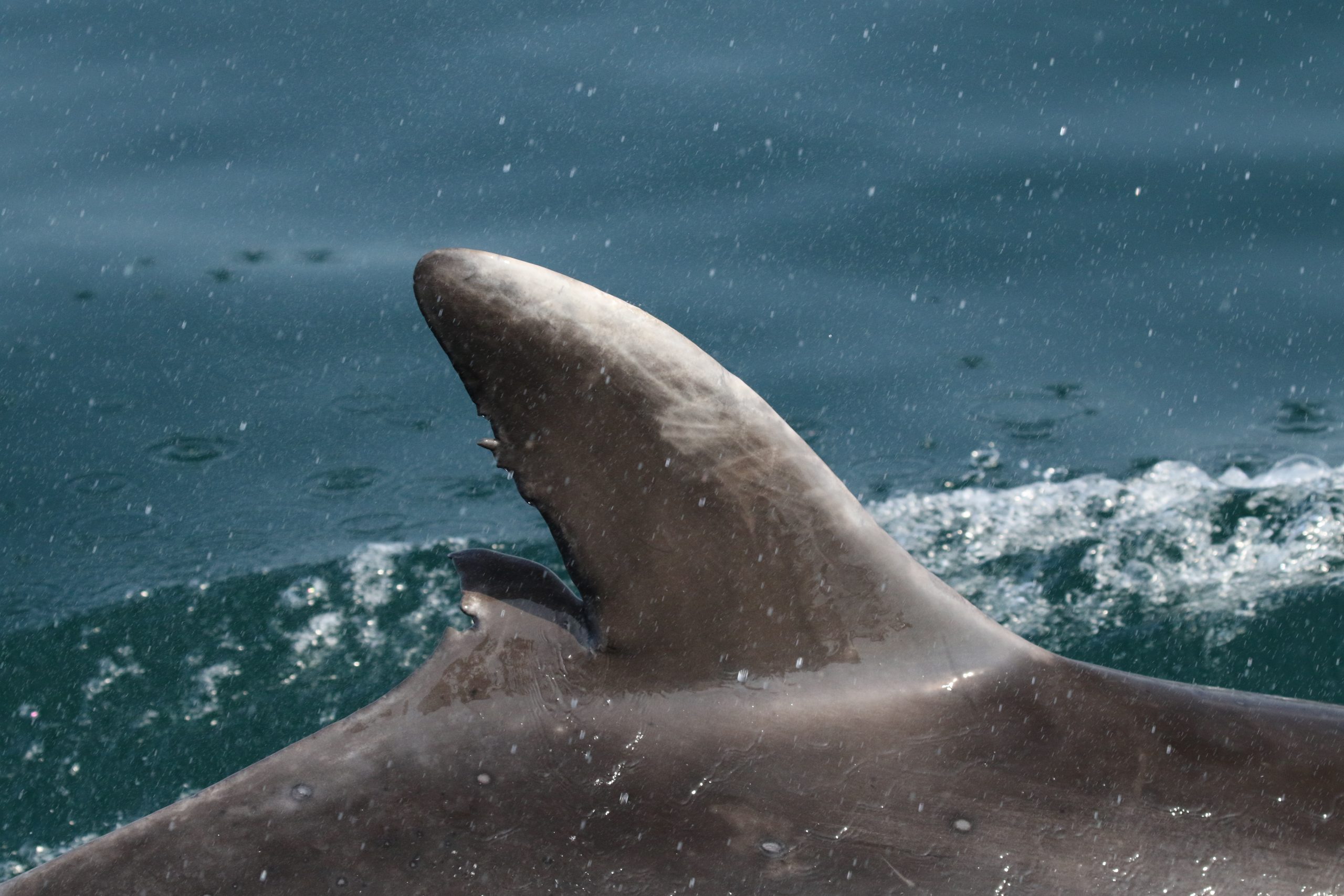
Photo identification (Photo ID) is one of the ways that we identify individual dolphins. Specific individuals have nicks, notches, and scratches on their dorsal fins and their bodies from social interactions, hunting, and unfortunately boat strikes. By taking photographs of these, we can identify individuals and keep a record of where they have been, who they have been with, what they have been doing, and ultimately estimate population numbers.
Outreach
Outreach is a very important aspect of this new project. The overall aim is to establish a model community-based marine management approach by engaging the local community, visitors to the areas, and stakeholders in the project and getting them involved. Over the next few months, we aim to host several training sessions so that people from the area can learn how to survey these animals in an effective way. We also aim to create two Wildlife Champion opportunities where we aim to train two local young people on wildlife guiding and business development.
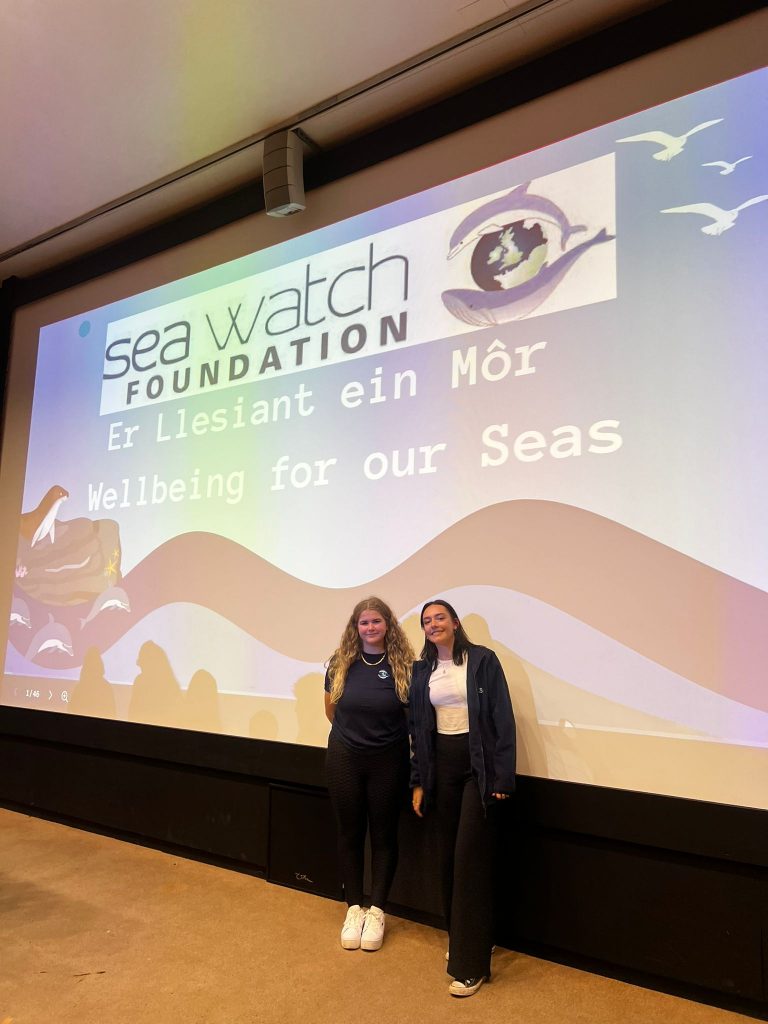
In the first year, we have been successful in many aspects of the outreach plan of the project. An example was National Whale and Dolphin Watch 2023, which is a week where we aim to get a snapshot of the whole of the UK’s marine mammal sightings. During this week we held several events such as public land watches, and a sand sculpture session on Aberffraw Beach. We were also in attendance at Anglesey Sea Zoo’s Conservation Festival Cymru where we had a stall and several activities for children to do. After hiring a part-time Outreach Officer we have since started visiting local schools to talk to pupils about the marine habitats that are found right on their doorstep, as well as working with two of Bangor Universities societies, giving them a talk about our work and how to survey then finally taking them out on a land watch to utilise the skills that they have learned. Over the next few months, we plan to develop the outreach portion of the project further by contacting local groups and communities.
-

Anglesey Sea Zoo Stall -
Bangor University Societies Talk

The Team
During the summer months of the project, data is constantly collected during dedicated surveys from land and from a boat. The team is led by Project Lead Jenny Bond, who is supported by an Intern Coordinator and six Research Interns. The outreach work is led by Outreach Officer Elan Jones, who was previously an intern herself.
The interns get involved in all aspects of the project from the surveys, office work, school visits, and conversations with stakeholders and community groups. Interns join the project from all around the world, most coming from a marine background hoping to gain more experience and make connections within the industry. For the first year of the project, there were four groups of interns, each here for a period of five weeks, whereas Intern Coordinators (previously Research and Outreach Assistants) were here for periods of 10 weeks where they would oversee the research interns. With preparation for 2024’s intern program underway, we look forward to hosting a further five groups of interns next year. For more information on our Anglesey Internships and how to get involved, visit our internship page.