
Research focused on conserving Scotland’s rich marine mammal biodiversity
Field studies of Scottish cetaceans by Sea Watch staff and volunteers started in the 1980s, focusing upon three main regions: the Shetland Isles, North-east Scotland, and the Hebrides. Throughout the last 25 years, collaborations have developed with others from Aberdeen and St Andrews Universities, the Hebridean Whale & Dolphin Trust (HWDT), Whale & Dolphin Conservation (WDC), Cetacean Research & Rescue Unit (CRRU), and the Scottish Association for Marine Science (SAMS), all of whom are doing excellent work in different parts of Scotland. We recommend visiting their websites to see the range of activities they are engaged upon.
In 2025, we appointed our Scottish Officer, Sally Tapp, whose main focus is to travel around Scotland, strengthening the ties we have with these partners and supporting our network of volunteer observers and Regional Co-ordinators around the country, focusing on data collection via our new Sea Watcher App, as well as helping to organise Orca Watch – our annual citizen science event based at John o’ Groats.
We have recently partnered with Caledonian MacBrayne in the Clyde Marine Region and Pentland Ferries off the north coast of Scotland to place our volunteers on their ferries to collect vital data on the presence and movements of cetaceans and other marine megafauna in these areas. We will be undertaking a new photo-ID study of bottlenose dolphins in the Clyde during the summer months. Keep an eye on our socials for news and updates on more Scottish projects coming soon.
Below you can find some of our main interests and findings.
Shetland Porpoises
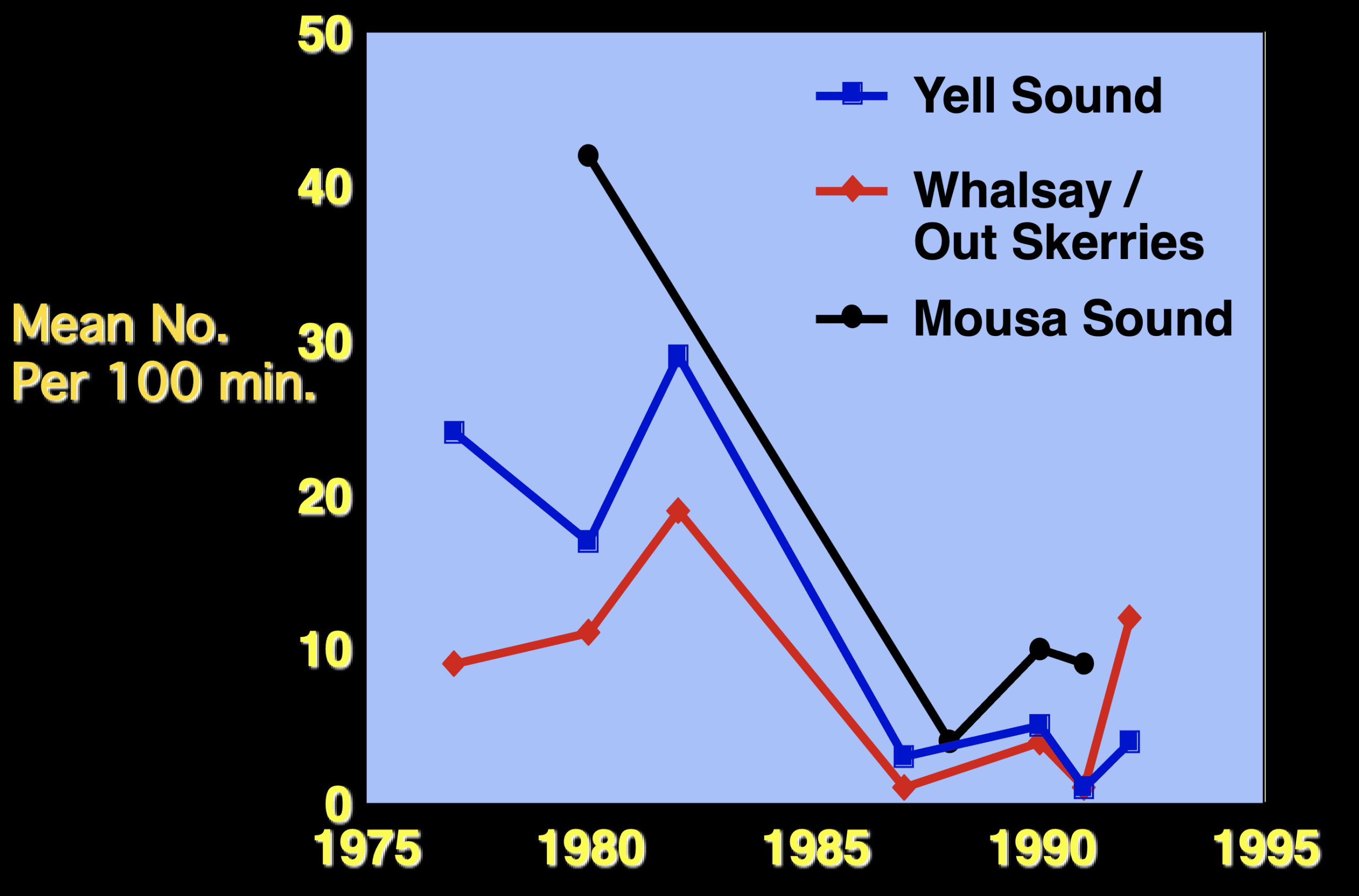
Regular boat surveys during the 1980s revealed a significant decline in the relative abundance of porpoises around Shetland. This was during a period when there was intensive fishing for sand eels in the region leading to major breeding failure lasting a period of at least eight years for seabirds such as arctic terns and auks dependent upon this fish prey species.
Credit: PGH Evans
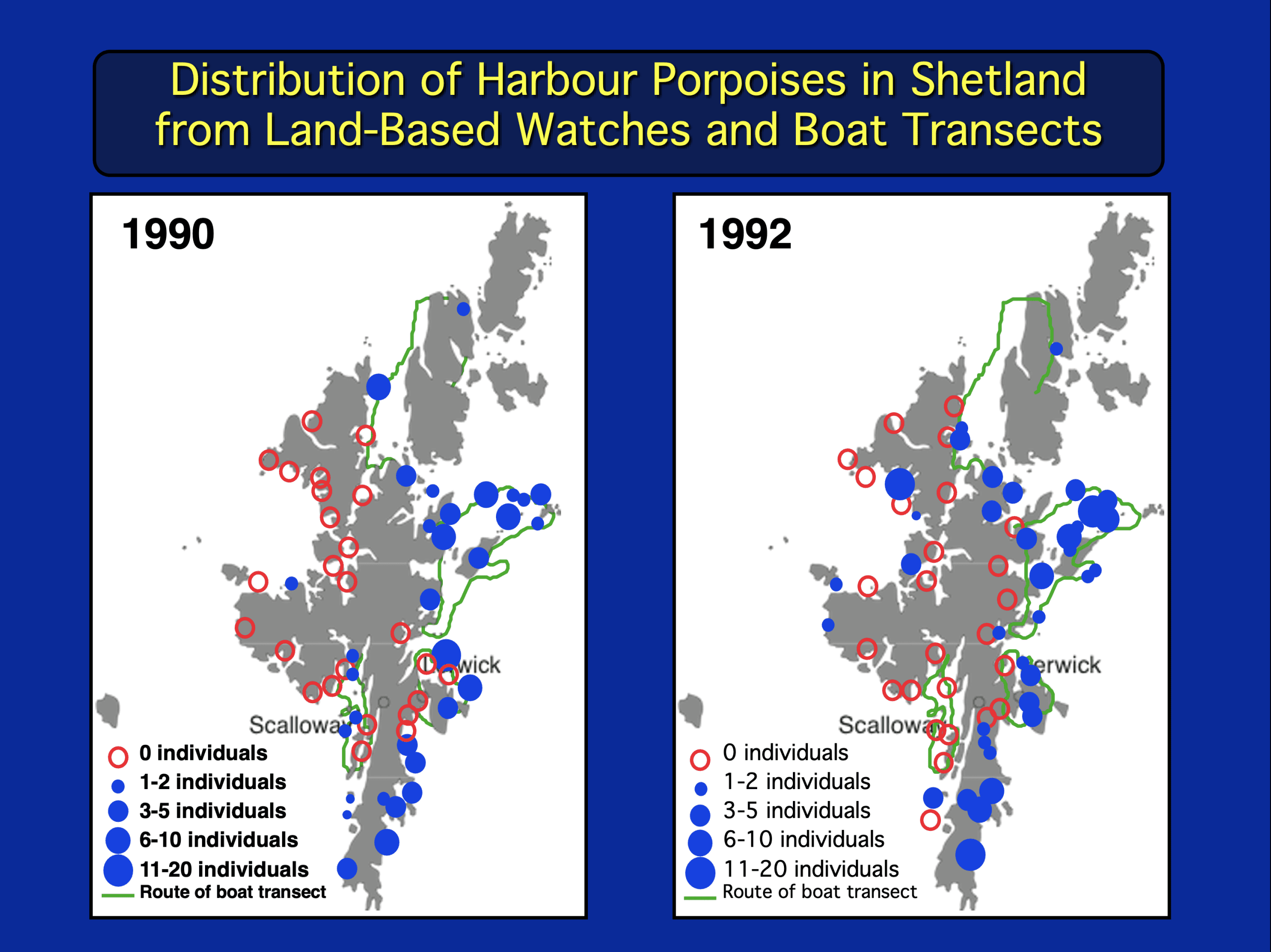
Porpoise Distributions around Shetland during summer 1990 & 1992 from standardised land watches and vessel surveys. Very similar patterns occurred in each year between 1990 and 1995.
Porpoise declines in Shetland, 1970s-1990s
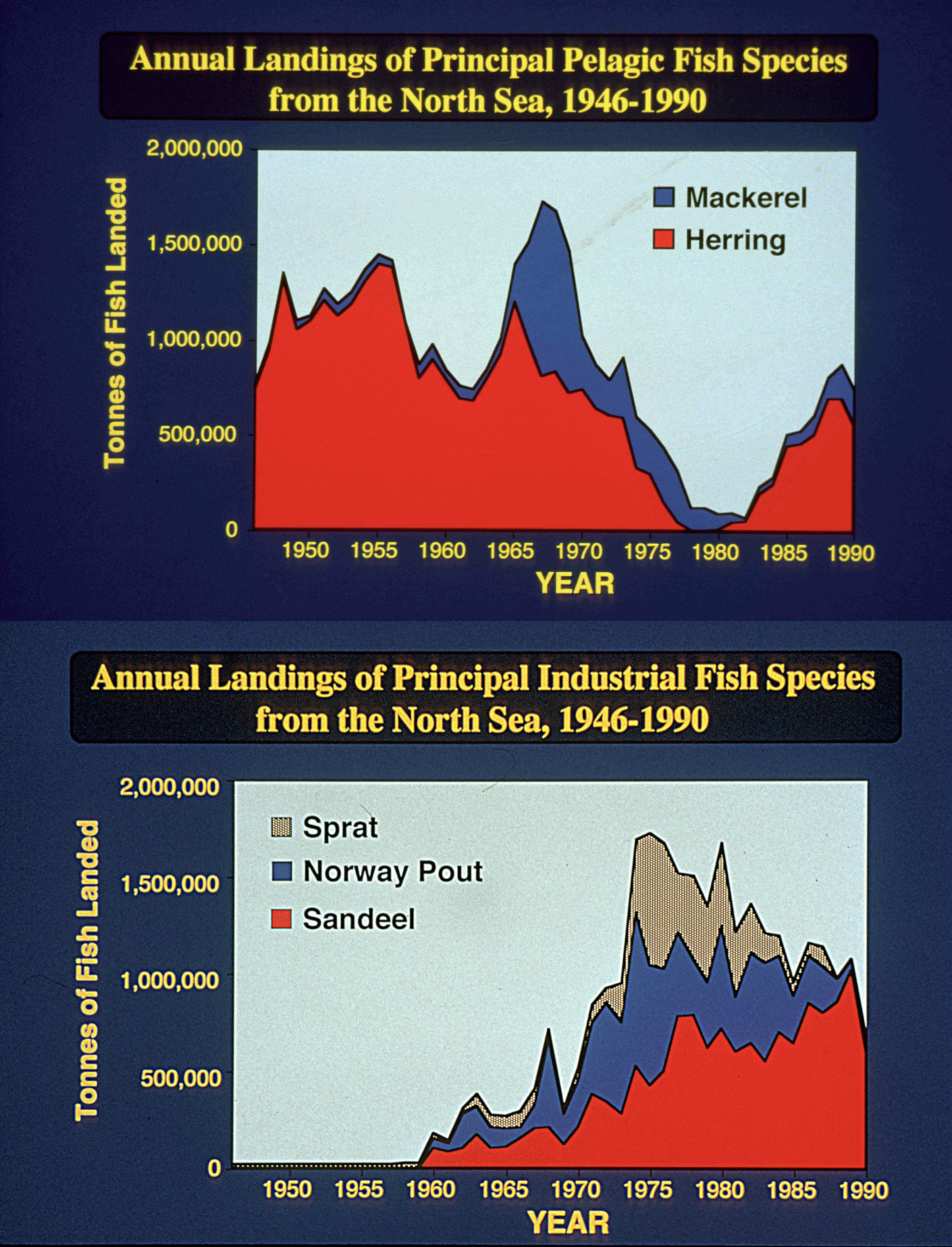
Trends in Fish Catches in the North Sea, 1946-1990
With funding from WWF-UK, over a period of six years (from 1989-95), we investigated the status and distribution of harbour porpoises in Shetland, and examined relationships to different potential prey using echosounder surveys. By a combination of land watches and boat surveys, we found that porpoises occurred mainly off the east coast of Shetland, with hotspots around Sumburgh Head, Mousa Sound, Noss Sound, Whalsay and Out Skerries. Peak numbers occurred in August and September where social and mating activities were observed. A significant correlation was found both spatially and temporally between porpoise numbers and sand eel densities but not with any other fish prey (gadoid species such as Norway pout, mackerel and herring, although the two latter species were scarce in the area during these years).
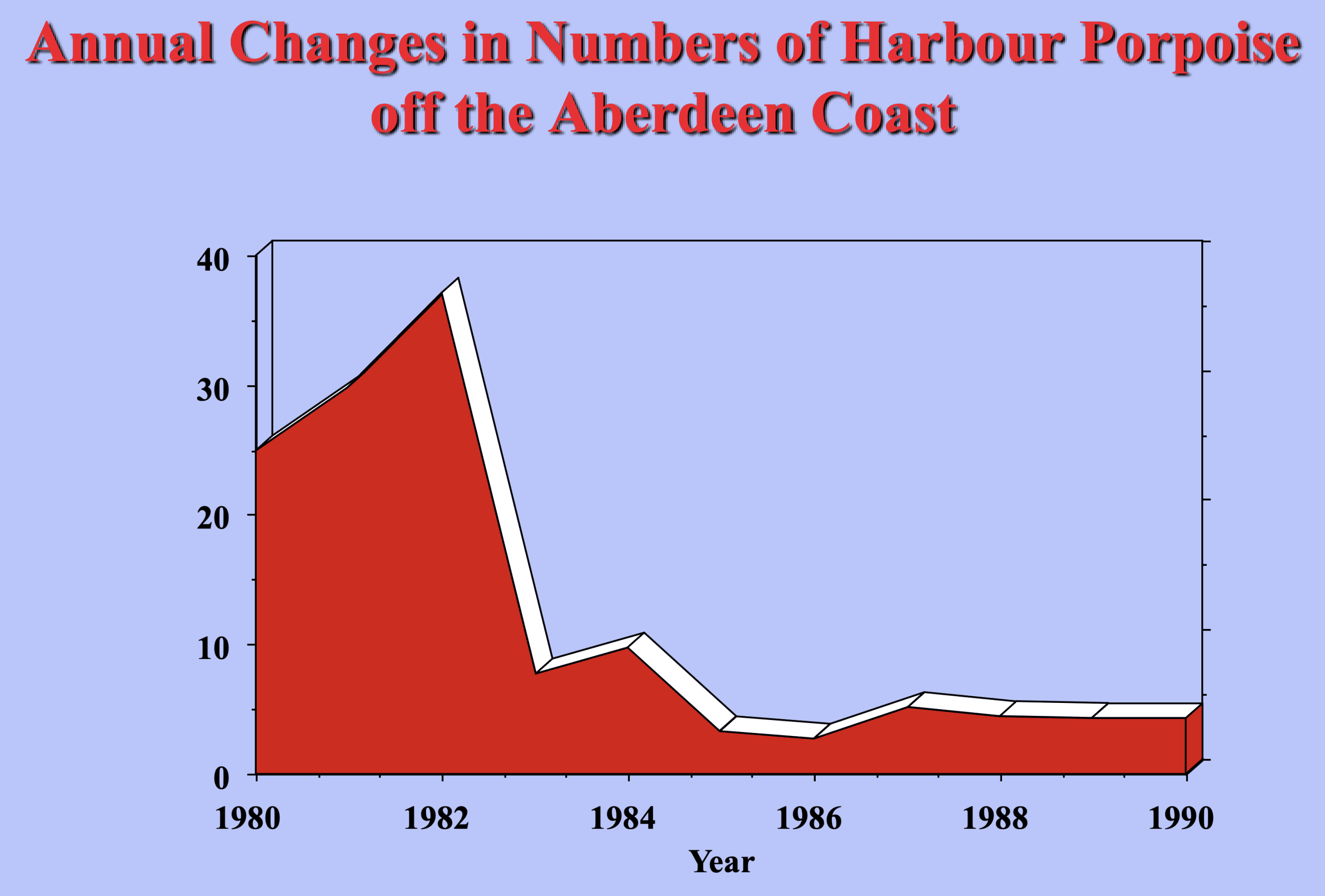
Porpoise Declines from standardised land watches in NE Scotland, 1980-1990
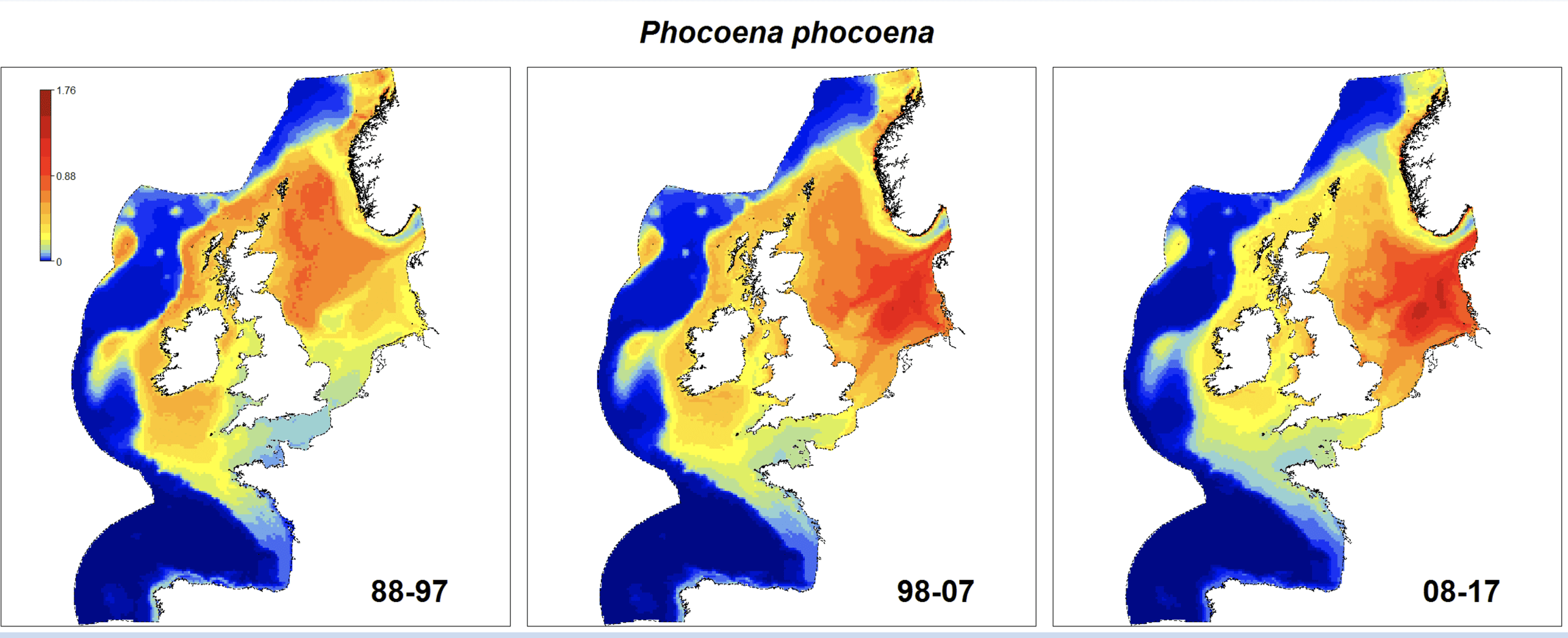
Wide-scale vessel surveys and coastal watches indicated a general decline in north-east Scotland and a distributional shift towards the southern North Sea between the 1990s and early 2000s. Porpoise numbers in the region appear to be a little higher now than they were in the 1990s but, nevertheless, the overall pattern in the North Sea of greatest porpoise densities in the central and southern sectors appears to have remained to the present day.
Changes in Density Distributions of Harbour Porpoises between 1988 and 2017 from systematic line transect surveys.
Hebridean Studies
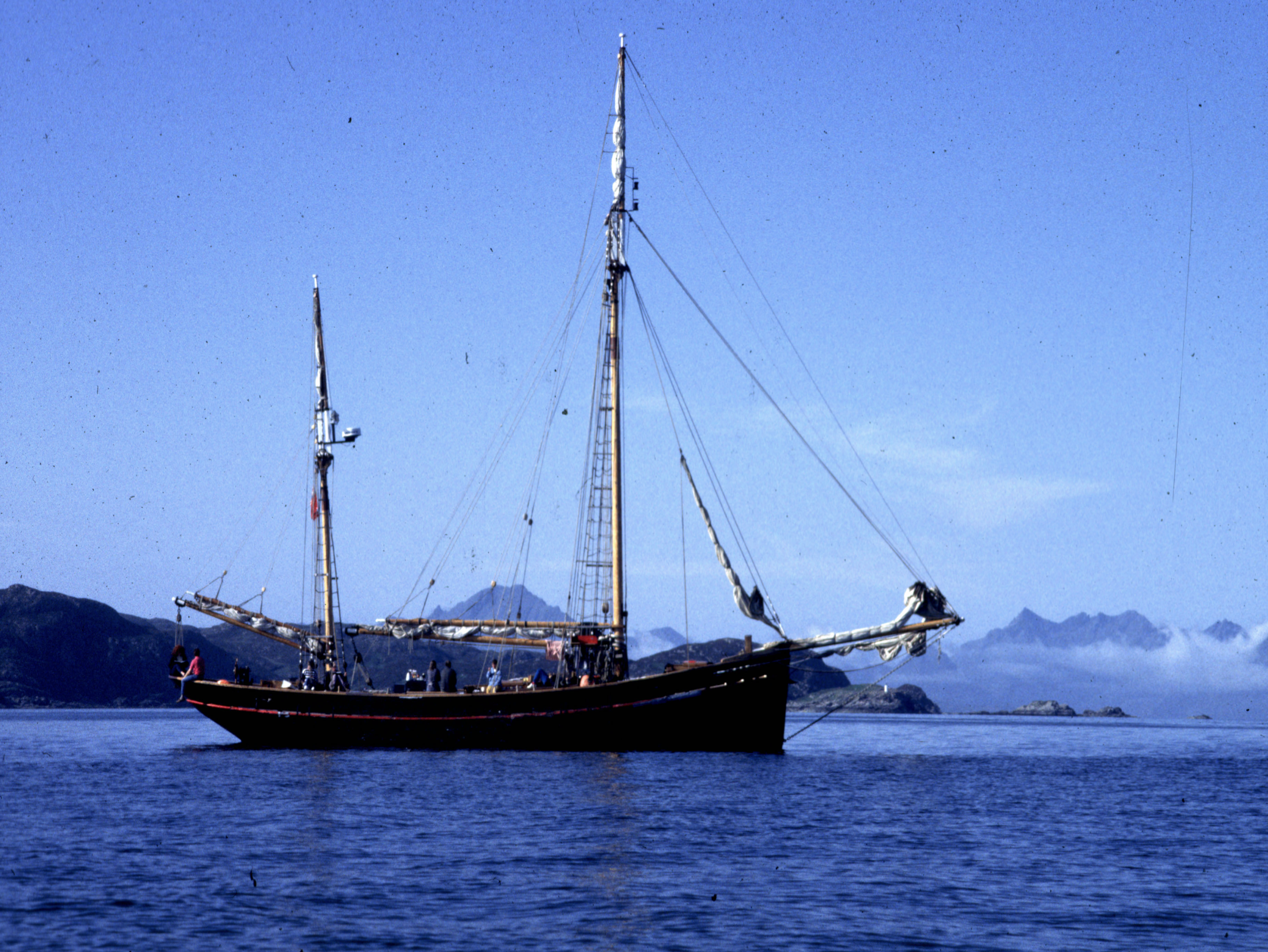
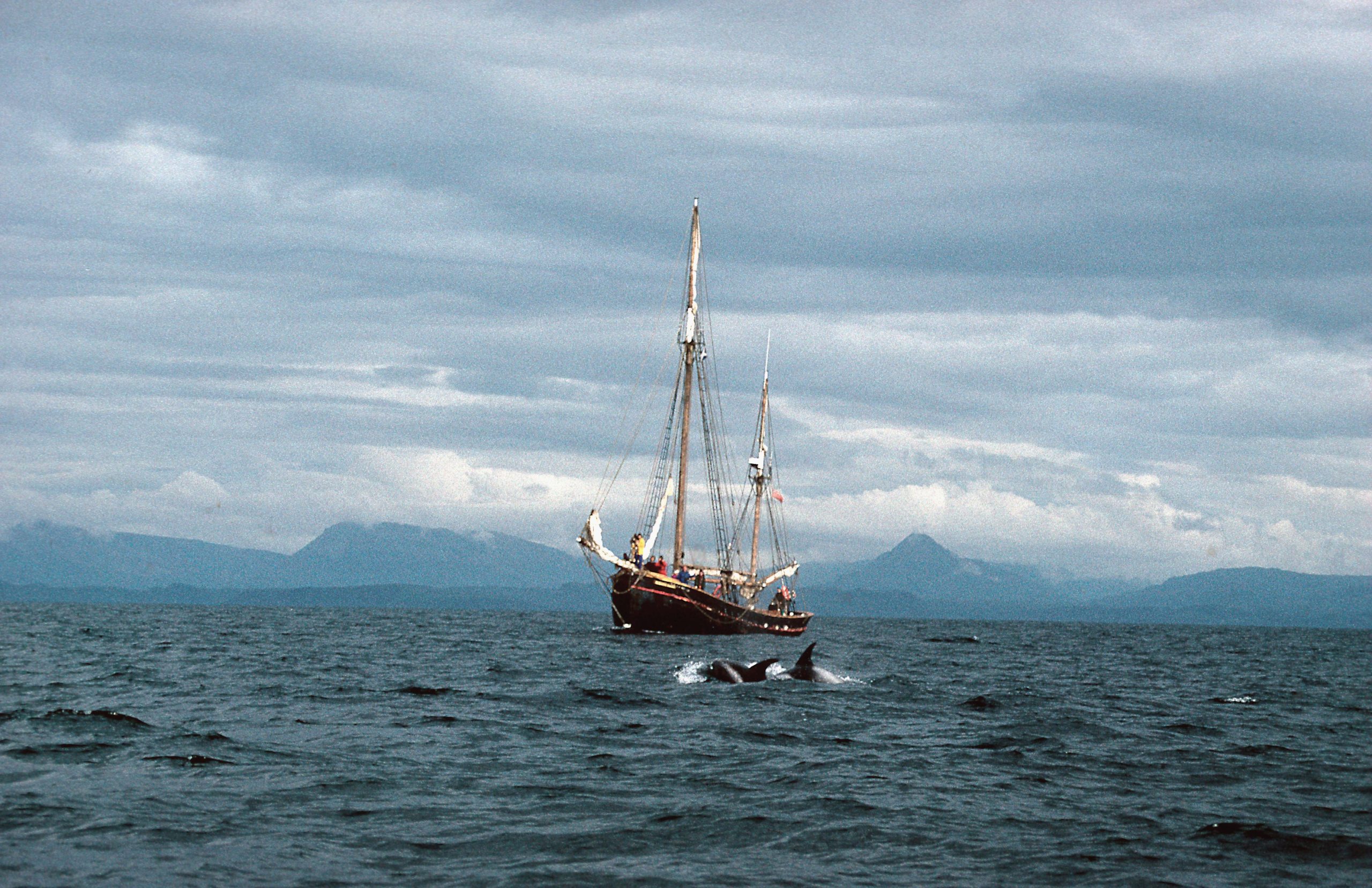
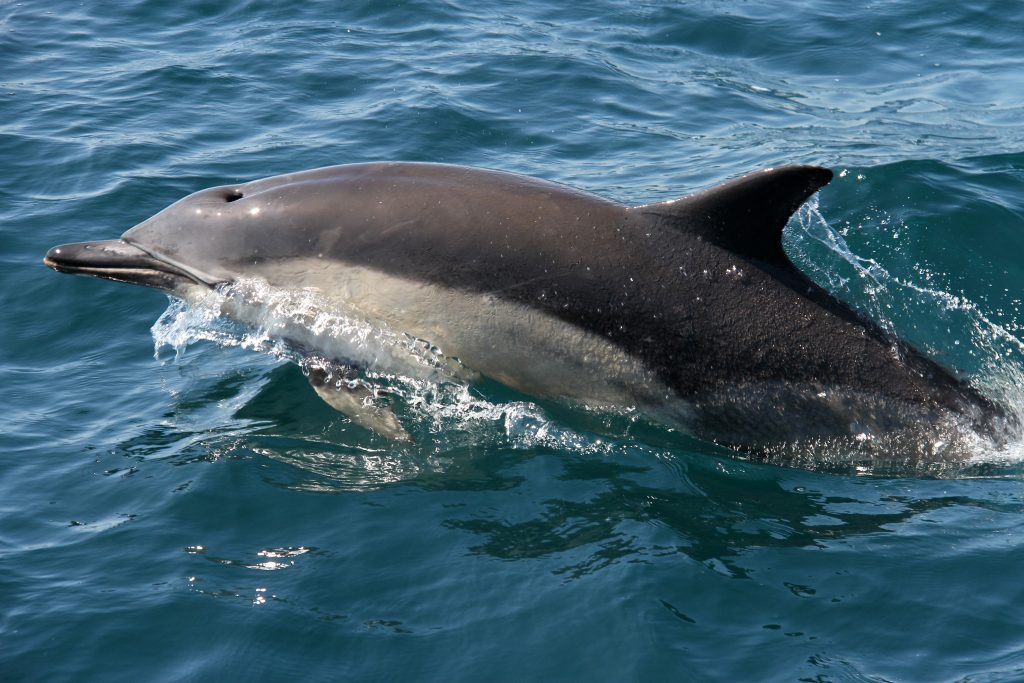
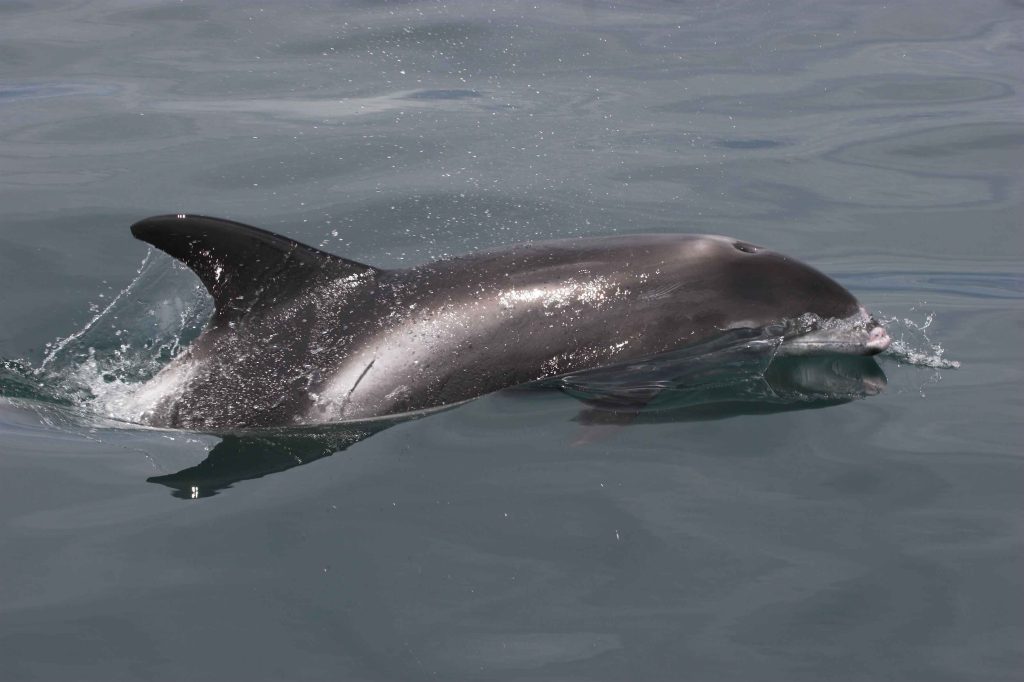
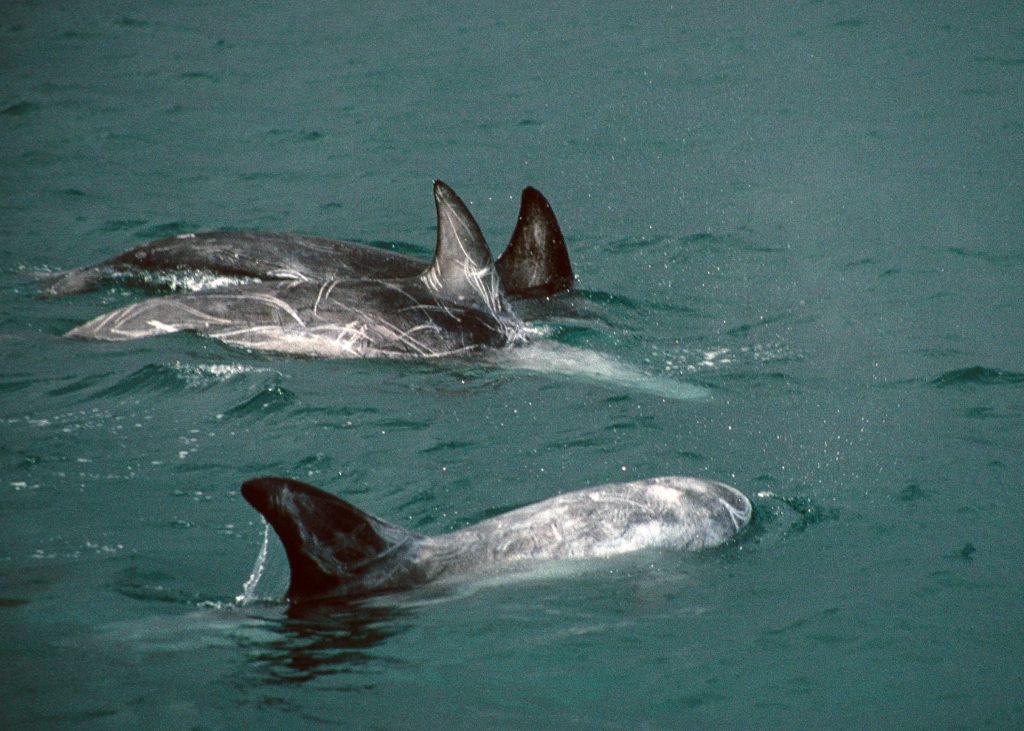
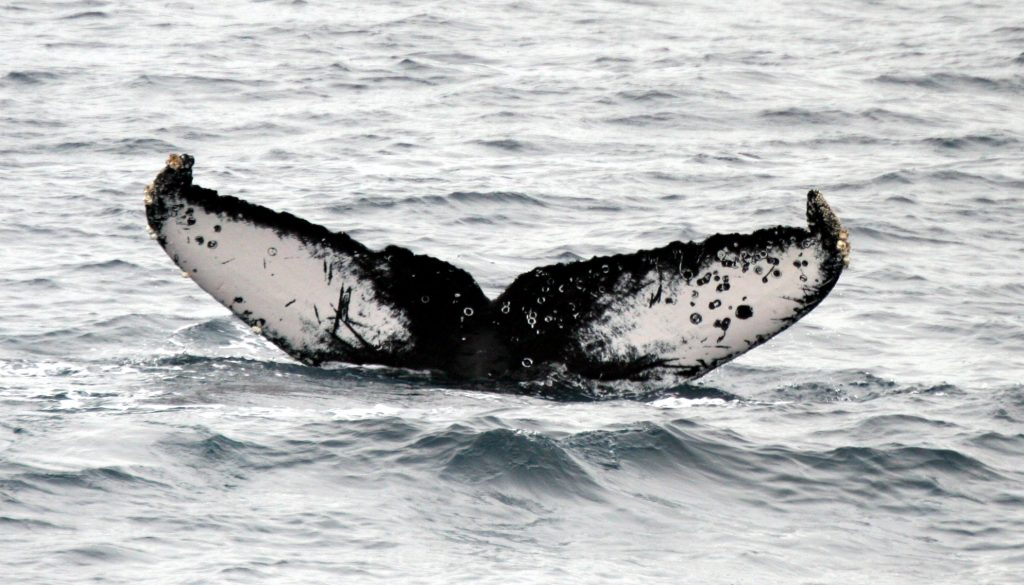
Marguerite Explorer. Photo Credit: PGH Evans
White-beaked Dolphins and survey vessel, Marguerite Explorer. Photo Credit: PGH Evans
The first time we undertook dedicated cetacean surveys in the Hebrides was in the summer of 1980, alongside surveys we conducted of seabirds at sea. Those survey efforts included waters in the Rockall Trough and over the Wyville Thompson Ridge west of the continental shelf as well as around the islands of St Kilda, Flannan and Monach Isles, Sula Sgeir and North Rona, and in the Hebridean Minches. Then, in the late 1980s through to the mid-2000s, we conducted surveys each summer between April and October throughout the Minches and the Sea of the Hebrides. Those surveys were facilitated by two important whale watching platforms, the sailing ship, Marguerite Explorer (courtesy of Christopher Swann of Western Isles Sailing) and Alpha Beta (courtesy of Richard Fairbairns of Sea Life Surveys).
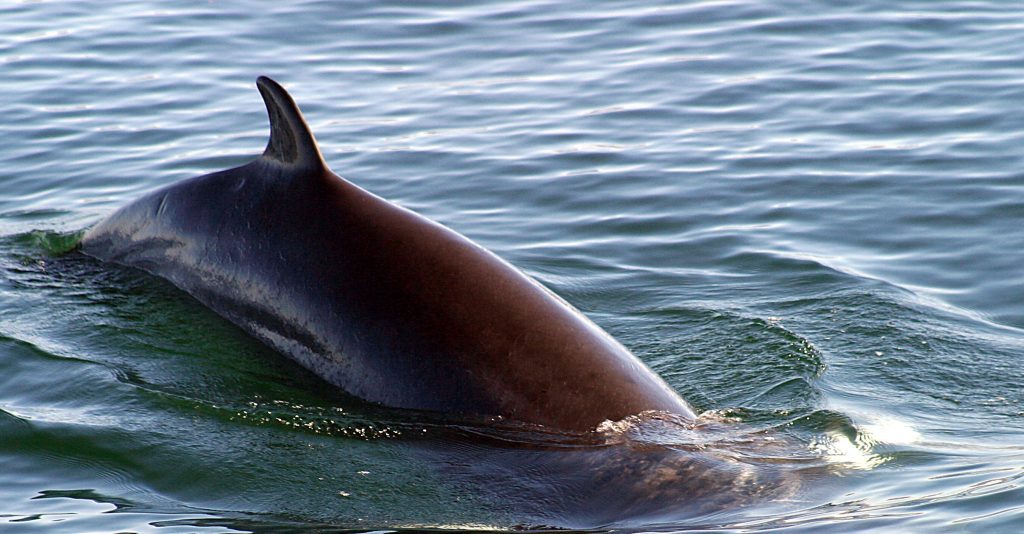
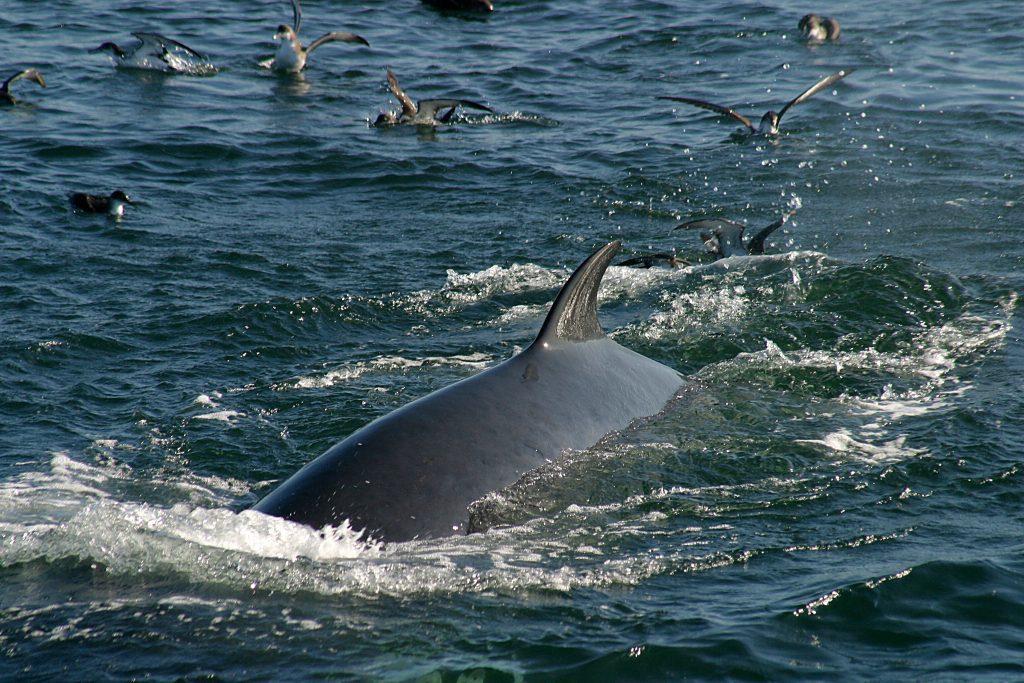
Minke Whale feeding upon larval herring and sprat. Photo Credit: PGH Evans
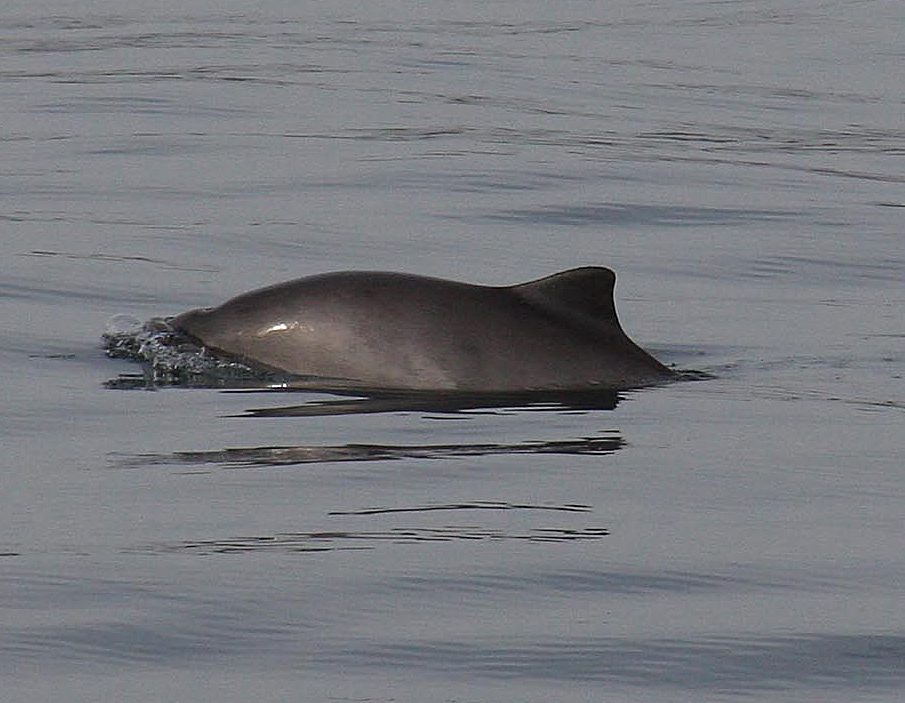
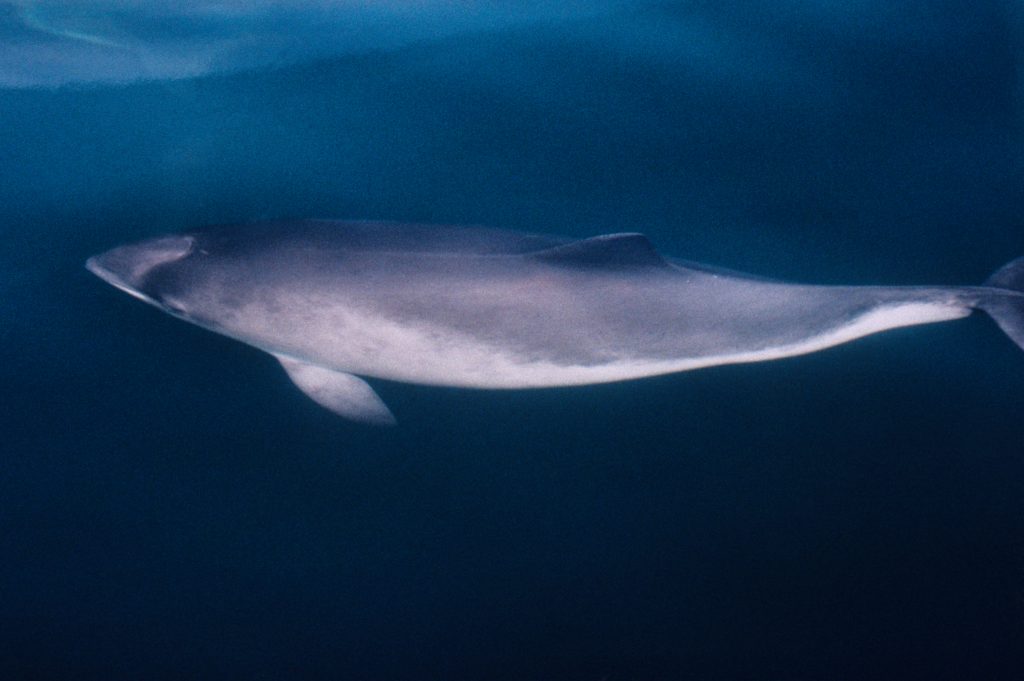
Harbour Porpoise. Photo Credit: I Birks
Common Dolphin. Photo Credit: PGH Evans
White-beaked Dolphin. Photo Credit: C Weir
Risso’s Dolphin. Photo Credit: PGH Evans
Credit: PGH Evans
Main species occurring in the Hebrides.
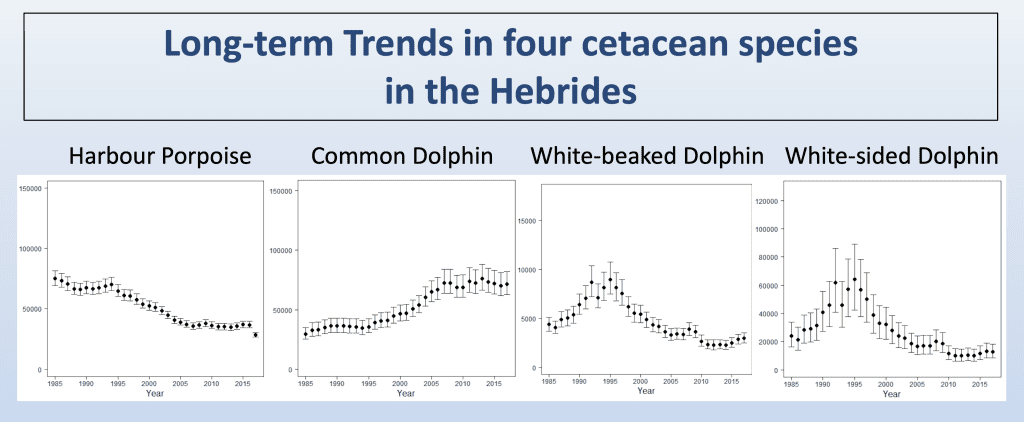
Those surveys highlighted the diversity of species in the region, and indicated hotspot areas for minke whale, harbour porpoise, common dolphin, white-beaked dolphin and Risso’s dolphin. The relationships with tidal currents for porpoise and minke whale were investigated, strong site fidelity of minke whale and Risso’s dolphin was revealed through photo-ID, and the northwards extension of the range of common dolphins between the 1990s and 2000s was tracked, whereas numbers of white-beaked dolphin and Atlantic white-sided dolphin appeared to decline. Focused studies were made of the ecology and behaviour of minke whales to form Pia Anderwald’s PhD.
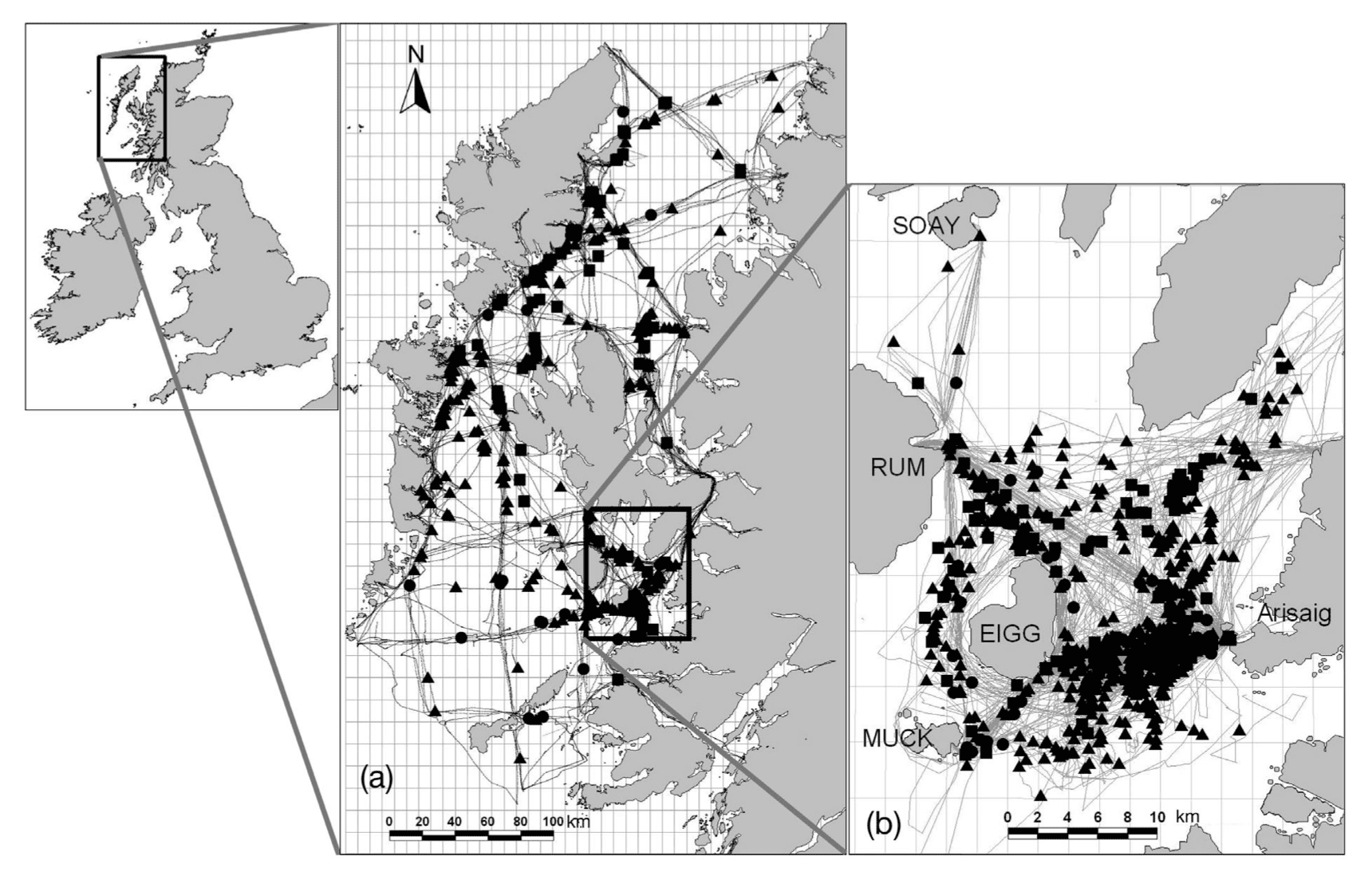
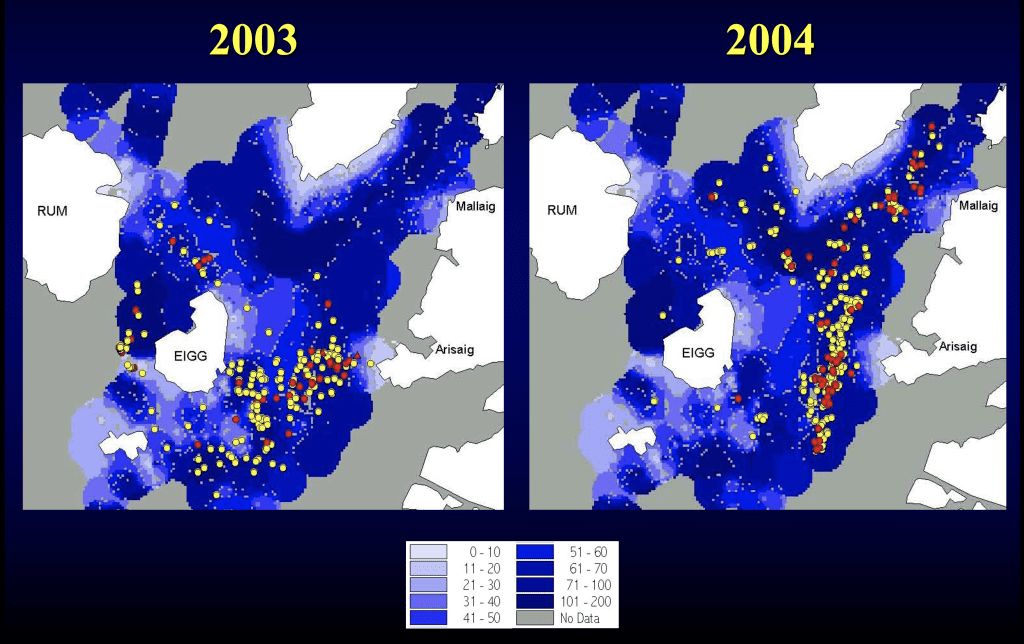
Images: 1) Surveys of minke whales in the wider Hebrides and around the Small Isles (Rum, Eigg, Canna & Muck). 2) Usage by minke whales of hotspot areas around the Small Isles. 3) Long-term abundance trends in the abundance of Harbour Porpoise, Common Dolphin, White-beaked Dolphin and Atlantic White-sided Dolphin in the Hebrides.
Surveys of minke whales in the wider Hebrides and around the Small Isles (Rum, Eigg, Canna & Muck)
Usage by minke whales of hotspot areas around the Small Isles
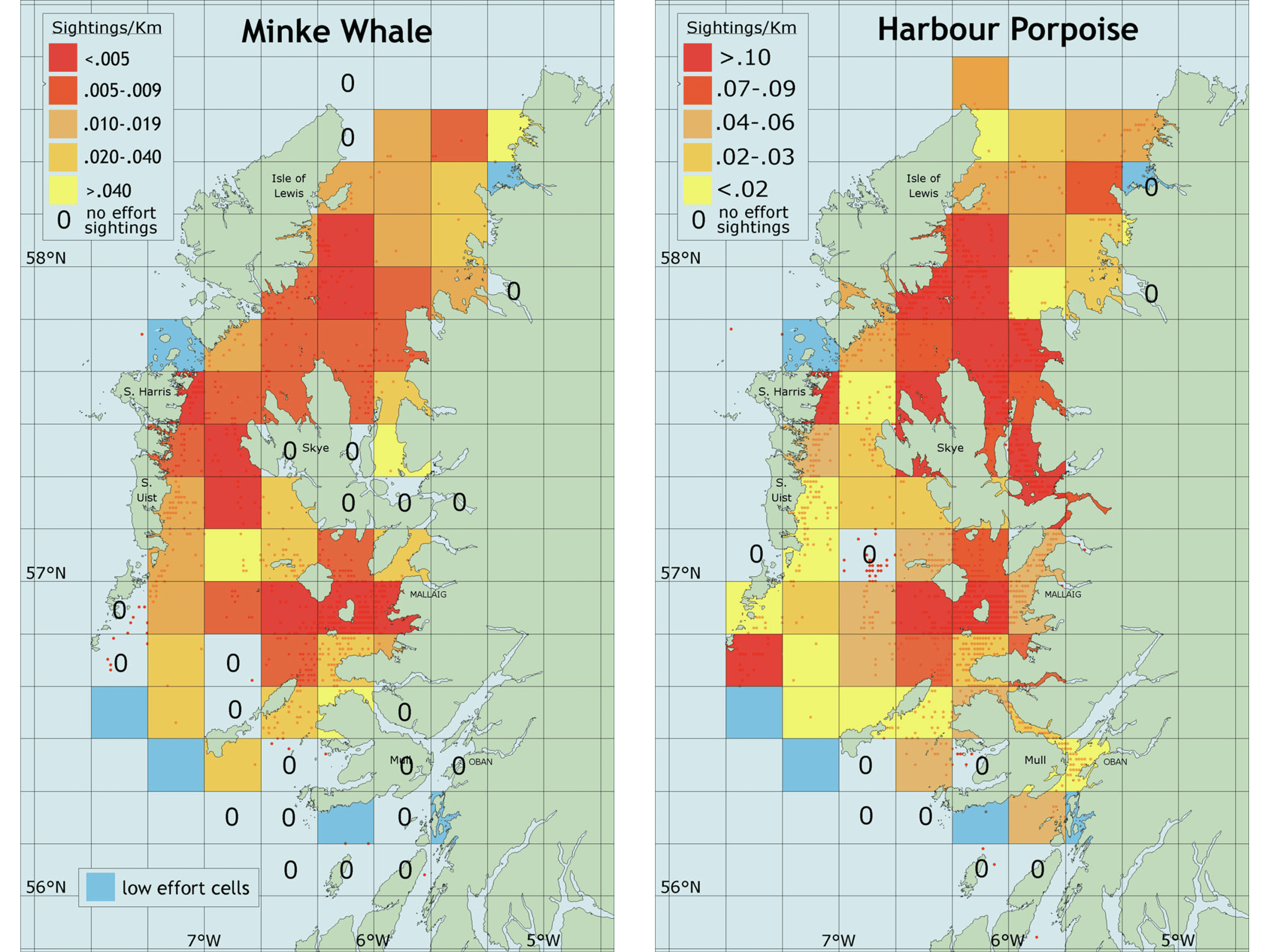
Distributions of Minke Whale and Harbour Porpoise across the Hebrides from systematic surveys, 1989-2005.
Minke whales can often be identified individually by photography. This animal has been seen in the Hebrides since at least the 1990s. P Anderwald
The photo-ID studies of Risso’s dolphins in the Outer Hebrides have been extended more recently by Whale & Dolphin Conservation, and, besides some dedicated surveys in the region in 2005-07 and 2015 by Sea Watch, survey effort within the Hebrides has largely been undertaken by HWDT using their sailing vessel Silurian. They have also established a new photo-ID catalogue for minke whale.
In the interests of combining as much information as possible, since 2016 we have worked with as many groups as possible to collate data for analysis of sightings and density distributions for different cetacean species in order to examine spatial and temporal trends in abundance.
Scottish Killer Whales
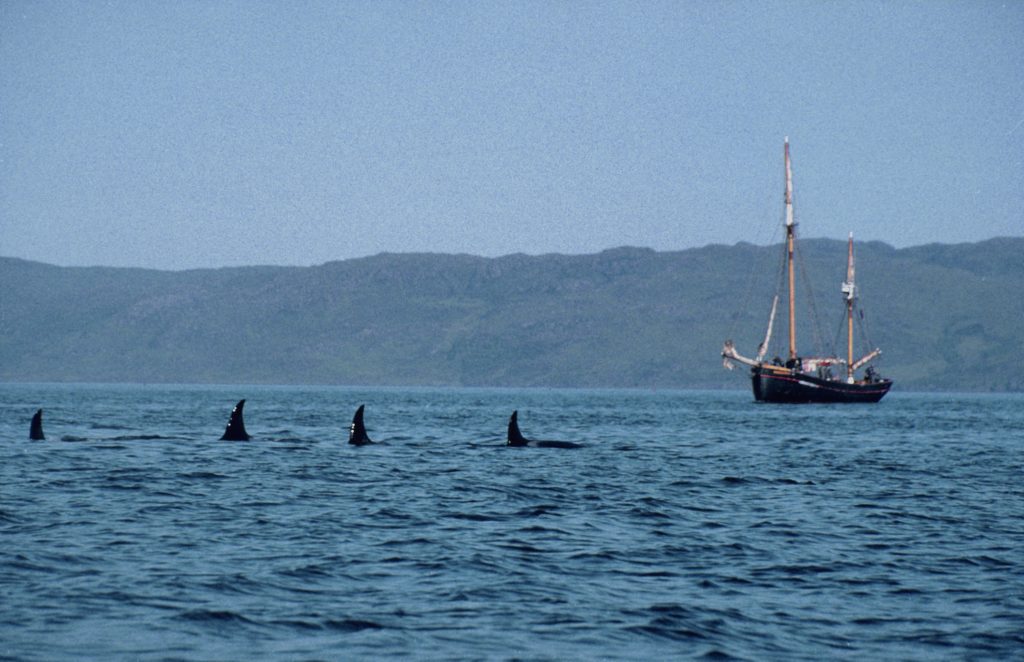
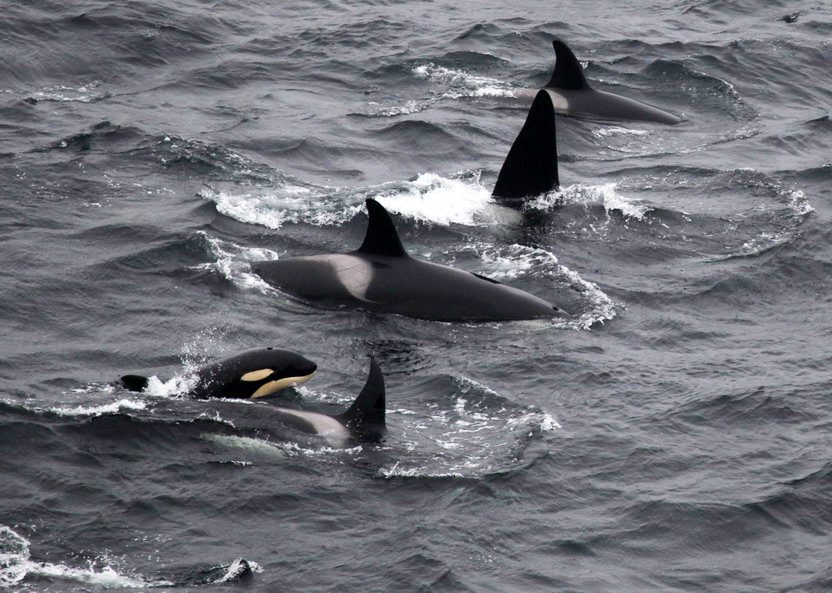
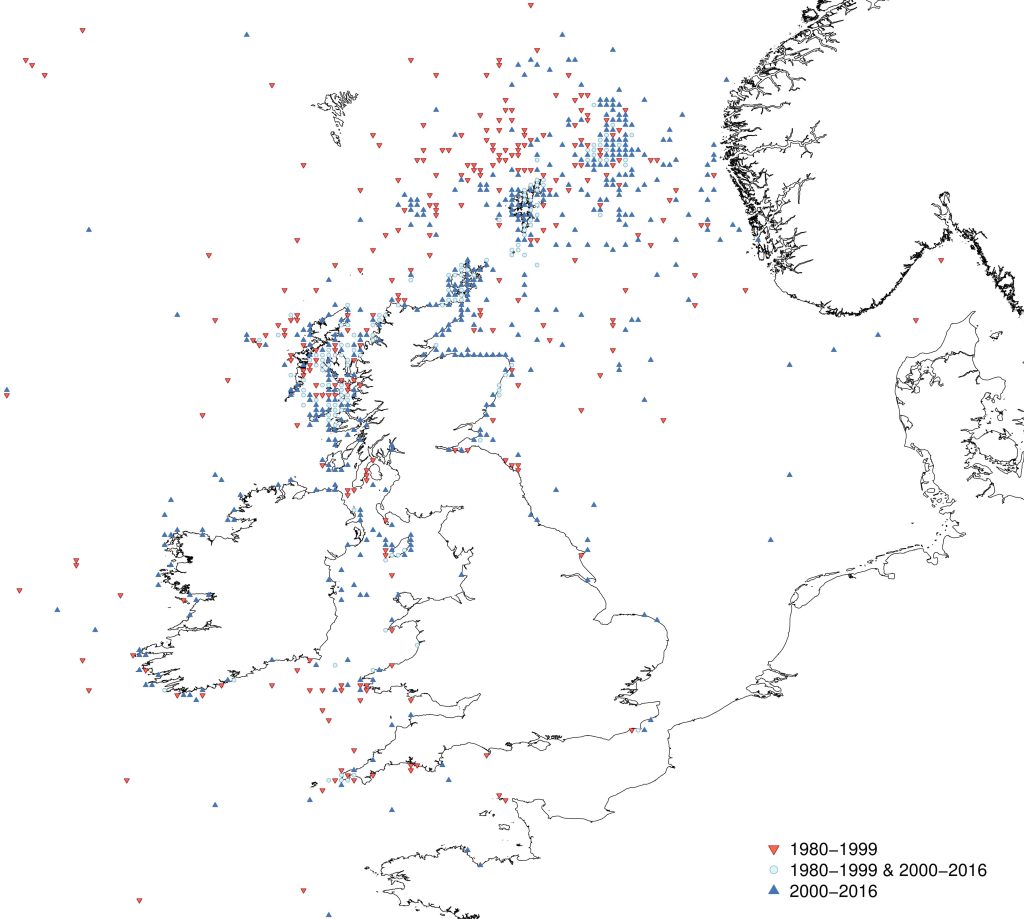
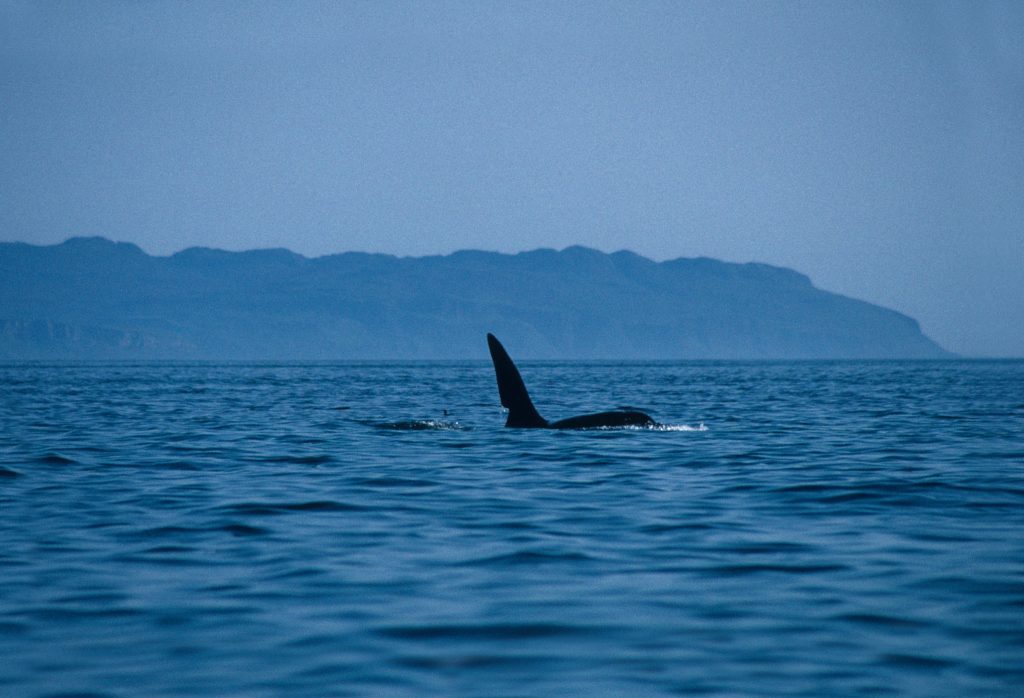
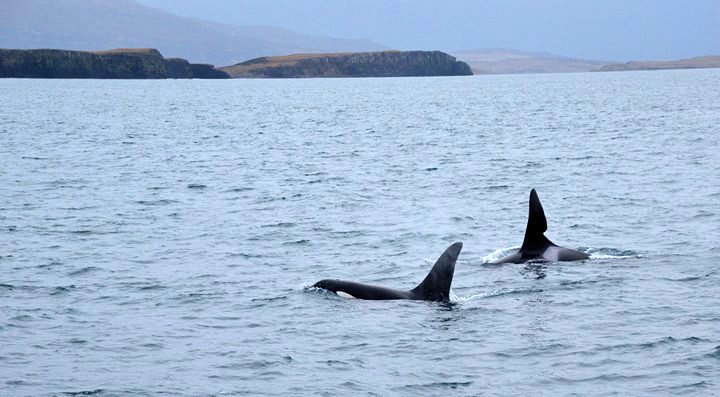
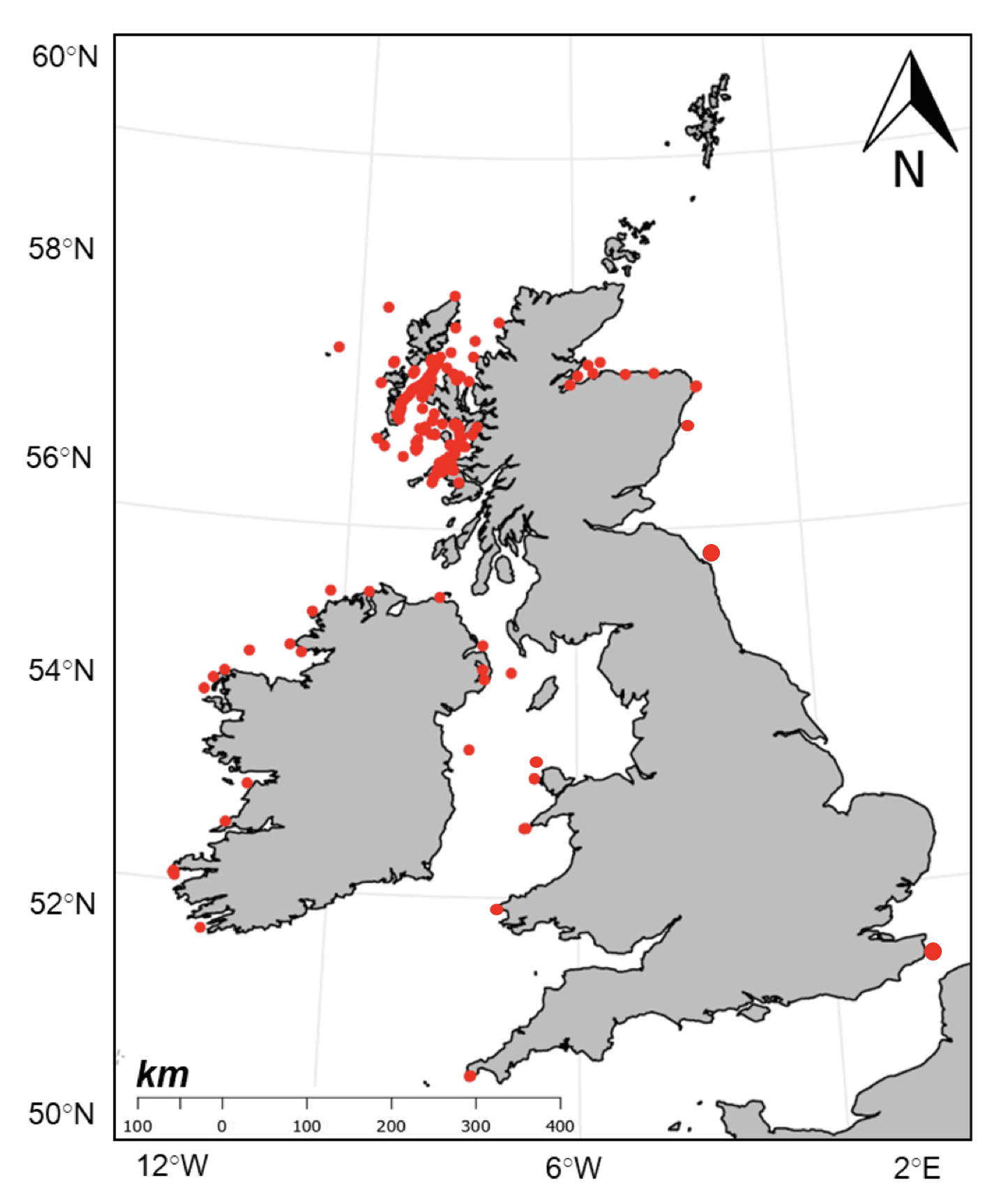
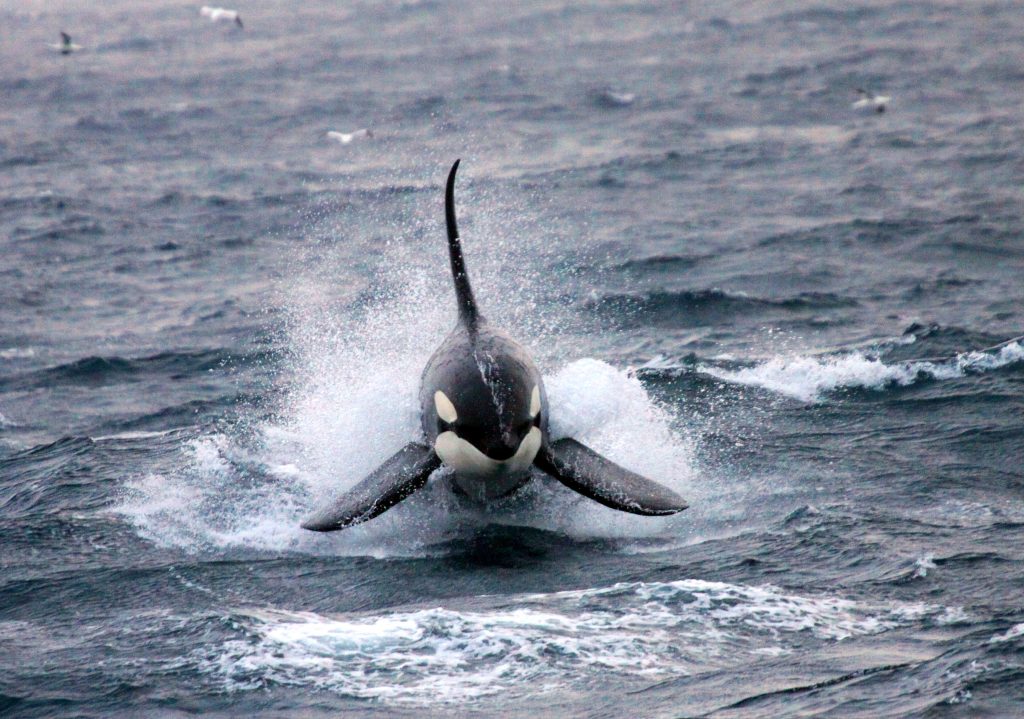
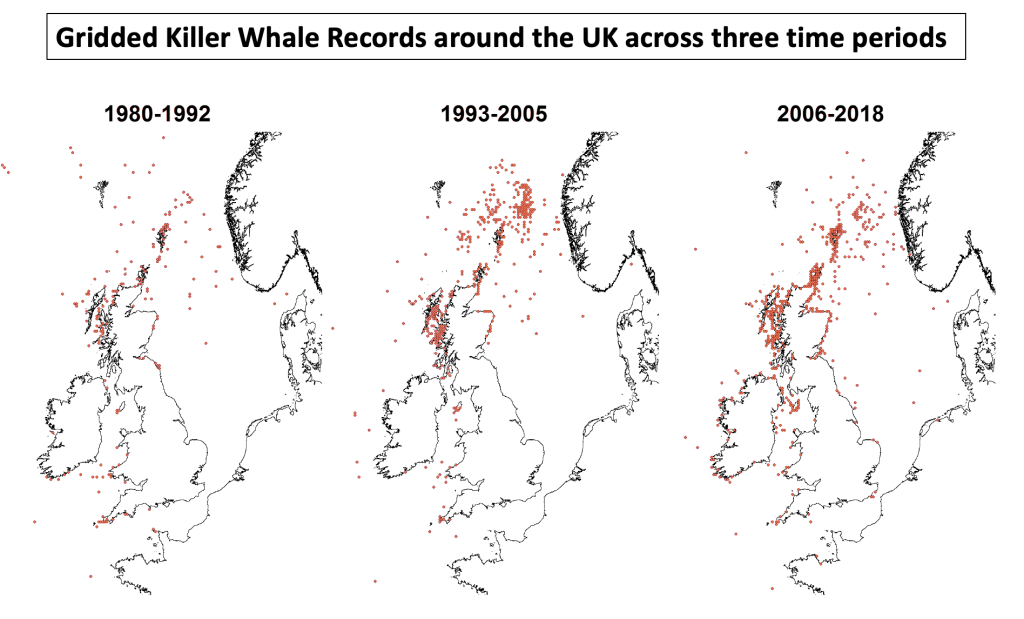
Northern Scotland has long been the main region for killer whales (orca) in British waters, occurring both off the West Coast and around the Hebrides, in the Northern Isles (Orkney and Shetland), and to a lesser extent in the Moray Firth and East Grampian region. One group of orcas often seen in the Hebrides but ranging as far as western Ireland, SW England, and SE England, has included some distinctive individuals such as the males nicknamed John Coe and Floppy Fin.
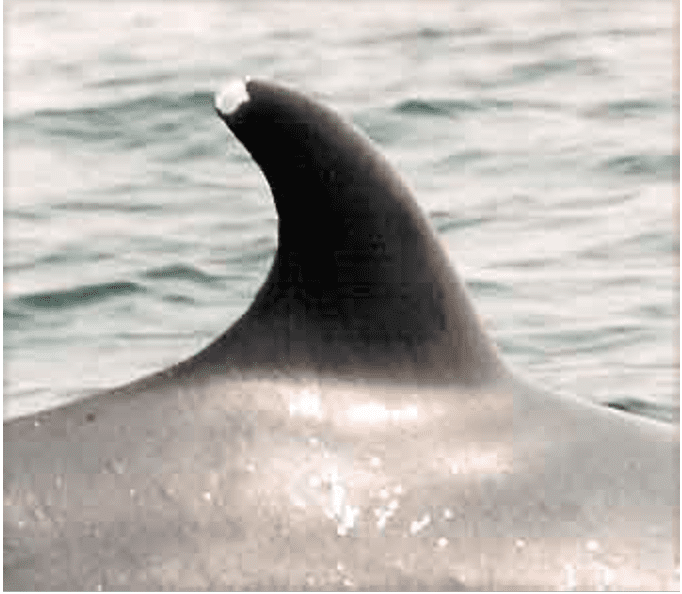
John Coe is perhaps the best-known individual, and part of the West Coast Community, as it has a deep nick in the trailing edge of its triangular dorsal fin, which can be readily spotted even at a distance. During the 1980s, John Coe was seen within groups that numbered up to twenty individuals. By the 1990s, however, the largest group in which John Coe was seen was fourteen, and in subsequent decades, group size declined further, going from ten down to eight following the death of two of the individuals (one of which had extremely high levels of the persistent chemical, PCBs, although its death was due to net entanglement).
Images:1) Killer Whale Pod in the Hebrides. Photo Credit: PGH Evans. 2) Killer Whale Pod in the Pentland Firth. Photo Credit: C Bird. 3) Killer Whale Distribution in British Waters. 4) John Coe off the Isle of Eigg. Photo Credit: PGH Evans.
Killer Whale Pod in the Hebrides. Photo Credit: PGH Evans
Killer Whale Pod in the Pentland Firth. Photo Credit: C Bird
Killer Whale Distribution in British Waters
John Coe off the Isle of Eigg. Photo Credit: PGH Evans
Since 2016, the two individual males John Coe and Aquarius have travelled around together, and have not been seen with any other killer whales. Although mainly recorded in west Scotland, they have been spotted off the west coast of Ireland, in the Irish Sea, and off the north-east coast of Scotland within the Moray Firth. In May 2021, John Coe and Aquarius were photographed near Porthcurno, in SW Cornwall, and then the following month at the other end of the English Channel in the Strait of Dover. Since then, the two have been seen off the East coast of England, in North-east Scotland as well as in the Hebrides.
John Coe and Aquarius of the Isle of Skye. Photo Credit: J Anderson
Travels of John Coe, 1980-2021. Data from Sea Watch Foundation, Hebridean Whale & Dolphin Trust, and Irish Whale & Dolphin Group
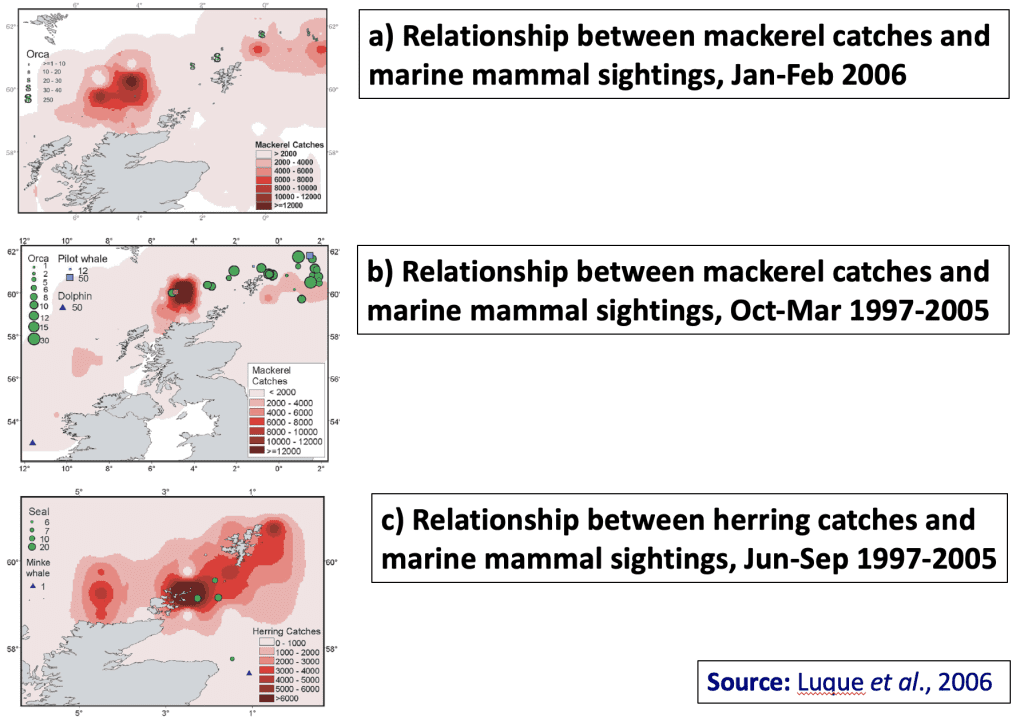
The greatest numbers of killer whales in UK waters occur offshore in the northern North Sea westwards to the north of the Hebrides. Photo-ID studies have confirmed that these are largely animals that make seasonal migrations from Iceland. During the 1990s and 2000s, tens and even hundreds of orcas were observed associating with trawlers fishing for mackerel mainly between October and February. There is also a fishery for herring in the same region between June and September, when killer whales have also been recorded associating with trawlers.
Although the species has long been recorded around the Northern Isles, the frequency of sightings has increased in these coastal waters since the 2000s, with animals now occurring in the region at any time of year. Part of this may be the result of increased public awareness and rapid communication through social media and mobile networks. However, there does seem to have been a genuine increase which may reflect the changing status of herring and mackerel stocks in the region, and the specialisation of some orca groups in preying upon marine mammals such as seals and harbour porpoise.
Killer Whale west of Foula, Shetland. Photo Credit: J Irvine
Images: 1) Associations between Killer Whales and Mackerel & Herring Fisheries (from Luque et al. 2006). 2) Killer Whale west of Foula, Shetland. Photo Credit: J Irvine. 3) Long-term Trends in Killer Whale sightings.
Photo-ID studies in Shetland and Orkney have led to the delineation of a number of discrete pods (e.g. 12s, 19s, 27s, 29s, 64s and 65s), all of which are depicted in an excellent Photo-ID catalogue compiled by A.J. Scullion, H. Harrop, K. Munro, S.R. Truluck & A.D. Foote (2021).
In May 2012, Colin Bird, the Sea Watch Regional Coordinator for North-east Scotland organised an Orca Watch event with systematic watches across the Pentland Firth from the mainland coast of Caithness and Sutherland. This has continued on an annual basis in late May-early June, and included observations also from the Northern Isles of Orkney and Shetland.
For a chance to spot these magnificent creatures yourself, find out about Orca Watch here!
Shifting Bottlenose Dolphin Distributions
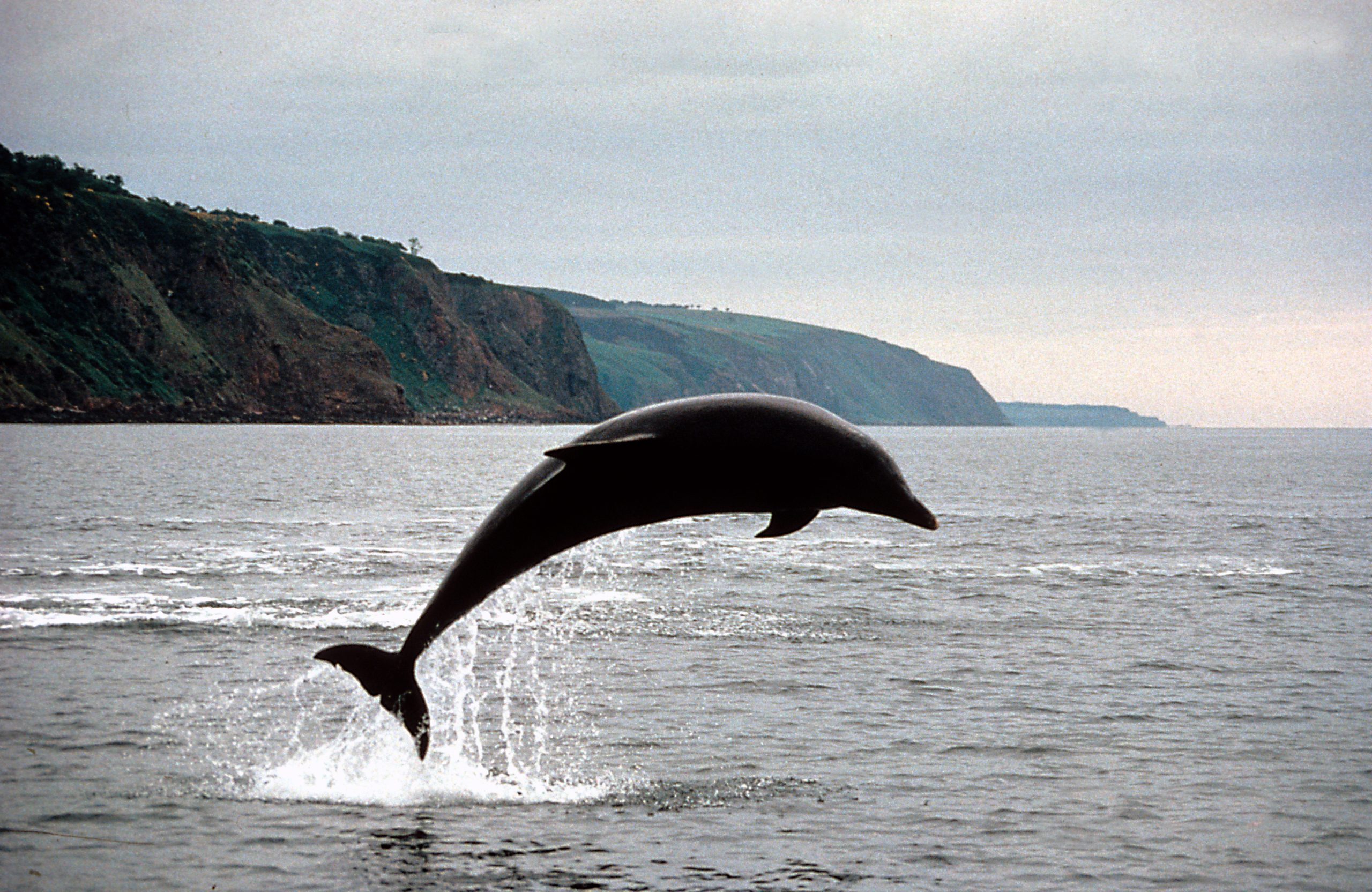
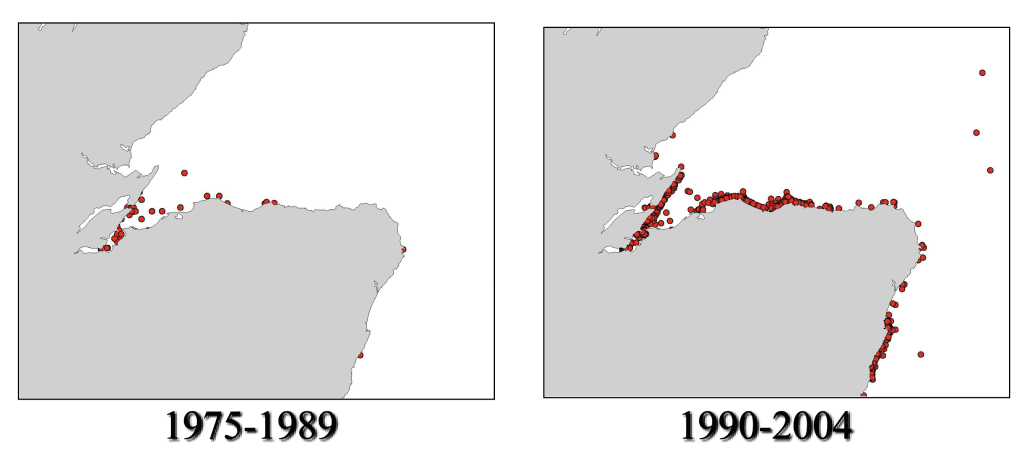
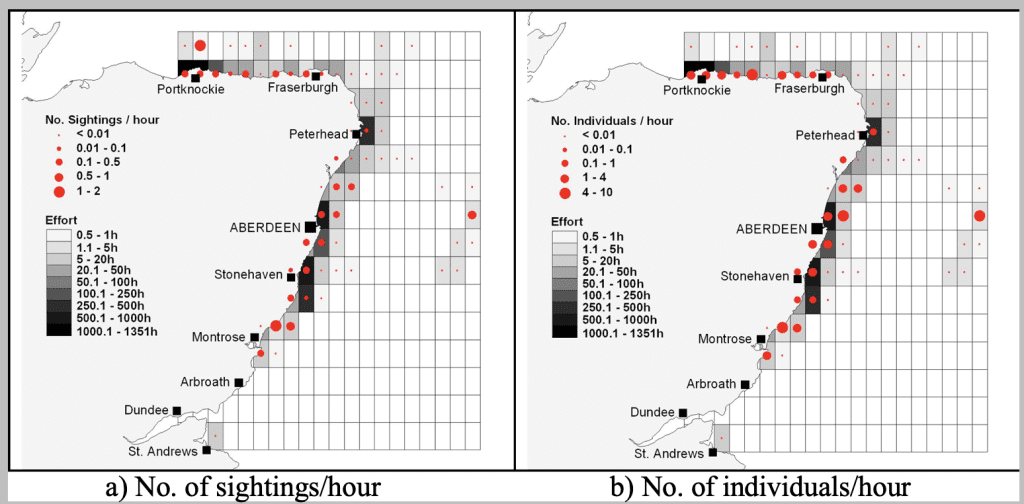
In the late 1980s and early 1990s, Paul Thompson and Ben Wilson from Aberdeen University started photo-ID surveys in the Moray Firth, in order to monitor the bottlenose dolphin population there. This study has continued ever since, and yielded some very useful and interesting information (see their publications listed on the Aberdeen University Lighthouse Field Station website).
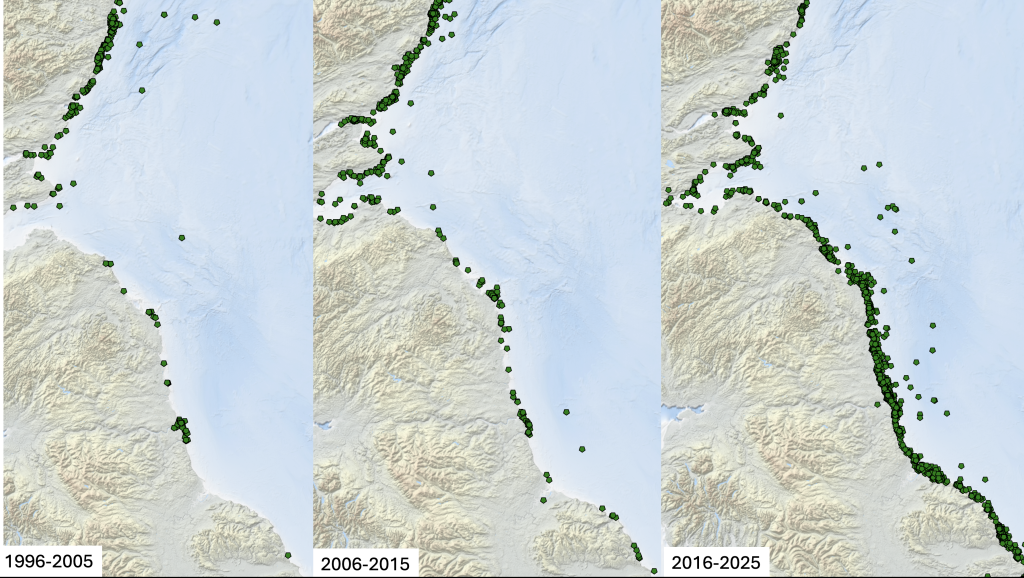
During the 1990s, bottlenose dolphin individuals started extending their range eastwards along the southern shores of the Outer Moray Firth and down the East Grampian coast. We can be confident of this because Sea Watch observers undertook regular systematic watches at several locations along the coast from the Moray Firth around the Grampian coast south to the Firth of Forth and across the border into North-east England, and locations with no sightings started witnessing arrivals of dolphins from elsewhere. Now, we see bottlenose dolphins observed year-round as far south as Yorkshire with occasional forays even to Norfolk. Photo-ID confirms that at least some of these individuals come from the Moray Firth, with indications that females are giving birth to young off the east coast of England, whilst the original core area of the inner Moray Firth for this population now appears to be hosting fewer animals. This has conservation implications because much of the population range is now outside the Special Area of Conservation established to protect them.
Bottlenose Dolphin off the Sutors of Cromarty, Moray Firth. Photo Credit: PGH Evans
Long-term trends in bottlenose dolphins in the North Sea
Images: 1) Distribution of Sightings of Bottlenose Dolphin in the Moray Firth, 1975-2004. 2) Bottlenose Dolphin Sighting Rates off the coast of Aberdeenshire from Systematic Surveys. 3) Bottlenose Dolphin Sightings in Coastal waters of Eastern Britain from 1996 to 2025.
When bottlenose dolphins make excursions into new territory, they seem to do so in larger groups and largely outside the main summer period. As yet, we don’t know what has caused these distribution shifts. It may be that there is a shortage of prey (for example salmon in the river estuaries) within the Moray Firth although the population appears to have increased and be reproducing well.
Publications
Anderwald, P. (2009) Population Genetics and Behavioural Ecology of North Atlantic Minke Whales (Balaenoptera acutorostrata). PhD Thesis, University of Durham, Durham 216pp.
Anderwald, P., Evans, P.G.H., Gygax, L., and Hoelzel, A.R. (2011) Role of feeding strategies in seabird-minke whale associations. Marine Ecology Progress Series, 424: 219-227.
Anderwald, P., Evans, P.G.H., Dyer, R., Dale, A., Wright, P.J., and Hoelzel, A.R. (2012) Spatial scale and environmental determinants in minke whale habitat use and foraging. Marine Ecology Progress Series, 450: 259-274.
Anderwald, P., Evans, P.G.H., Canning, C., Hepworth, K., Innes, M., Macdonald, P., Sim, I., Stockin, K., and Weir, C. (2010) Cetaceans of the East Grampian Region. Sea Watch Foundation, Aberdeen. 68pp.
Anderwald, P., Daníelsdottir, A.K., Haug, T., Larsen, F., Lesage, V., Reid, R.J., Vikingsson, G., and Hoelzel, A.R. (2011) Possible cryptic stock structure for minke whales in the North Atlantic: Implications for conservation and management. Biological Conservation, 144: 2479-2489.
Atkinson, T. Gill, A., and Evans, P.G.H. (1997) A photo-identification study of Risso’s Dolphins (Grampus griseus) in the coastal waters of the Eye Peninsula, Isle of Lewis, Scotland. European Research on Cetaceans, 11: 170.
Atkinson, T., Gill, A. and Evans, P.G.H. (1997) Notes on the natural markings on Risso’s Dolphins (Grampus griseus) photographed in the coastal waters around the Eye Peninsula, Isle of Lewis, Scotland. European Research on Cetaceans, 11: 209.
Atkinson, T., Gill, A. and Evans, P.G.H. (1999) A photo-identification study of Risso’s Dolphins in the Outer Hebrides, Northwest Scotland. European Research on Cetaceans, 12: 102.
Banguera-Hinestroza, E., Evans, P.G.H., Mirimin, L., Reid, R.J., Mikkelsen, B., Couperus, A.S., Deaville, R., Rogan, E., and Hoelzel, A.R. (2014) Phylogeography and population dynamics of the Atlantic white-sided dolphin (Lagenorhynchus acutus) in the North Atlantic. Conservation Genetics, 10.1007/s10592-014-0578-z.
Barry, S., Parsons, E.C.M., McNee, J., McClennan, R., Evans, P.G.H. and McClennan, L. (2000) Cetacean sighting distribution in West Scotland in 1999. European Research on Cetaceans, 13: 355.
Benoldi, C., Evans, P.G.H., Pavan, G., Manghi, M. and Priano, M. (1997) Acoustic survey of Risso’s Dolphins in Hebridean Waters, Scotland. European Research on Cetaceans, 11: 232-236.
Benoldi, C., Gill, A., Evans, P.G.H., Manghi, M., Pavan, G. and Priano, M. (1999) Comparison between Risso’s dolphin vocal repertoire in Scottish waters and in the Mediterranean Sea. European Research on Cetaceans, 12: 235-239.
Boran, J.R., Evans, P.G.H. and Rosen, M.J. (1999) Cetaceans of the Hebrides: seven years of surveys. European Research on Cetaceans, 13: 169-174.
Borges. L. and Evans, P.G.H. (1997) Spatial Distribution of the Harbour Porpoise and Fish Prey and their Associations in Southeast Shetland. N. Scotland. European Research on Cetaceans, 10: 262-265.
Canning, S.J. (2007) Cetacean distribution and habitat use along the east coast of Scotland. PhD Thesis. University of Aberdeen, Scotland. 199pp.
Canning, S.J., Santos, M.B., Reid, R.J., Evans, P.G.H., Sabin, R.C., Bailey, N. and Pierce, G.J. (2008) Seasonal distribution of white-beaked dolphins (Lagenorhynchus albirostris) in UK waters with new information on diet and habitat use. Journal of the Marine Biological Association of the United Kingdom, 88: 1159-1166.
Cheney, B.J., Thompson, P.M., Ingram, S.N., Hammond, P.S., Stevick, P.T., Durban, J.W., Culloch, R.M., Elwen, S.H., Mandleberg, L., Janik, V.M., Quick, N.J., Islas-Villanueva, V., Robinson, K.P., Costa, M., Eisfeld, S.M., Walters, A., Philips, C., Weir, C.R., Evans, P.G.H., Anderwald, P., Reid, R.J., Reid, J.B., and Wilson, B. (2012) Integrating multiple data sources to assess the distribution and abundance of bottlenose dolphins (Tursiops truncatus) in Scottish waters. Mammal Review, 43: 71-88.
Evans, P.G.H. (1996) Identifying areas of summer concentrations for cetaceans in the Shetland Islands, North Scotland. Report to WWF-UK. Sea Watch Foundation, Oxford. 30pp.
Evans, P.G.H. (1996) Whales, dolphins and porpoises. Chapter 5.15. Pp. 131-134. In: Coasts and Seas of the United Kingdom. Region 3. North-east Scotland: Cape Wrath to St Cyrus. (Eds. J.H. Barne, C.F. Robson, S.S. Kaznowska and J.P. Doody). Joint Nature Conservation Committee, Peterborough.
Evans, P.G.H. (1996) Ecological studies of the harbour porpoise in Shetland, North Scotland. Final Report to WWF-UK. Sea Watch Foundation, Oxford. 106pp.
Evans, P.G.H. (1997) Whales, dolphins and porpoises. Chapter 5.15. Pp. 126-130. In: Coasts and Seas of the United Kingdom. Region 1. Shetland. (Editors J.H. Barne, C.F. Robson, S.S. Kaznowska and J.P. Doody). Joint Nature Conservation Committee, Peterborough.
Evans, P.G.H. (1997) Whales, dolphins and porpoises. Chapter 5.15. Pp. 120-123. In: Coasts and Seas of the United Kingdom. Region 2. Orkney (Editors J.H. Barne, C.F. Robson, S.S. Kaznowska and J.P. Doody). Joint Nature Conservation Committee, Peterborough.
Evans, P.G.H. (1997) Whales, dolphins and porpoises. Chapter 5.15. Pp. 129-132. In: Coasts and Seas of the United Kingdom. Region 4. South-east Scotland: Montrose to Eyemouth. (Editors J.H. Barne, C.F. Robson, S.S. Kaznowska and J.P. Doody). Joint Nature Conservation Committee, Peterborough.
Evans, P.G.H. (1997) Whales, dolphins and porpoises. Chapter 5.15. Pp. 167-170. In: Coasts and Seas of the United Kingdom. Region 14. South-west Scotland: Ballantrae to Mull. (Editors J.H. Barne, C.F. Robson, S.S. Kaznowska and J.P. Doody). Joint Nature Conservation Committee, Peterborough.
Evans, P.G.H. (1997) Whales, dolphins and porpoises. Chapter 5.15. Pp. 162-167. In: Coasts and Seas of the United Kingdom. Regions 15 and 16. North-west Scotland: The Western Isles and West Highland. (Editors J.H. Barne, C.F. Robson, S.S. Kaznowska and J.P. Doody). Joint Nature Conservation Committee, Peterborough.
Evans, P.G.H. (2011) Site Characterisation Survey & Monitoring Recommendations for Cetaceans & Basking Sharks in the Pentland Firth and Orkney Waters. Scottish Natural Heritage Commissioned Report No. (iBids and Projects ID 1052). 54pp.
Evans, P.G.H. and Borges, L. (1995) Associations between Porpoises, Seabirds and Their Prey in South-East Shetland, N. Scotland. European Research on Cetaceans, 9, 173-178.
Evans, P.G.H. and Gilbert, L. (1991) The distributional ecology of harbour porpoises in the Shetland Islands, North Scotland. European Research on Cetaceans – 5, 47-53.
Evans, P.G.H., Anderwald, P. and Hepworth, K.S. (2008) Cetaceans in the vicinity of Aberdeen and adjacent sea areas. Sea Watch Foundation, Caernarfon, Gwynedd. 37pp.
Evans, P.G.H., Carson, Q., Fisher, P., Jordan, W., Limer, R. and Rees, I. (1994) A study of the reactions of harbour porpoises to various boats in the coastal waters of South-east Shetland. European Research on Cetaceans, 8, 60-64.
Evans, P.G.H., Fisher, P., Rees, I. and Wainwright, J. (1993) Ecological studies of the Harbour Porpoise in Shetland, North Scotland. Report to World Wide Fund for Nature. Sea Watch Foundation, Oxford. 52pp.
Evans, P.G.H., Fisher, P., Rees, I., Wainwright, J., Farrell, J., and Mayo, W. (1993) Foraging ecology of harbour porpoises in Shetland. European Research on Cetaceans, 7, 33-38.
Evans, P.G.H., Lewis, E.J., Parsons, E. and Swann, C. (1993) A Survey of Whales and Dolphins in Hebridean Waters. Report to the Whale & Dolphin Conservation Society. Sea Watch Foundation, Oxford. 30pp.
Evans, P.G.H., Nice, H.E. and Weir, C.R. (1997) Sightings frequency and distribution of cetaceans in Shetland waters. European Research on Cetaceans, 10, 143-147.
Evans, P.G.H., Swann, C., Lewis, E., Parsons, E., Heimlich-Boran, J. and Heimlich-Boran, S. (1993) Survey of cetaceans in the Minches and Sea of Hebrides, Northwest Scotland. European Research on Cetaceans, 7, 111-116.
Evans, P.G.H., Weir, C.R. and Nice, H.E. (1997). Temporal and spatial distribution of harbour porpoises in Shetland waters, 1990-95. European Research on Cetaceans, 10: 233-237.
Fisher, P.R., Adam, M. and Brown, E.G. (1999) Killer whales (Orcinus orca) in Shetland waters. European Research on Cetaceans, 13: 206-209.
Gill, A., Atkinson, T. and Evans, P.G.H. (1997) Cetacean sightings off the east coast of the Isle of Lewis, Scotland recorded by the Risso’s Dolphin Project in summer 1996. European Research on Cetaceans, 11: 109-111.
Harris, G. (2022) Humpback Whale Ecology, Movement and Distribution. MSc Thesis, Bangor University. 86pp.
Hodgins, N.K., Steel, E.M., Dyke, K., Walters, A.E.M., Dolman, S.J., Hall, K., Neave-Webb, E., Evans, P.G.H., Bird, C., Robinson, K.P., Marwood, E.M., Foubister, R., Harrop, H., Knight, A., and Munro, K. (2024) Using citizen science to better understand Risso’s dolphin (Grampus griseus) presence in northeast Scotland and the Northern Isles. Frontiers in Conservation Science, 5:1366064. doi: 10.3389/fcosc.2024.1366064
Jeewoonarain, T., Parsons, E.C.M. and Evans, P.G.H. (1999) Operation sightings: sightings of cetaceans in the southern Hebrides, Scotland. European Research on Cetaceans, 13: 237-241.
Leaper, R., MacLennan, E., Brownlow, A., Calderan, S.V., Dyke, K., Evans, P.G.H., Hartny-Mills, L., Jarvis, D., McWhinnie, L., Philp, A., Read, F.L., Robinson, K.P., and Ryan, C. (2022) Estimates of humpback and minke whale entanglements in the Scottish static pot (creel) fishery. Endangered Species Research, 49, 217-232.
Luque, P.L., Davis, C.G., Reid, D.G., Wang, J. and Pierce, G.J. (2006). Opportunistic sightings of killer whales from Scottish pelagic trawlers fishing for mackerel and herring off North Scotland (UK) between 2000 and 2006. Aquatic Living Resources, 19(4), 403-410. https://doi.org/10.1051/alr:2007009
Marubini, F., Gimona, A., Evans, P.G.H., Wright, P.J. and Pierce, G.J. (2009) Habitat preferences and interannual variability in occurrence of the harbour porpoise Phocoena phocoena in the north-west of Scotland. Marine Ecology Progress Series, 381: 297-310.
Parsons, E.C.M., Birks, I., Evans, P.G.H., Gordon, J.C.D. and Shrimpton, J.H. (2000) The possible impacts of military activity on cetaceans in West Scotland. European Research on Cetaceans, 13: 185-190.
Parsons, E.C.M., Shrimpton, J. and Evans, P.G.H. (1999) Cetacean Conservation in Northwest Scotland: perceived threats to cetaceans. European Research on Cetaceans, 13: 128-133.
Paxton, C.G.M., Waggitt, J.J., Evans, P.G.H., Miller, D.L, and Chudzinska, M.E. (2022) Production of Seabird and Marine Mammal Distribution Models for the East of Scotland. Report to Marine Scotland. Centre for Research into Ecological and Environmental Modelling, St Andrews University. 155pp.
Robinson, K.P., Bamford, C.C.G., Airey, A., Bean, T.S., Bird, C., Haskins, G.M., Sim, T., and Evans, P.G.H. (2016) Killer Whale (Orcinus orca) Occurrence in the Moray Firth, Northeast Scotland: Incidental Sightings, Behavioural Observations, and Photo-Identification. Aquatic Mammals, 45: 26-32. DOI 10.1578/AM.43.1.2017.26.
Ryan, R., Leaper, R., Evans, P.G.H., Dyke, K., Robinson, K.P., Haskins, G.N., Calderan, S., van Geel, N., Harries, O., Froud, K., Brownlow, A., and Jack, A. (2016) Entanglement: an emerging threat to humpback whales in Scottish waters. IWC SC/66b/HIM/01. 12pp.
Weir, C.R. and Stockin, K.A. (2001) The occurrence and distribution of the bottlenose dolphin (Tursiops truncatus) and other cetacean species in the coastal waters of Aberdeenshire. Sea Watch Foundation, Oxford. 68pp.
Weir, C., Stockin, K. and Pierce, G.J. (2007) Spatial and temporal trends in the distribution of harbour porpoises, white-beaked dolphins and minke whales off Aberdeenshire (UK), north-western North Sea. Journal of the Marne Biological Association of the United Kingdom, 87: 327-338.