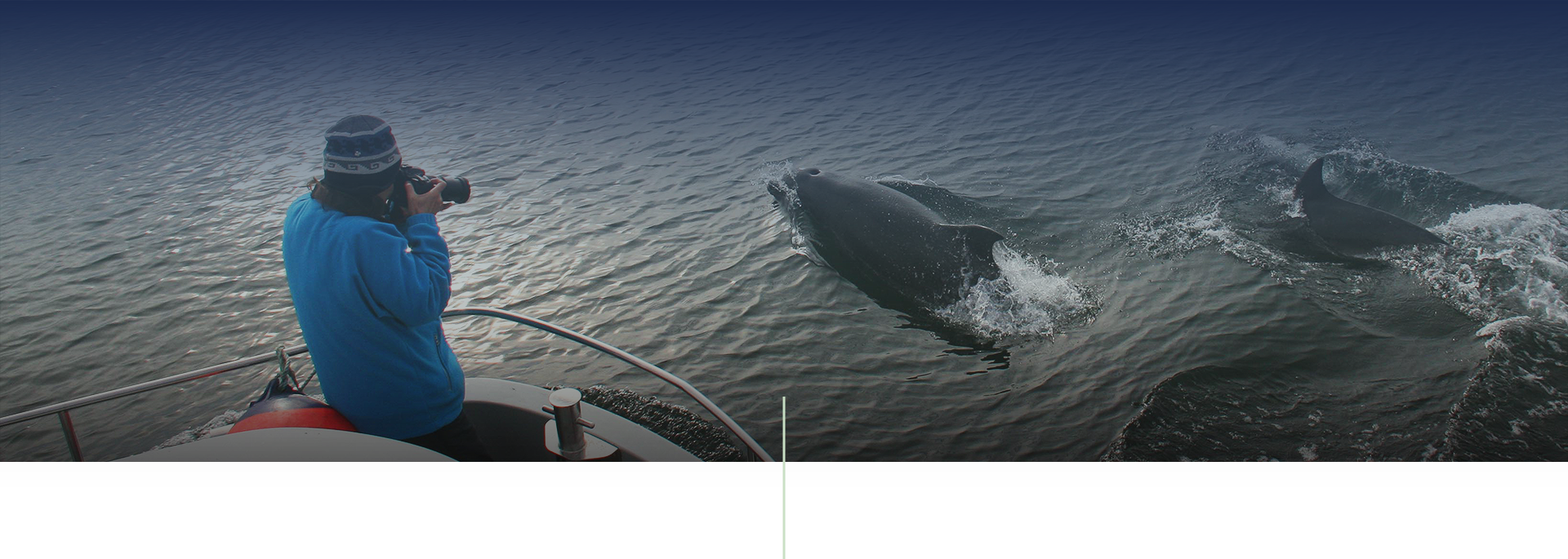
The Cardigan Bay Monitoring Project is the flagship field project of the Sea Watch Foundation.
Based in New Quay, Ceredigion, Sea Watch Foundation has been studying the only semi-resident population of bottlenose dolphins in Wales, and the largest in the UK, since the 1990s. With over 25 years of experience studying Welsh bottlenose dolphins, the Cardigan Bay Monitoring Project is one of the longest-running monitoring projects in Europe.
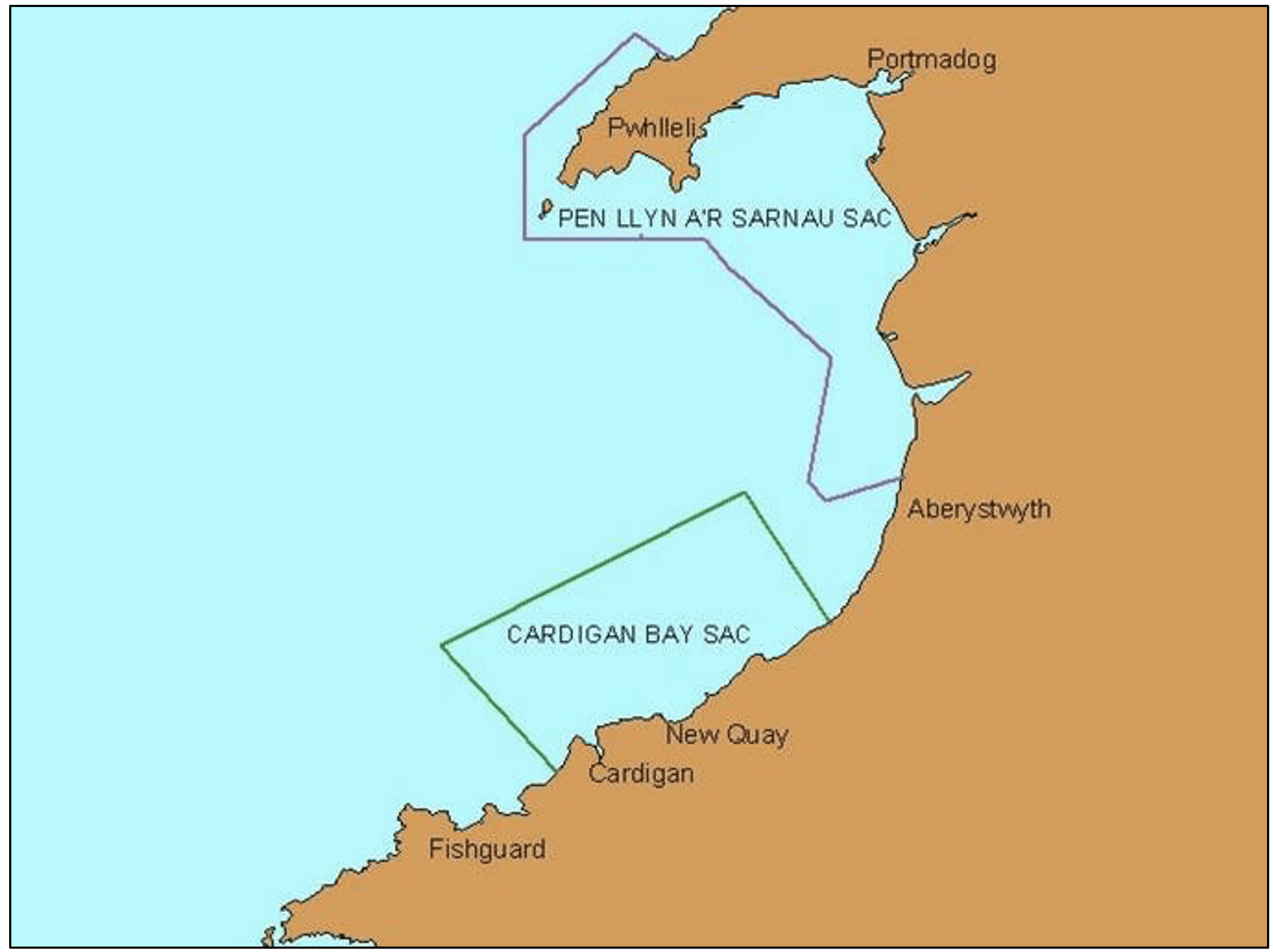
Cardigan Bay is home to a variety of unique habitats and marine wildlife such as bottlenose dolphins, harbour porpoise and grey seals, and in recognition of this, two Special Areas of Conservation (SACs), the Cardigan Bay SAC and the Pen Llŷn a’r Sarnau SAC, have been designated under the EU Habitats Directive. Sea Watch Foundation’s work in Cardigan Bay was instrumental in the initial designation and since then we have worked closely with Natural Resources Wales, Ceredigion County Council and other organisations such as Joint Nature Conservation Committee to continue to monitor the Cardigan Bay population of bottlenose dolphins and ensure their survival. The aim of this project is to monitor the abundance of bottlenose dolphins in Cardigan Bay, study residency and assess home ranges, estimating birth rates and reporting on the health of individuals. We also take on a number of university students every year to conduct additional research as part of their theses to study topics such as anthropogenic disturbance, social structure and behaviour. Our published reports to date can be found in the publications section of our website (click here) but a general overview can be found below.
Introduction to Cardigan Bay
Cardigan Bay is the largest bay in the British Isles, stretching approximately 100km from the Llŷn Peninsula in the north to Strumble Head in the south. It provides a shallow, sheltered habitat for marine wildlife, which is likely to be one of the reasons that it is favoured by bottlenose dolphins which give births to their calves here every year.
Besides bottlenose dolphins, Cardigan Bay is home to several other marine mammal species; including harbour porpoise, grey seal, Risso’s dolphin and common dolphin. Bottlenose dolphins, harbour porpoise and grey seals are the most commonly sighted species and are locally affectionately nicknamed ‘the big three.’
In the summer, the cliffs around New Quay are host to one of the largest seabird breeding colonies in Wales, and large numbers of guillemots, razorbills and kittiwakes come to mate and raise their chicks here every year. Fulmars, great black-backed gulls and herring gulls are also commonly sighted and, further out at sea, Manx shearwaters and storm petrels are frequently seen.
Cardigan Bay Special Areas of Conservation for the bottlenose dolphin populations.
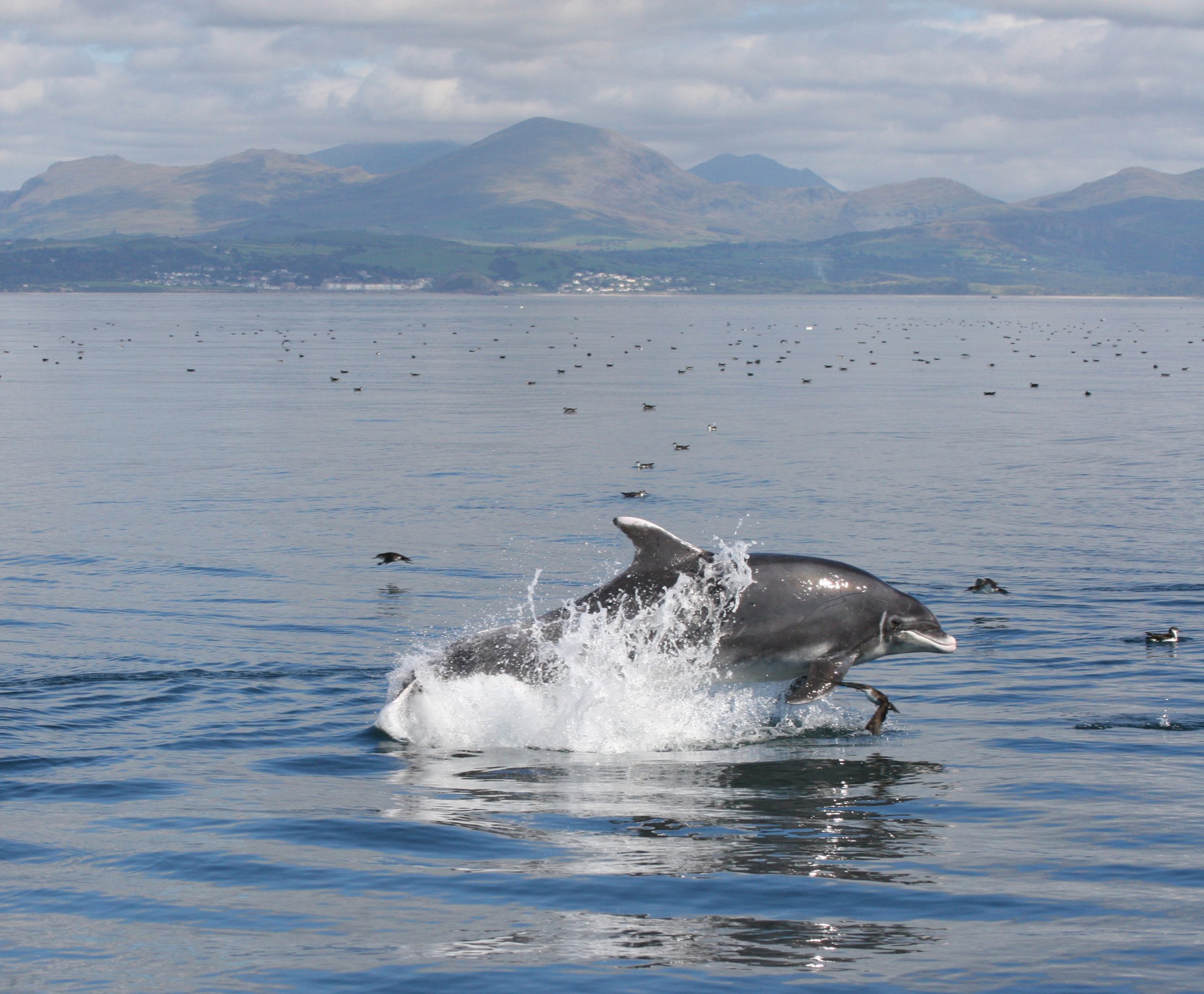
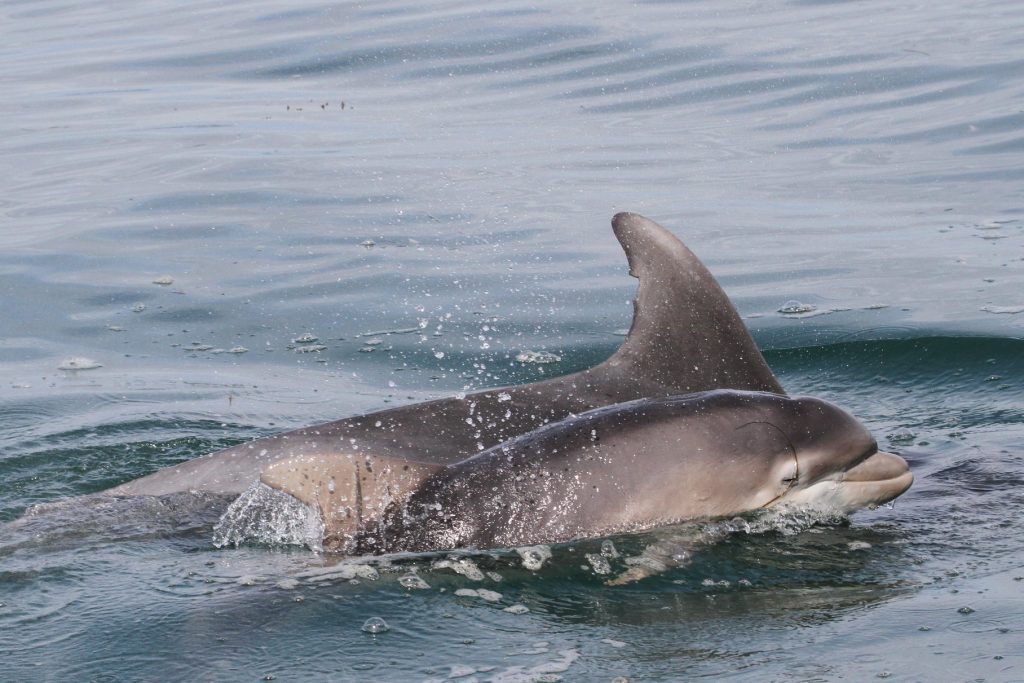
Bottlenose dolphin in Pen Llŷn A’r Sarnau SAC.
Photo credit: P Anderwald
The bay includes several rare habitats such as rocky reefs, sandbanks and sea caves that are protected under the EU Habitats Directive. The variety of habitats and substrates that can be found here is likely to be a significant factor in the abundance of marine wildlife that calls Cardigan Bay its home.
In order to protect the unique wildlife and habitats of Cardigan Bay, there is a strict code of conduct in place to prevent disturbance of animals and destruction of delicate habitats that all marine users are requested to abide by. There is more information available on the marine code of conduct here.
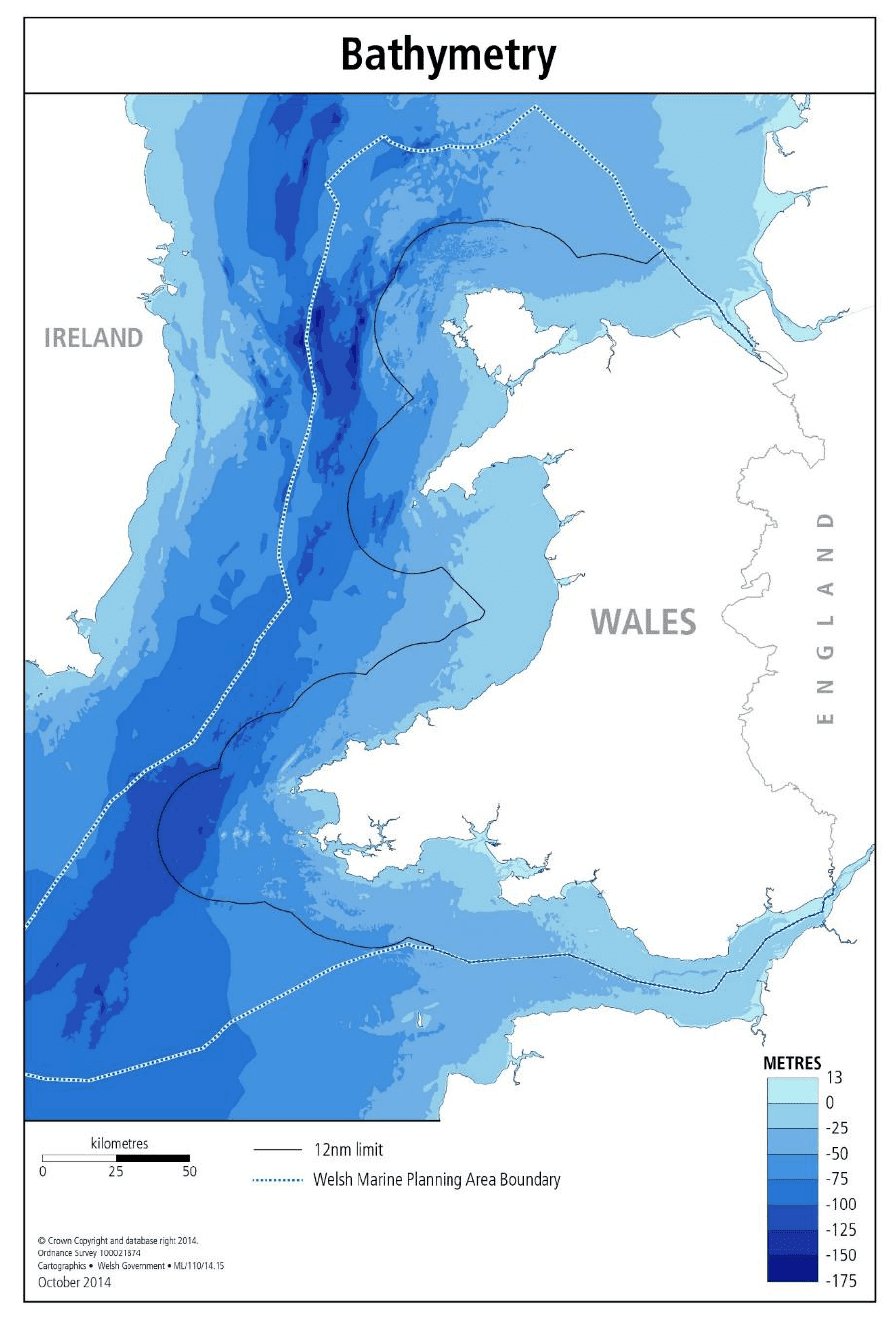
Bathymetry of the Irish Sea.
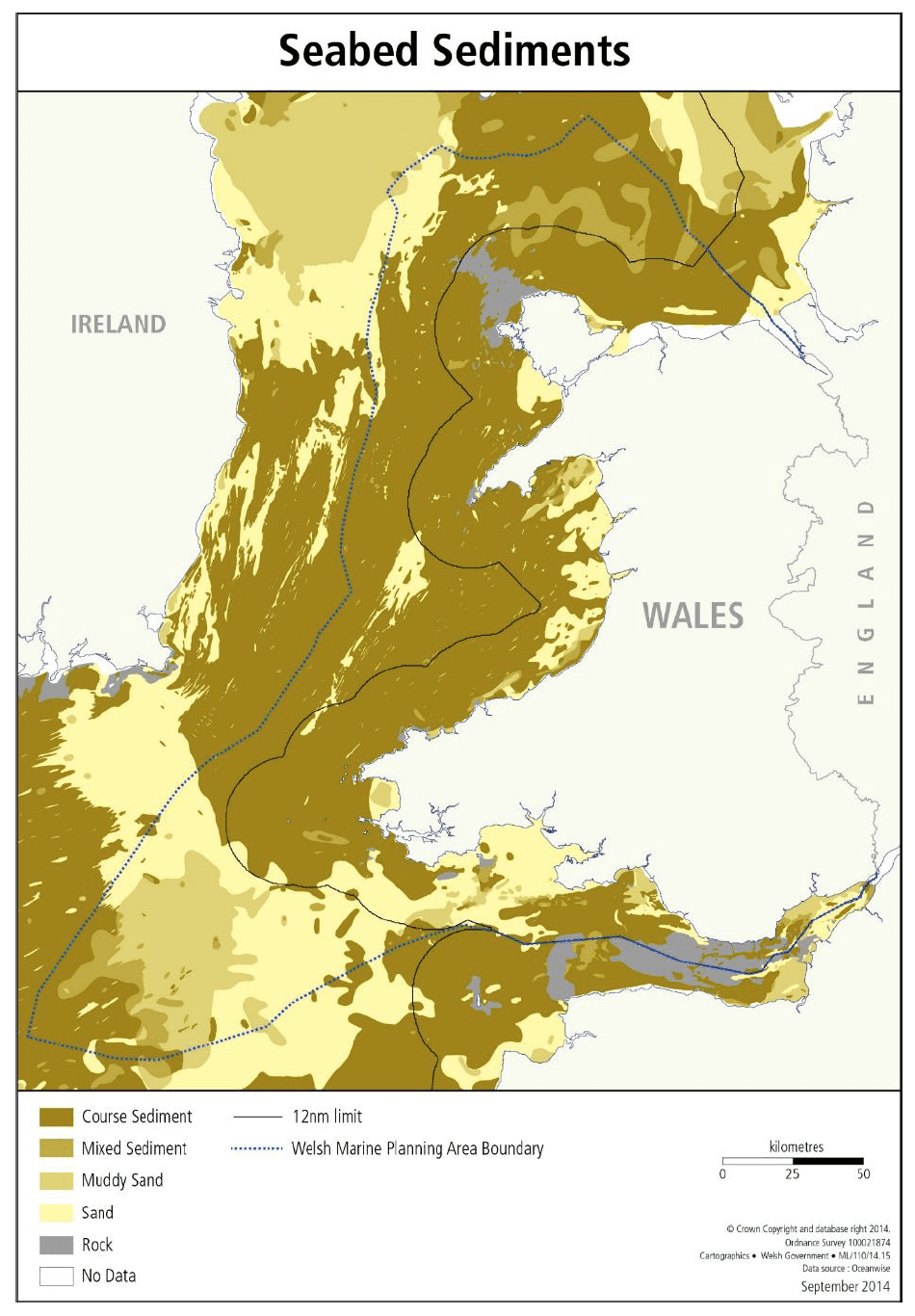
Seabed sediments of the Irish Sea.
Cardigan Bay Bottlenose Dolphins
British bottlenose dolphins (Tursiops truncatus), are amongst the largest of their species, growing up to 4m in length. In warmer climates such as Florida, bottlenose dolphins grow to a maximum of about 2.5m, just over half the length of bottlenose dolphins that can be found in the colder, temperate waters of Britain.
Research carried out by the Cardigan Bay Monitoring Project has been providing information on habitat use, social structure, and population trends for two decades. In addition to this, we have also carried out a number of studies on the effects of boat traffic and human disturbance on bottlenose dolphins.
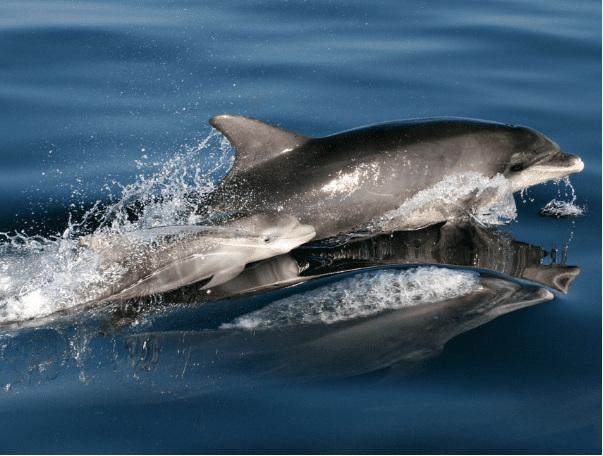
Within Cardigan Bay, there is a population of about 200 individuals. The dolphins live in what is known as a fission-fusion society. This is a fluid society structure where individuals may stay together for a few hours or a few days before splitting up and forming new groups, although there are some that form long-term associations. Adult bottlenose dolphins tend to associate preferentially with adults of the same sex, and in southern Cardigan Bay, we often encounter ‘nursery groups’ – groups of dolphins with multiple mother-calf pairs. Calves can be present all year around but the majority are born in the summer months between May and August. Gestation is approximately 12 months and calves stay with their mothers for an average of 3 years, although the record currently stands at 7 years for a young dolphin named Tigger who has only recently left his mum!
Mother and calf bottlenose dolphin in the Cardigan Bay SAC
Photo credit: K Lohrengel / Sea Watch Foundation
On average, dolphin groups number around six individuals in Cardigan Bay SAC, although we commonly observe larger groups in Pen Llŷn a’r Sarnau SAC in the north, or during the winter months when prey is more patchily distributed and animals aggregate around limited resources. Dolphin behaviour varies with season, and whereas some animals stay in Cardigan Bay throughout the year, a large proportion migrates north towards Anglesey and the Isle of Man in pursuit of prey.
Population numbers appear to have fallen in recent years, However, it is unclear whether this is part of a natural cycle or due to another underlying factor. There has been some suggestion that dolphins have responded negatively to particular human activities such as scallop dredging and increased boat traffic; there appears to be a correlation in the sharpest decline in numbers immediately after the year that Cardigan Bay was opened up to scallop dredging, and high levels of recreational boat traffic have been shown to negatively impact social structure of dolphins in Cardigan Bay.
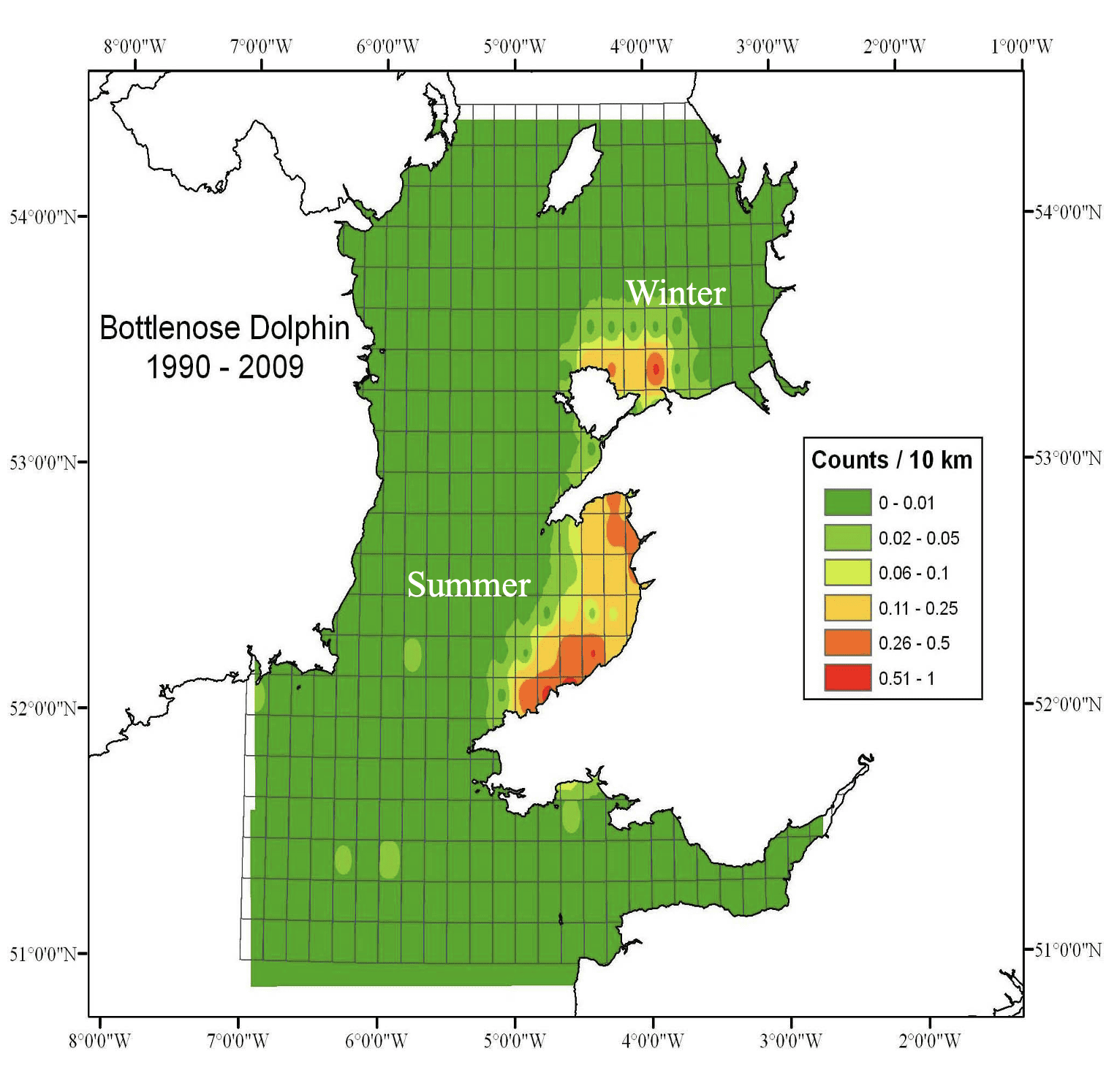
Bottlenose dolphin distribution from the Welsh Atlas (2012).
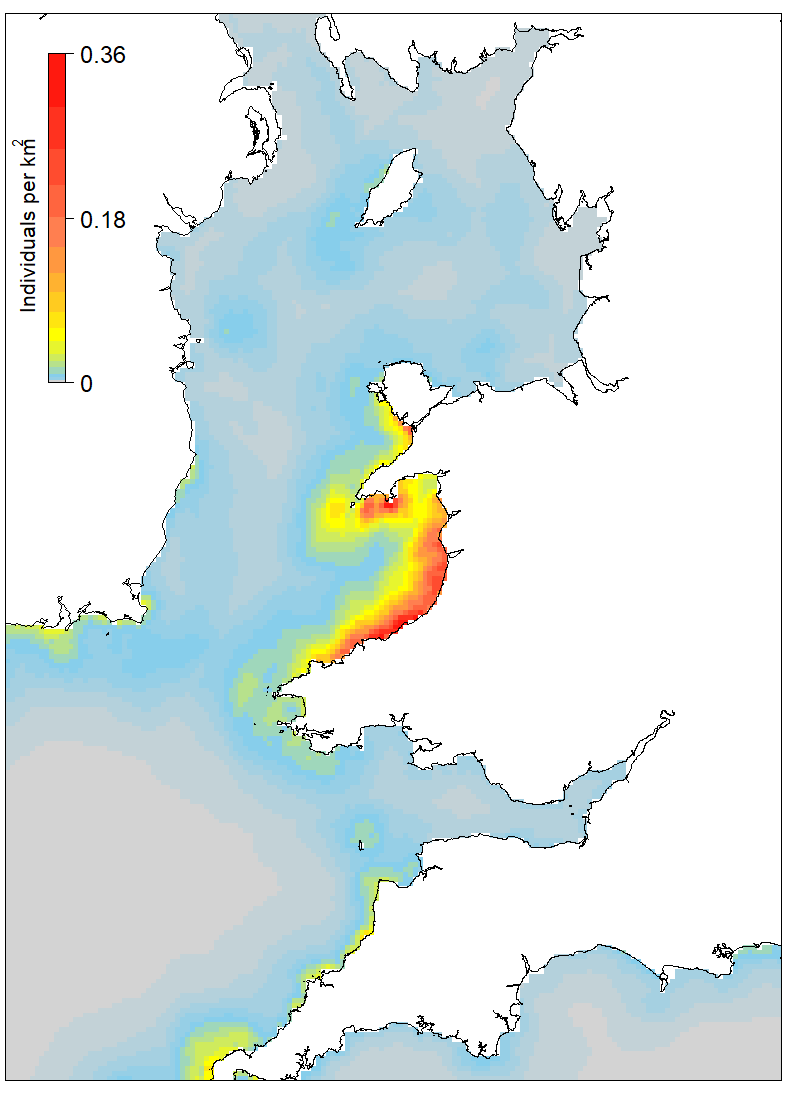
Bottlenose dolphin distribution from the Welsh Atlas (2024).
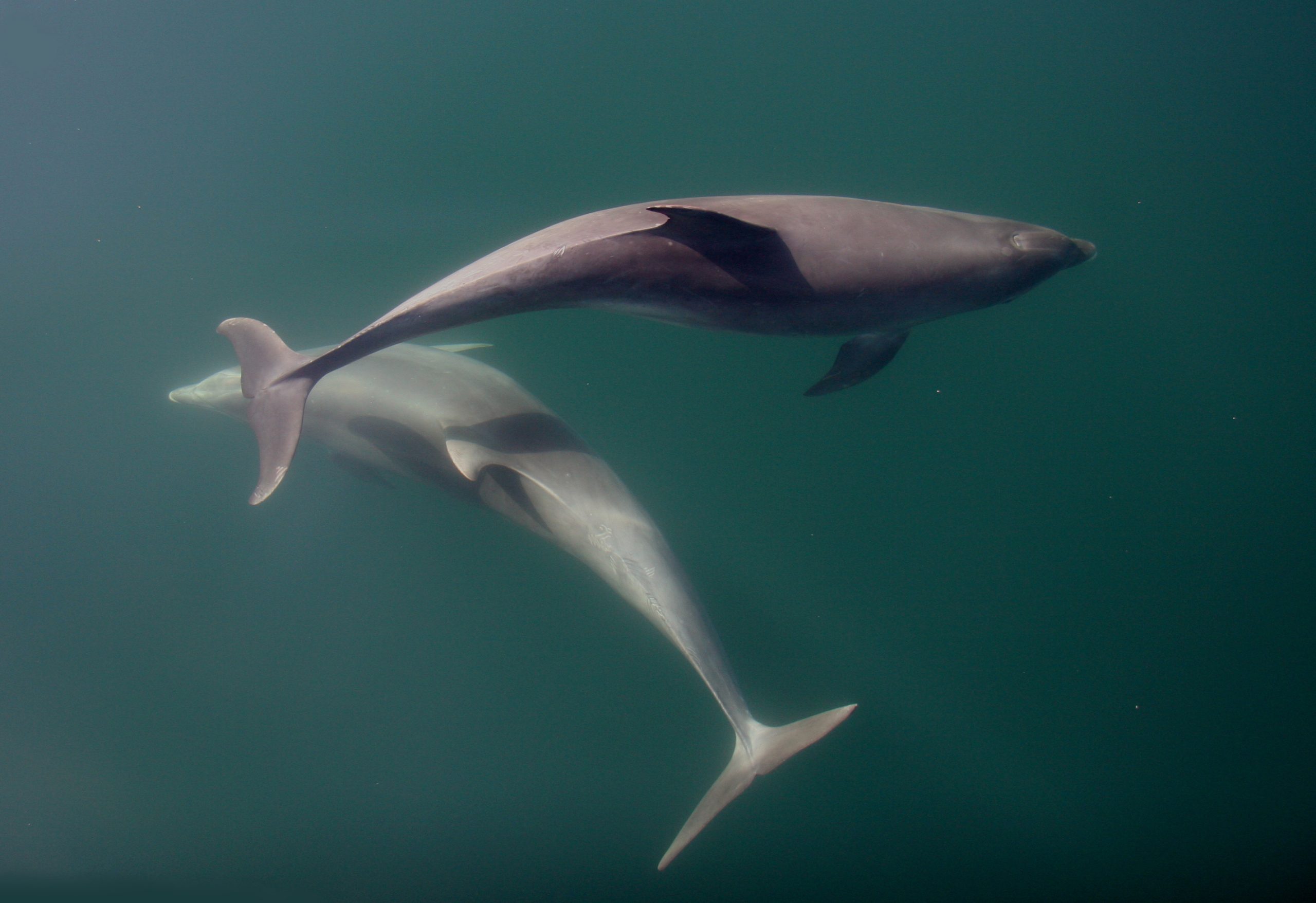
Bottlenose dolphins underwater
Photo credit: P Anderwald
Methods of Monitoring
Sea Watch Foundation uses a combination of land based surveys, opportunistic observations and dedicated boat based surveys to monitor the bottlenose dolphin population in Cardigan Bay.
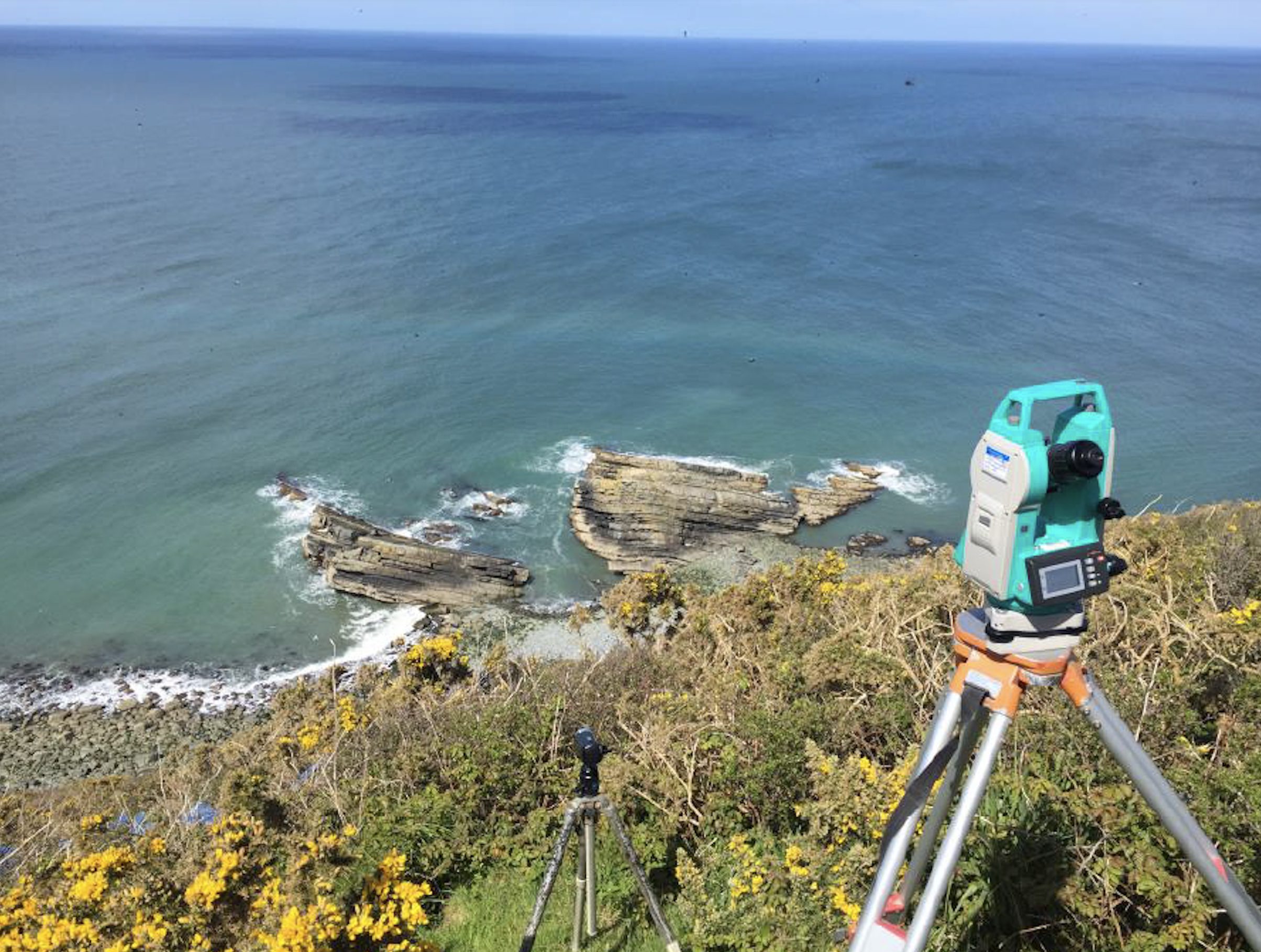
Land based watches are conducted every day from New Quay pier from April to October, running from 7AM to 9PM during the height of the summer. During the two hour watches, observers collect data on marine mammal sightings, environmental conditions, boat interactions and opportunistically attempt to acquire photographs for photo-identification. We are fortunate in New Quay that dolphins will often venture very close to the pier and some well marked animals can easily be identified at a glance by staff and some of our more experienced interns! These watches are always open to the public, expanding our citizen science action in the local area.
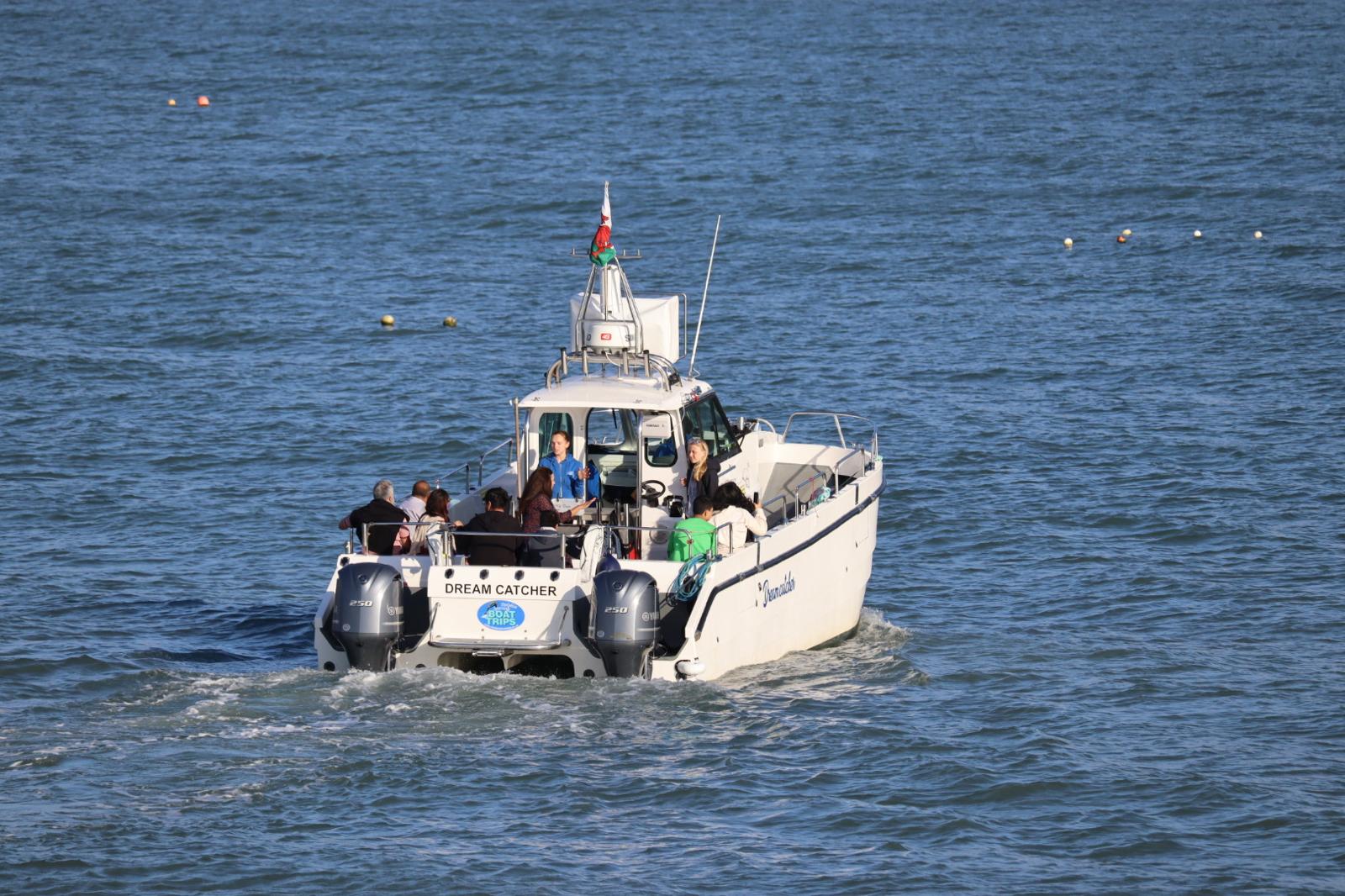
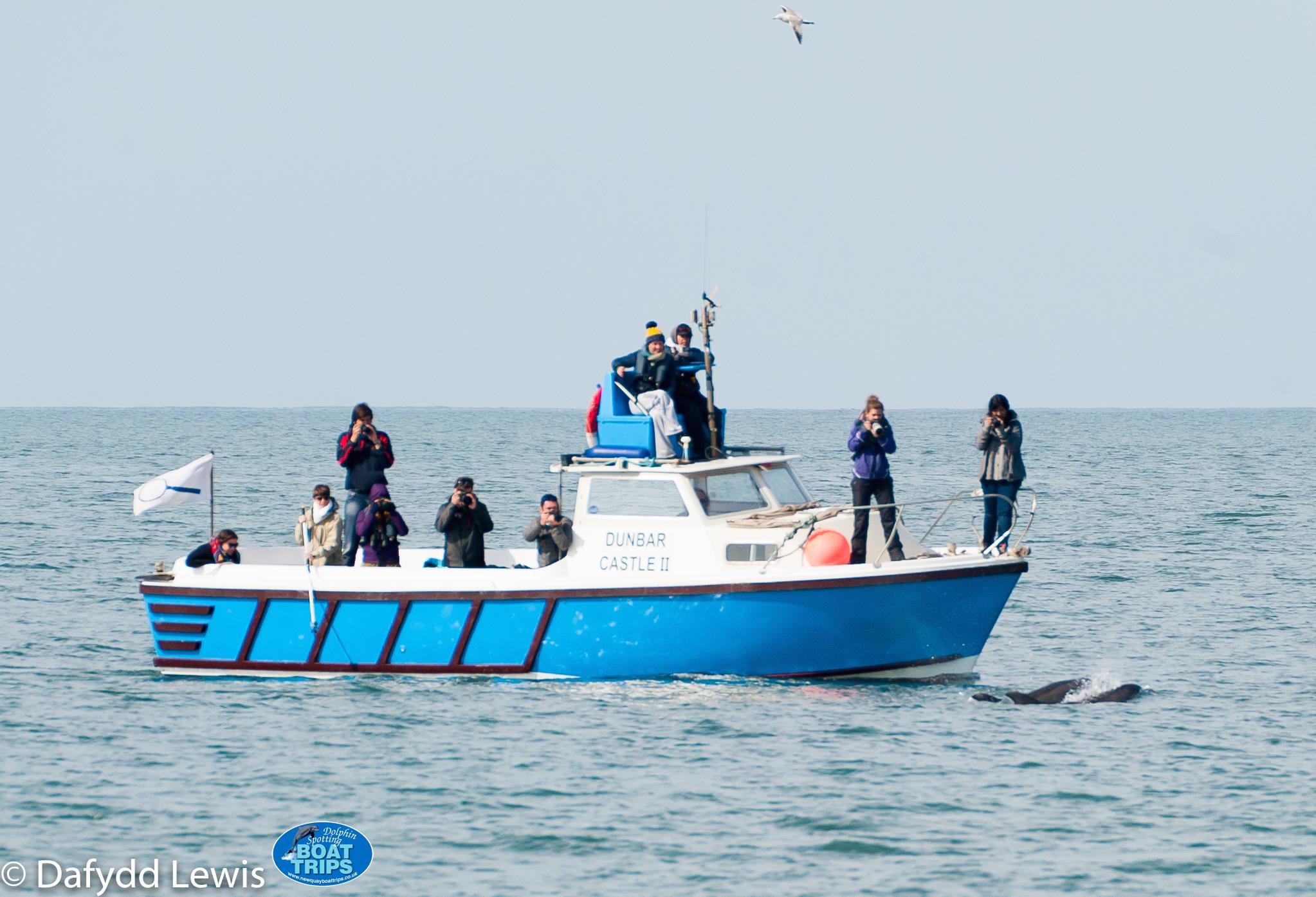
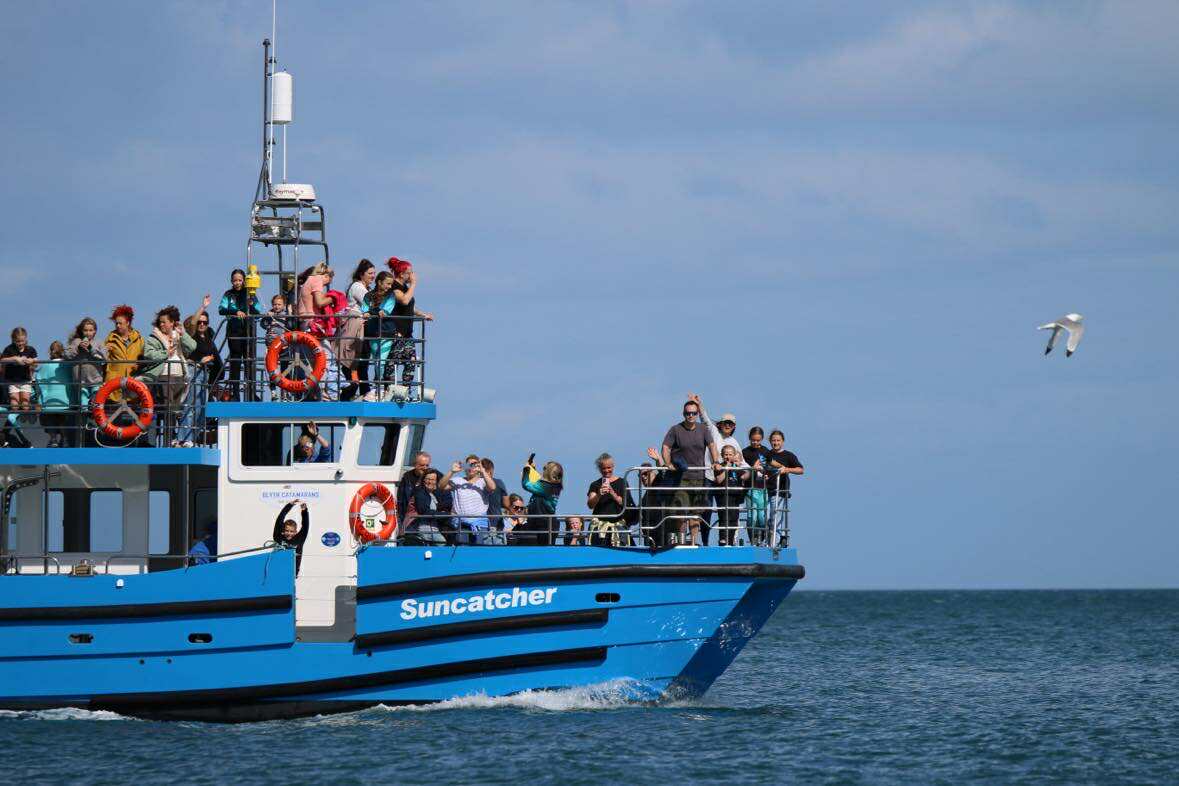
Sea Watch Foundation has been extremely fortunate to have received continued support from our local recommended boat operator, Dolphin Spotting Boat Trips, who allow our interns to join them on daily wildlife tours free of charge to opportunistically collect sightings and photo-identification data. While the majority of the data used in our analyses comes from dedicated line transect surveys, this supplemental data is invaluable, particularly in years where the weather is too poor for full day surveys.
Theodolite in action.
Dreamcatcher
Dolphin Spotting Boat Trips
Dunbar Castle II
Dolphin Spotting Boat Trips
Suncatcher
Dolphin Spotting Boat Trips
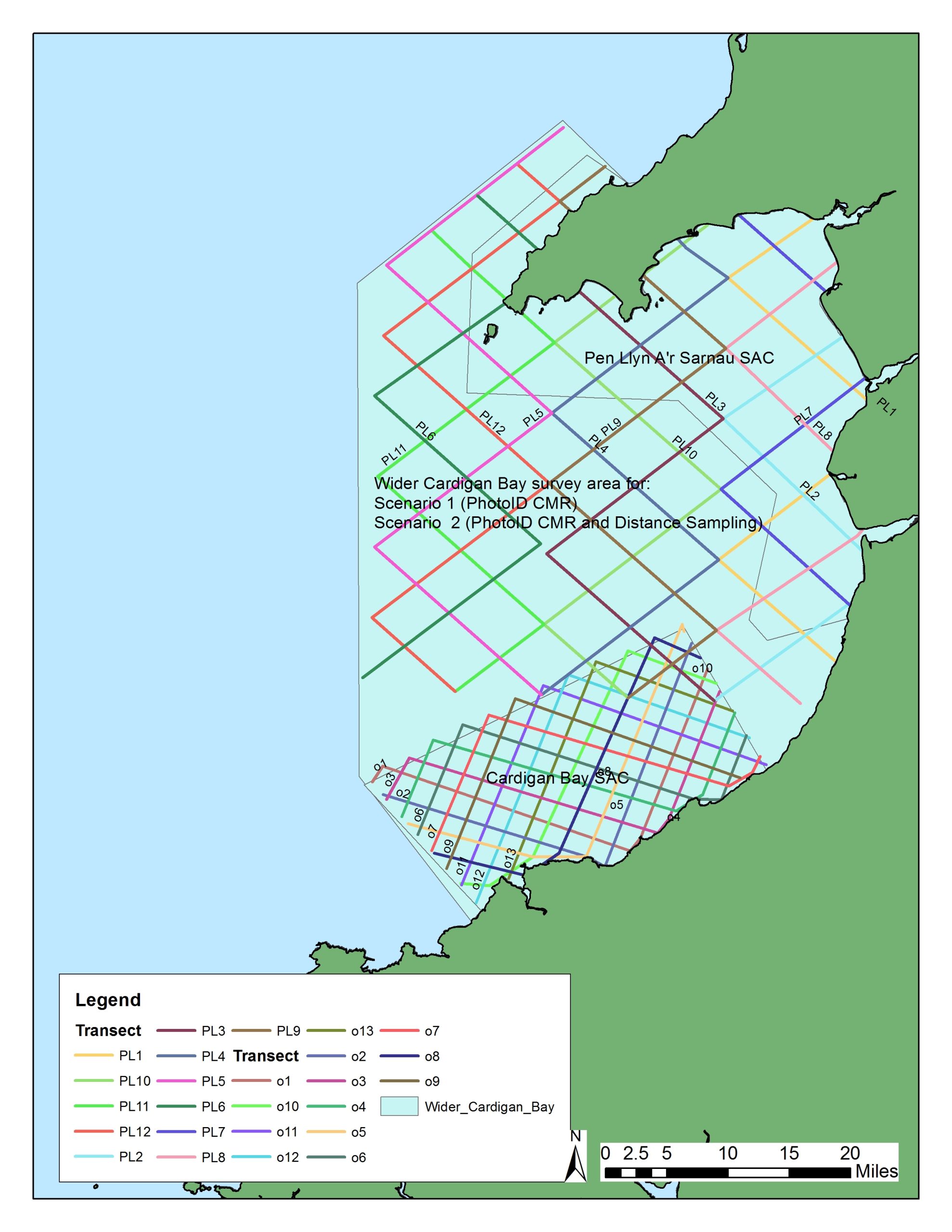
Cetacean monitoring wider Cardigan Bay transect lines.
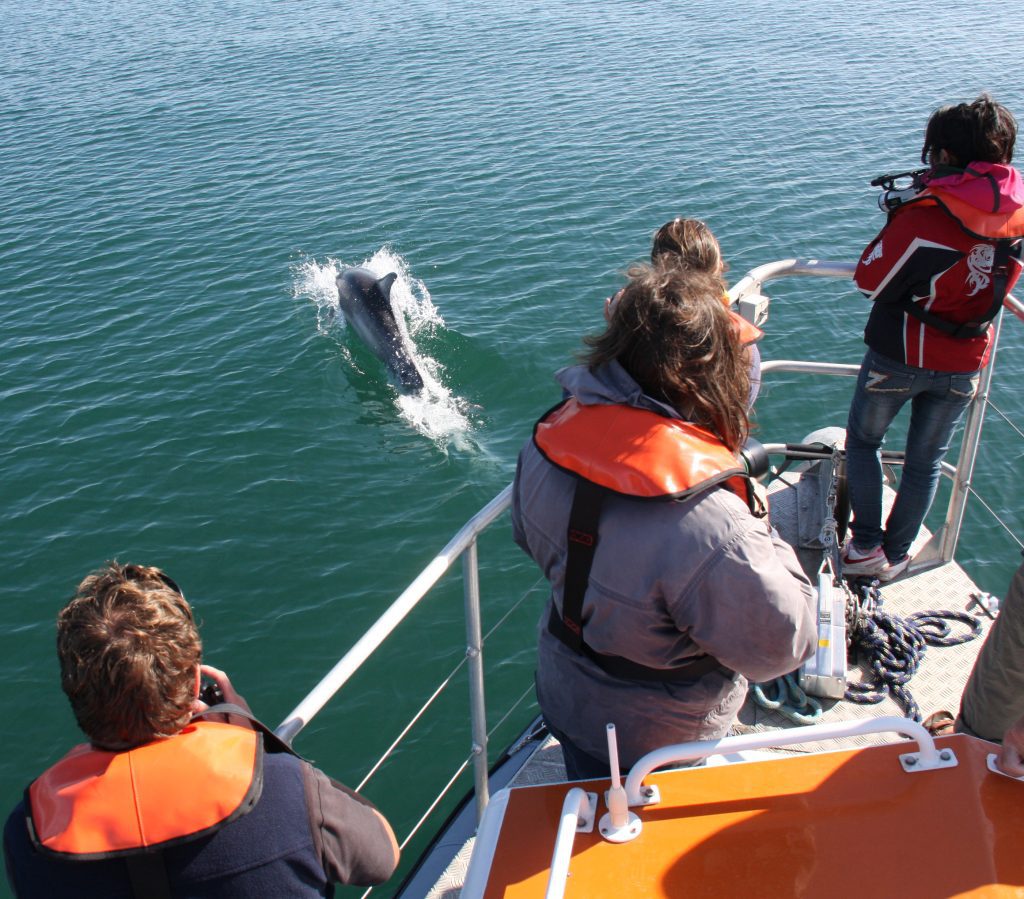
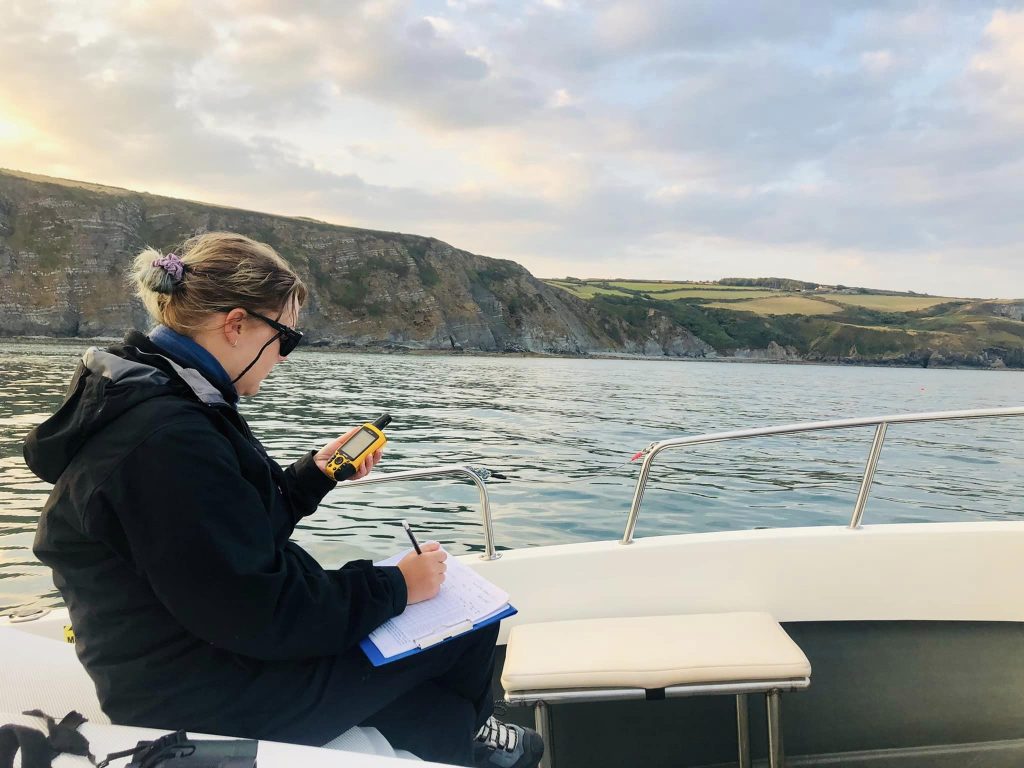
Line transect surveys are the key to Sea Watch Foundation monitoring effort with regular full day surveys being conducted from New Quay and Pwllheli, covering both SACs and beyond. During these surveys, the research team follows set routes, recording environmental conditions and sightings and only breaking away to take pictures of dolphins for photo-identification. Deliberately approaching dolphins requires a license which Sea Watch Foundation is granted by Natural Resources Wales for research purposes.
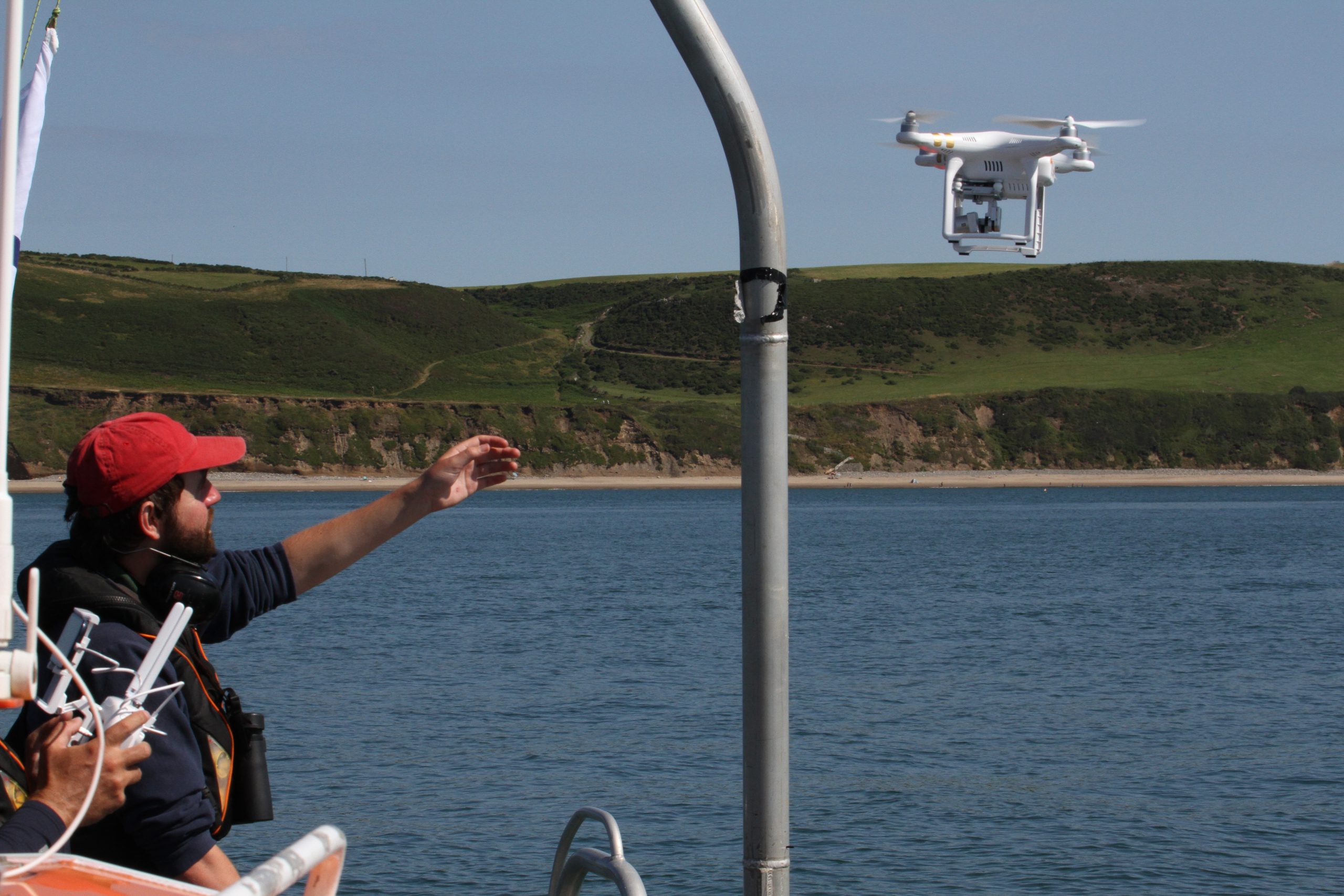
Drone in flight.
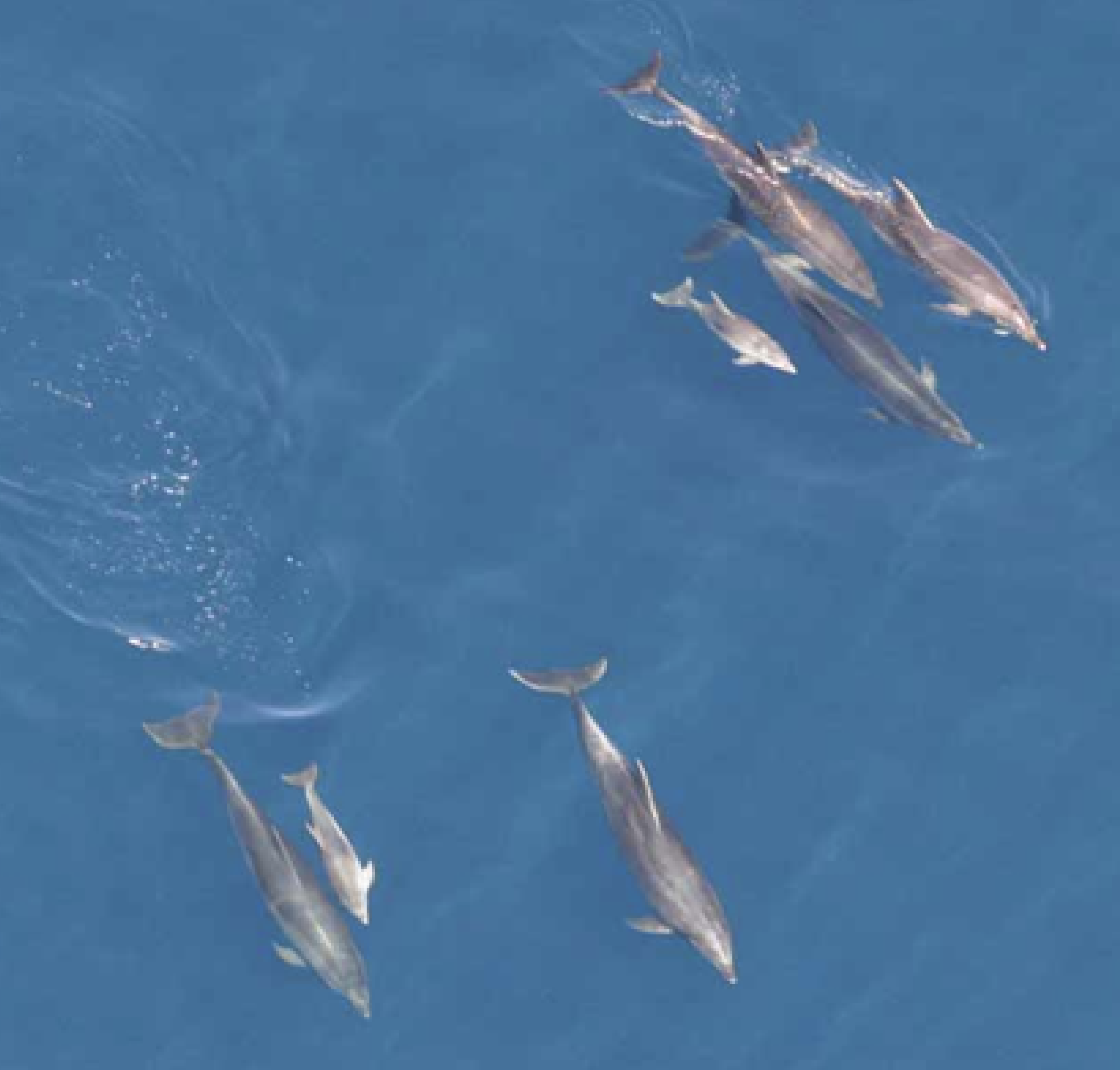
Drone photograph of bottlenose dolphins.
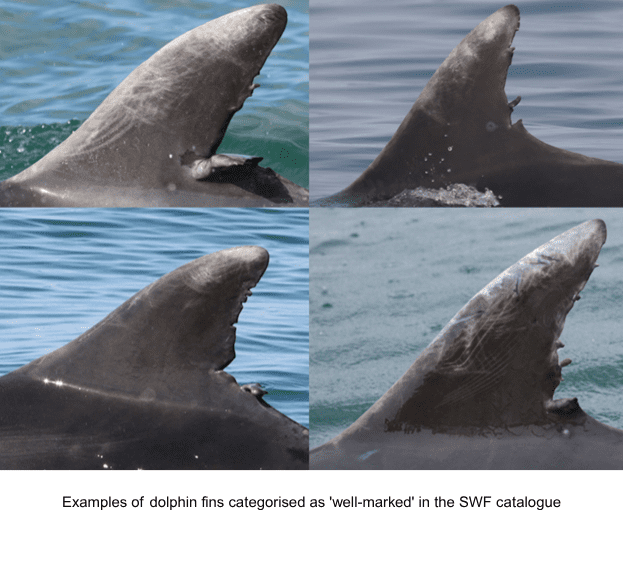
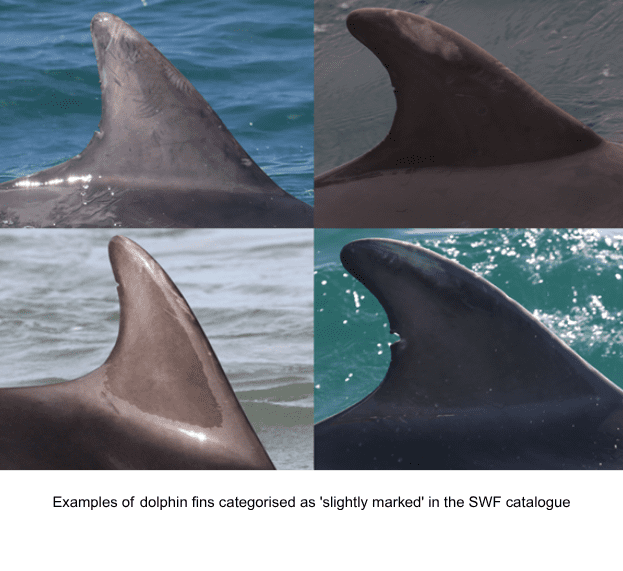
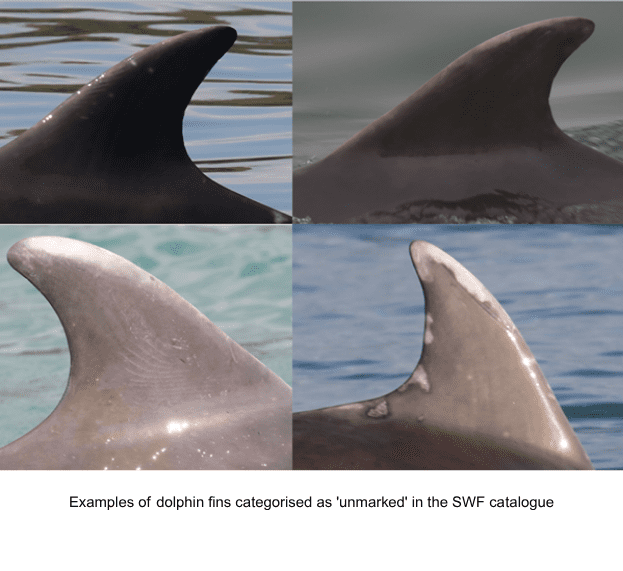
Photo-identification is a key part of the monitoring effort, utilising the nicks, notches and scratches that bottlenose dolphins acquire on their dorsal fins to identify individuals. The unique marks on the dorsal fins enable scientists to recognise individual animals by taking photographs of their fins and matching them against a catalogue of existing photographs of fins. Photo-ID images can provide us with information on abundance, assess population trends, define habitat use and loyalty to a site, define migration patterns, inform on social structures and allow us to study life history (such as birth and death rates). Sea Watch currently has a catalogue of approximately 400 (max. 500) bottlenose dolphins from the Irish Sea.
Photo-identification images are collected during land based watches as well as dedicated and opportunistic boat based surveys throughout the season.
Some of our more well known dolphins get assigned ‘nick names’ in addition to their more formal catalogue codes and are often known by these to our recommended boat operators.
We also have a catalogue for Risso’s dolphins in Welsh waters (primarily Pembrokeshire and Anglesey), and are working towards a catalogue for common dolphins.
Findings
Abundance
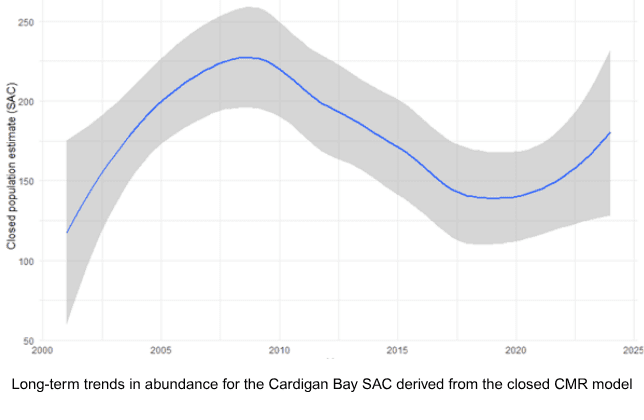
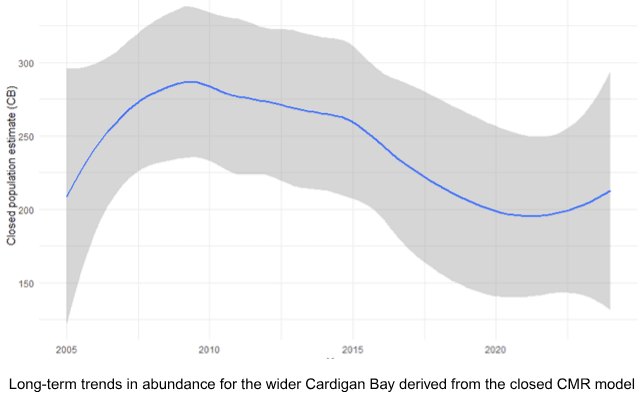
Abundance estimates have varied over the years, within Cardigan Bay SAC rising from around 120 in 2001 to a peak of c. 225 in 2008, followed by a decline to around 140 in 2020, since when there has been a corresponding increase. In 2024, we estimated a population of c. 230 individuals within this SAC whereas a smaller number inhabits the neighbouring Pen Llŷn a’r Sarnau SAC in northern Cardigan Bay.
Sightings rates are also higher within Cardigan Bay SAC than further north, although group sizes are consistently smaller. Sighting rates in Pen Llŷn a’r Sarnau SAC are about half those within Cardigan Bay SAC even though group sizes are larger. Within the Bay as a whole, group sizes tend to be larger at the start (April) and end (October) of the season.
Approximately 400 individuals have been identified in the Cardigan Bay catalogue over the last 25 years. At any one time, the Welsh population is estimated to vary between 200 and 300 individuals.
Home ranges and residency
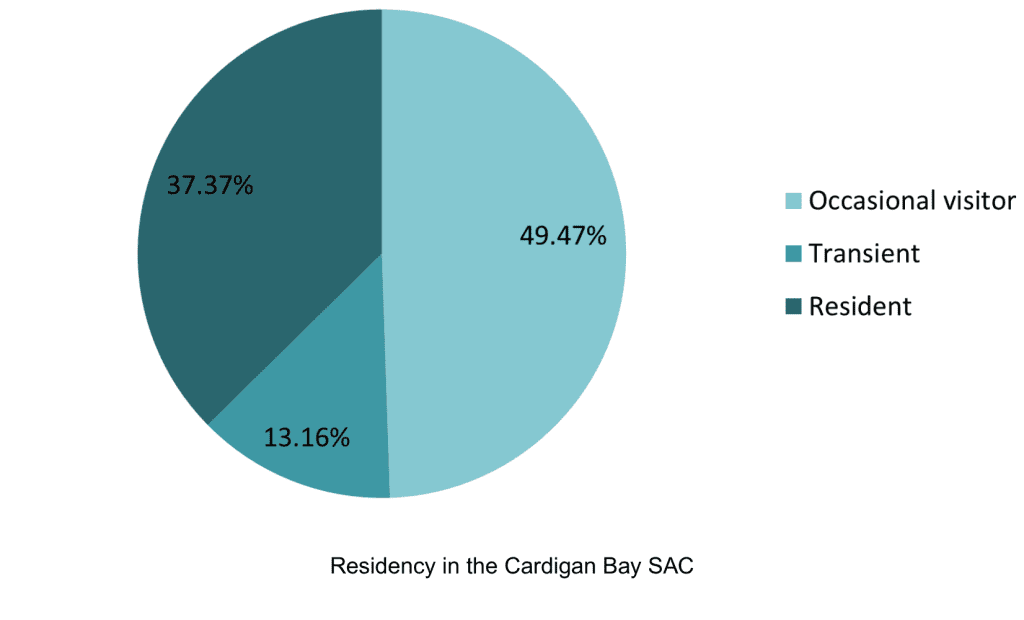
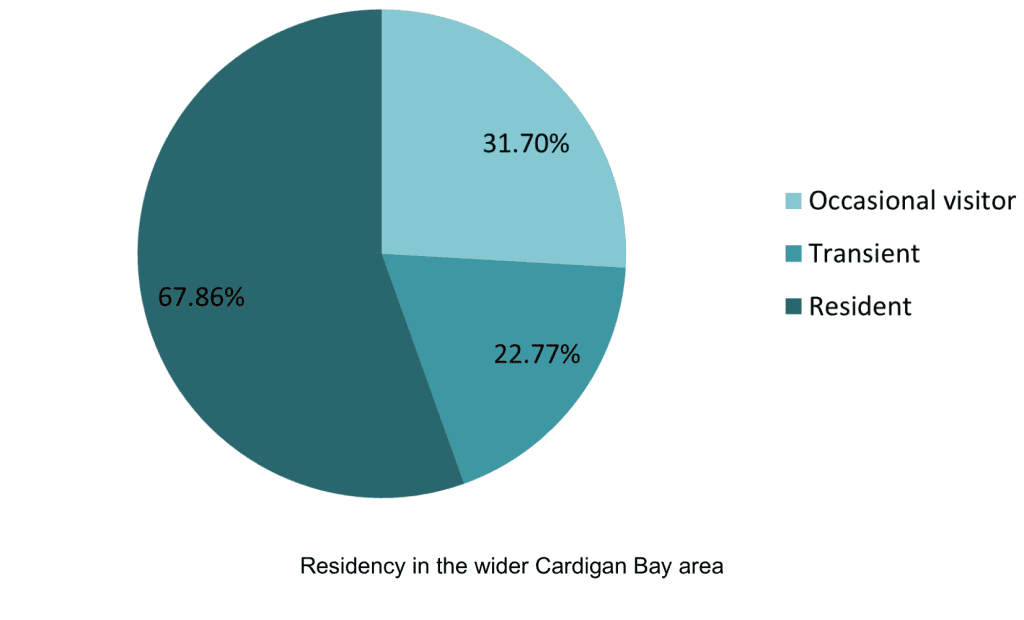
Cardigan Bay bottlenose dolphins are considered to be semi-resident with a proportion of the population remaining in the area throughout the year, but others leaving the area over the winter months.
Different individuals show preferences within Cardigan Bay, some animals favouring Cardigan Bay SAC and rarely venturing north while others are sighted regularly throughout Cardigan Bay as well as being seen in Caernarfon Bay and North Wales.
The Cardigan Bay population comprises a mixture of residents, occasional visitors and transient individuals, the majority (ca. 60%) being classed as residents. Animals that have been recorded over more than seven years are considered residents, whereas occasional visitors are individuals that are typically sighted only every one or two years, and transients are animals that have only been recorded once or twice throughout the length of the project.
Comparisons of the Cardigan Bay Photo-ID catalogue to other photo-identification catalogues from different parts of the UK have so far only resulted in confirmed matches with the Isle of Man. Matches with other catalogues cannot be ruled out and there are a number of potential matches with other catalogues such as Northern Ireland but these require further pictures to confirm. We are expanding coverage to North Wales through the Bodorgan Project and have confirmed that Cardigan Bay dolphins do use the Pen Llŷn a’r Sarnau region as well as around Anglesey.
Social structure and behaviour
Bottlenose dolphins in Cardigan Bay live in a fission-fusion society which is typical for this species. A fission-fusion society is characterised by a dynamic group composition that changes with time and as the animals move through their environment and engage in different
activities, for example, individuals may form large groups while foraging on shoaling fish or undertaking long-distance movements. They may split into smaller subgroups to forage on more solitary fish or when mothers are nursing small young.
Long-term associations between individuals can persist between pairs of animals with some level of male-male alliances being observed within Cardigan Bay, although they are not as strong or persistent as in other parts of the world, or even elsewhere in the UK. Male-male alliances are long term associations between two male dolphins for the purpose of facilitating mating. However, male-male alliances were not the only long-term associations that may be observed with some of the strongest associations in recent years being recorded between two females, particularly one female named Ghost and another one called Akira.
There is some separation between sexes which is likely due to the fact that adult male bottlenose dolphins can present a threat to bottlenose dolphin calves, with some known incidents of infanticide occurring in Cardigan Bay.
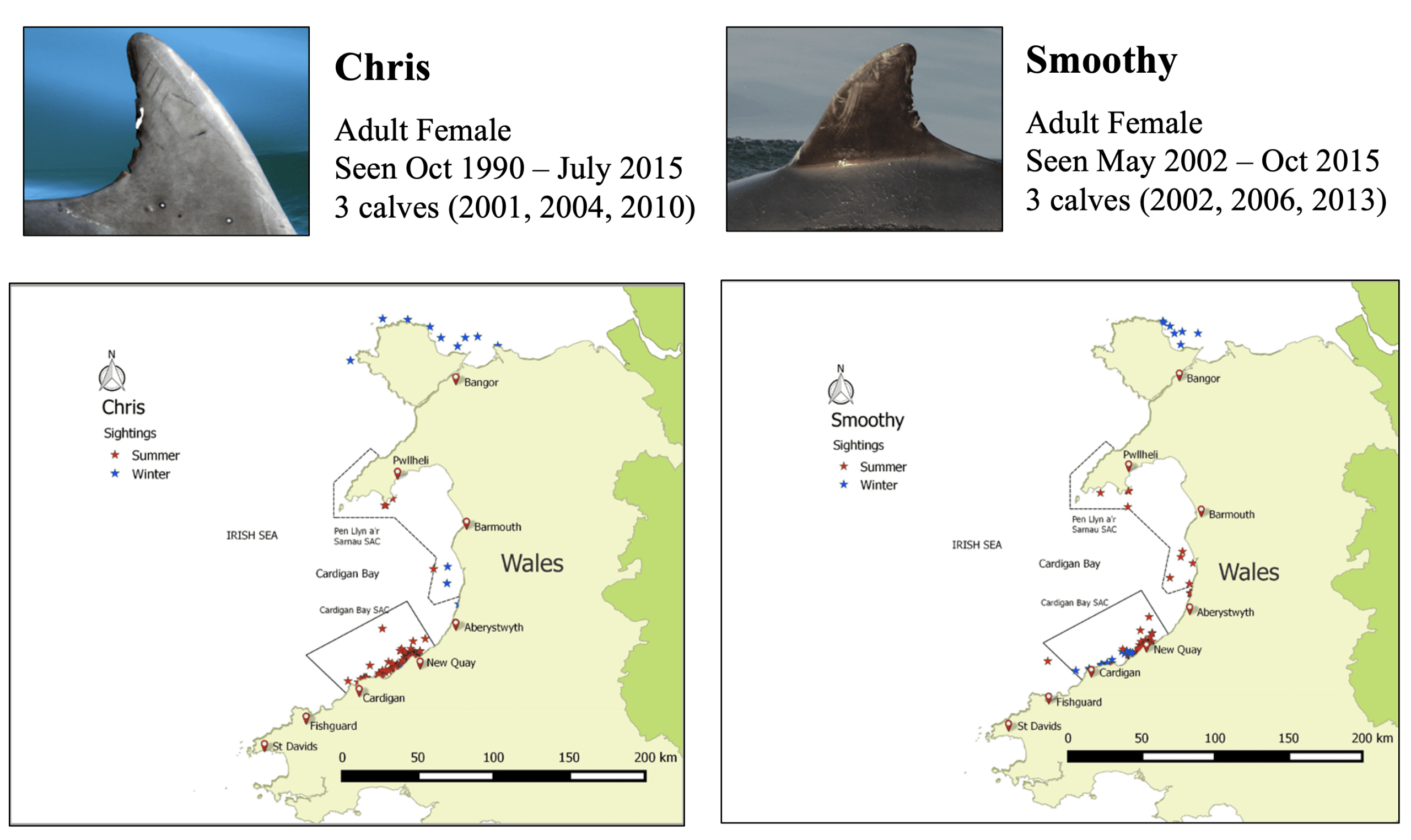
Mature females give birth every 2 to 4 years, calves typically staying with their mothers for three years before becoming independent, although in some cases this can be longer, the longest recorded period being 7 years for a dolphin named Tigger and his mother Chris. Little did we anticipate this when our Adopt a Dolphin Administrator, Kirsten, wrote a book featuring Chris and Tigger, called “The Magic Dolphin”.
The average group size across Cardigan Bay is six individuals, with smaller groups occurring in Cardigan Bay SAC than in Pen Llŷn a’r Sarnau SAC and group sizes generally showing a slight increase at the start and the end of the season, possibly in relation to migratory movements in and out of the Bay. In addition to this, group sizes are larger in areas of unregulated boat traffic with fewer persistent bonds showing between individuals, suggesting that boat traffic may be directly impacting bottlenose dolphin social structure in Cardigan Bay.
Bottlenose dolphin movements of females “Chris” and “Smoothy”.
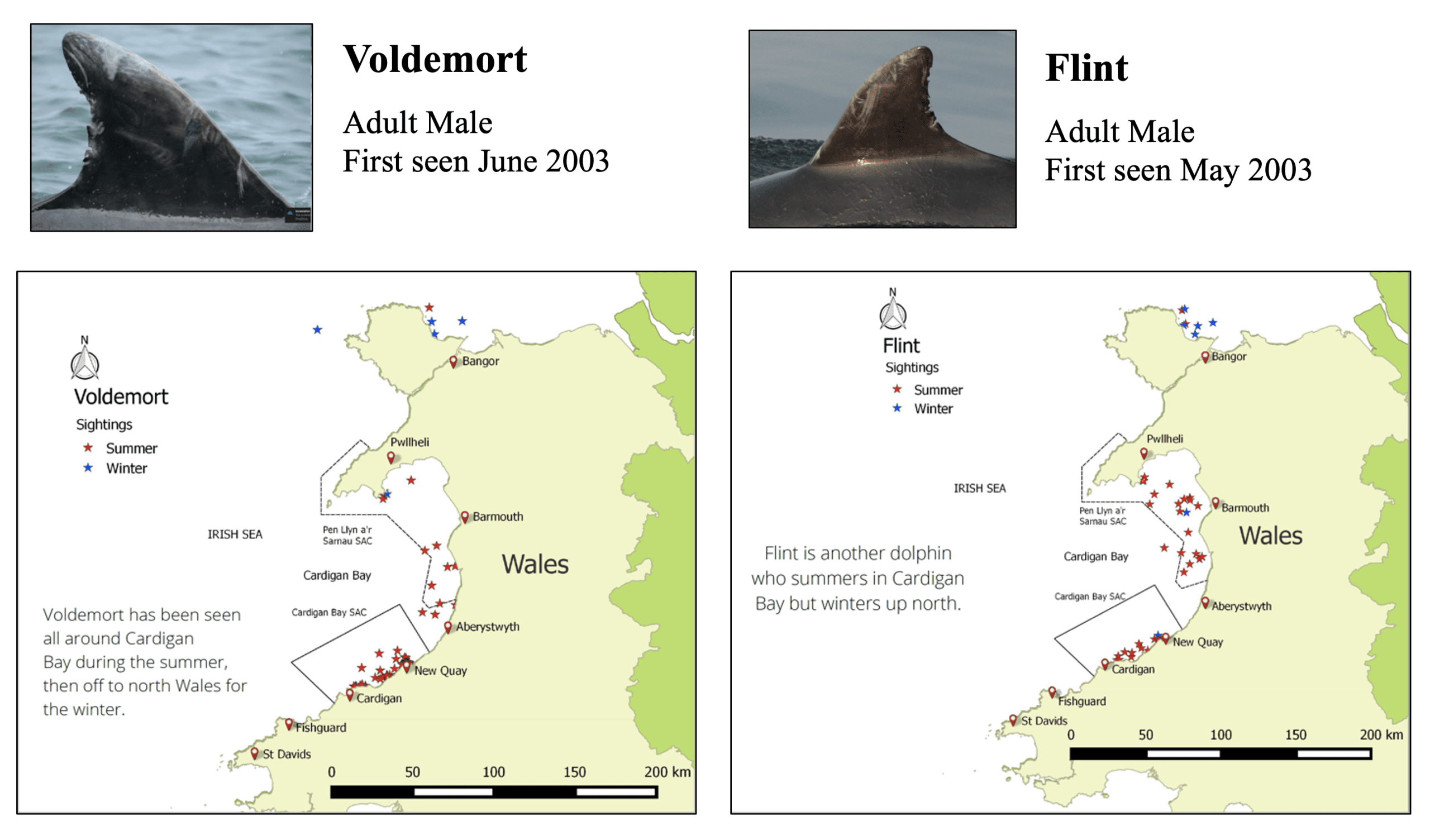
Bottlenose dolphin movements of males “Voldemort” and “Flint”.
Conservation pressures
Bottlenose dolphins can face a wide variety of human pressures, but in Cardigan Bay, the two main ones are most likely to be disturbance from recreational vessels and damage to the seabed on those occasions when there has been intensive scallop dredging in the area.
Internships
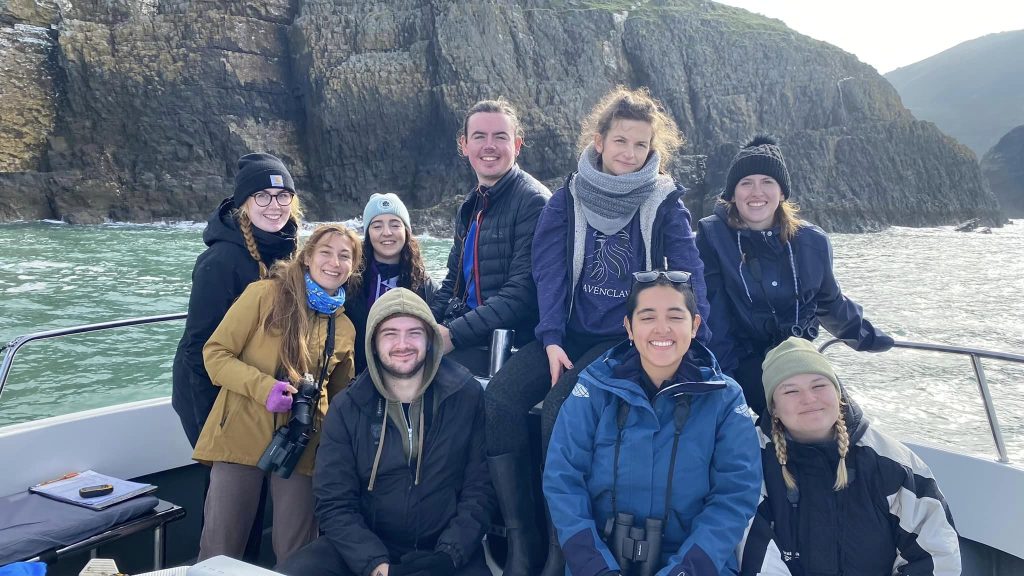
The Cardigan Bay Monitoring Project has a long running internship programme, which is essential to its success. Interns attend from 7 to 8 weeks over the summer and assist Sea Watch Foundation in collecting vital data, in return learning valuable skills and actively contributing to an established conservation project. Interns are involved in every aspect of field work, collecting data during land and boat based surveys, as well as participating in public awareness events, entering data and learning how to conduct photo-identification matching in the office. We are immensely grateful for all of our interns that have worked with us throughout the years and would like to thank them for their commitment and hard work. It is wonderful to see so many of them succeeding in their chosen career – and sometimes returning to New Quay to work with Sea Watch Foundation as new staff members!
Cardigan Bay Publications
Baines, M.E. and Evans, P.G.H. (2012) Atlas of the Marine Mammals of Wales. 2nd Edition. CCW Monitoring Report No. 68. 143pp.
Evans, P.G.H. (2008) The bottlenose dolphins of Cardigan Bay. Natur Cymru, 28: 4-9.
Evans, P.G.H. (2018) Marine protected areas and marine spatial planning for the benefit of marine mammals. Journal of the Marine Biological Association of the United Kingdom, 98(5): 973-976. doi:10.1017/S0025315418000334
Evans, P.G.H. and Cordes, L. (2022) Review of population modelling approaches for marine mammals: recommendations for regulatory applications. NRW Evidence Report No. 128pp.
Evans, P.G.H. and Waggitt, J.J. (2024) Modelled distributions and abundance of cetaceans and seabirds of Wales and surrounding waters. NRW Evidence Report No. 646. 354pp. https://cdn.cyfoethnaturiol.cymru/media/696779/modelled-distributions-and-abundance-of-cetaceans-and-seabirds-of-wales-and-surrounding-waters.pdf
Feingold, D. and Evans, P.G.H. (2012) Sea Watch Foundation Welsh Bottlenose Dolphin Photo-Identification Catalogue 2011. CCW Marine Monitoring Report No: 97: 1-262.
Feingold, D. and Evans, P.G.H. (2014a) Bottlenose Dolphin and Harbour Porpoise Monitoring in Cardigan Bay and Pen Llyn a’r Sarnau Special Areas of Conservation 2011-2013. Natural Resources Wales Evidence Report Series No. 4. 124pp.
Isojunno, S., Matthiopoulos, J., and Evans, P.G.H. (2012) Harbour porpoise habitat preferences: Robust spatio-temporal inferences from opportunistic data. Marine Ecology Progress Series, 448: 155-170.
Koroza, A. and Evans, P.G.H. (2022) Bottlenose dolphin responses to boat traffic affected by boat characteristics and degree of compliance to code of conduct. Sustainability, 14;https://doi.org/10.3390/su14095185
Liret, C., Baines, M.E., Evans, P.G.H., Hammond, P.S. and Wilson, B. (2006) Atlantic bottlenose dolphins: conservation and management. Oceanopolis, Brest, France. 56pp.
Lohrengel, K., Afeltra, C., and Evans, P.G.H. (2022) Bubble Bursts, a Potential Foraging Strategy for Bottlenose Dolphins (Tursiops truncatus) in Cardigan Bay. Aquatic Mammals, 48(6): 733-736.
Lohrengel, K., Waggitt, J., Baines, M.E. and Evans, P.G.H. (2025) Bottlenose dolphin monitoring in Cardigan Bay and Pen Llŷn a’r Sarnau Special Areas of Conservation, 2022-24. Natural Resources Wales Evidence Report 858. 126pp.
Lohrengel, K., Waggitt, J., Baines, M.E. and Evans, P.G.H. (2023) Bottlenose dolphin monitoring in Cardigan Bay and Pen Llŷn a’r Sarnau Special Areas of Conservation: Interim Report 2023. Natural Resources Wales, Bangor. 102pp.
Nuuttila, H., Thomas, L., Hiddink, J., Meier, R., Turner, J., Bennell, J., Tregenza, N. and Evans, P.G.H. (2013) Acoustic detection probability of bottlenose dolphins, Tursiops truncatus, with static acoustic dataloggers in Cardigan Bay, Wales. Journal of the Acoustical Society of America, 134(3): 2596-2609.
Nuuttila, H.K., Courtene-Jones, W., Baulch, S., Simon, M., and Evans, P.G.H. (2017) Don’t forget the porpoise: Acoustic monitoring reveals fine scale temporal variation between bottlenose dolphin and harbour porpoise in Cardigan Bay SAC. Marine Biology, 164: 50. doi:10.1007/s00227-017-3081-5.
Nuuttila, H.K., Meier, R., Evans, P.G.H., Turner, J.R., Bennell, J.D., and Hiddink, J.G. (2013) Identifying foraging behaviour of wild bottlenose dolphins (Tursiops truncatus) and harbour porpoises (Phocoena phocoena) with static acoustic dataloggers. Aquatic Mammals, 39(2): DOI 10.1578/AM.39.2.2013.
Pesante, G. and Evans, P.G.H. (2008) Sea Watch Foundation Welsh Bottlenose Dolphin Photo-identification Catalogue. CCW Marine Monitoring Report No. 66, i-xii, 1-204.
Pesante, G., Evans, P.G.H., Anderwald, P., Powell, D. and McMath, M. (2008) Connectivity of bottlenose dolphins in Wales: North Wales photo-monitoring. CCW Marine Monitoring Report No. 62, 1-42.
Pesante, G., Evans, P.G.H., Baines, M.E., and McMath, M. (2008) Abundance and Life History Parameters of Bottlenose Dolphin in Cardigan Bay: Monitoring 2005-2007. CCW Marine Monitoring Report No. 61, 1-75.
Pierpoint, C., Allan, L., Arnold, H., Evans, P., Perry, S., Wilberforce, L., and Baxter, J. (2009) Monitoring important coastal sites for bottlenose dolphin in Cardigan Bay, UK. Journal of the Marine Biological Association of the United Kingdom, 89: 1033-1043.
Simon, M., Nuuttila, H., Reyes-Zamudio, M.M., Ugarte, F., Verfuß, U., and Evans, P.G.H. (2010) Passive acoustic monitoring of bottlenose dolphin and harbour porpoise with implications for habitat use and partitioning. Journal of the Marine Biological Association of the United Kingdom, 90: 1539-1546.
Stylos, A., Akritopoulou, E., Bertulli, C.G., Lohrengel, K., McGinty, N., Moutopoulos, D.K., and Evans, P.G.H. (2022) Prevalence and spatio-temporal variation of epidermal conditions, deformities and injuries in common bottlenose dolphins (Tursiops truncatus) in Welsh waters. Mammalian Biology, https://doi.org/10.1007/s42991-022-00300-z.
Vergara-Peña, A. (2019) The Effects of Marine Tourism on Bottlenose Dolphins in Cardigan Bay. PhD thesis, Bangor University. 244pp.