
23rd May to 31st May 2026
Events to be announced shortly…
Orca Watch is a nine-day event held annually, with its central hub based in John o’ Groats. However, the scope of the event extends far beyond this location, with observation points set up across Caithness, North Sutherland, and the Orkney and Shetland Islands…
These regions are particularly significant due to their proximity to the Pentland Firth, a key area for orca sightings during their seasonal movements closer to shore. The event typically takes place at the end of May or the beginning of June, coinciding with the period when orcas are most likely to be seen in these waters as they hunt seals and other prey. Throughout the nine days, Orca Watch combines dedicated cetacean monitoring with public engagement, offering a unique mix of citizen science and educational activities. Each year, a carefully planned schedule of watches is organised at designated coastal sites, where volunteers are stationed to collect data on all cetacean species present in the area. This includes not only orcas but also harbour porpoises, minke whales, dolphins, and occasionally larger species such as fin and humpback whales. The aim is to gather as much data as possible to help scientists better understand the status, distribution, and behaviour of these species in northern Scotland.
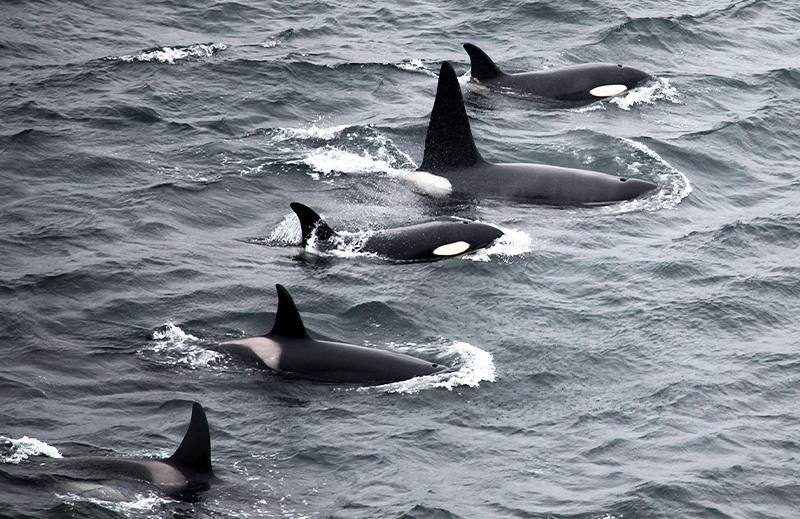
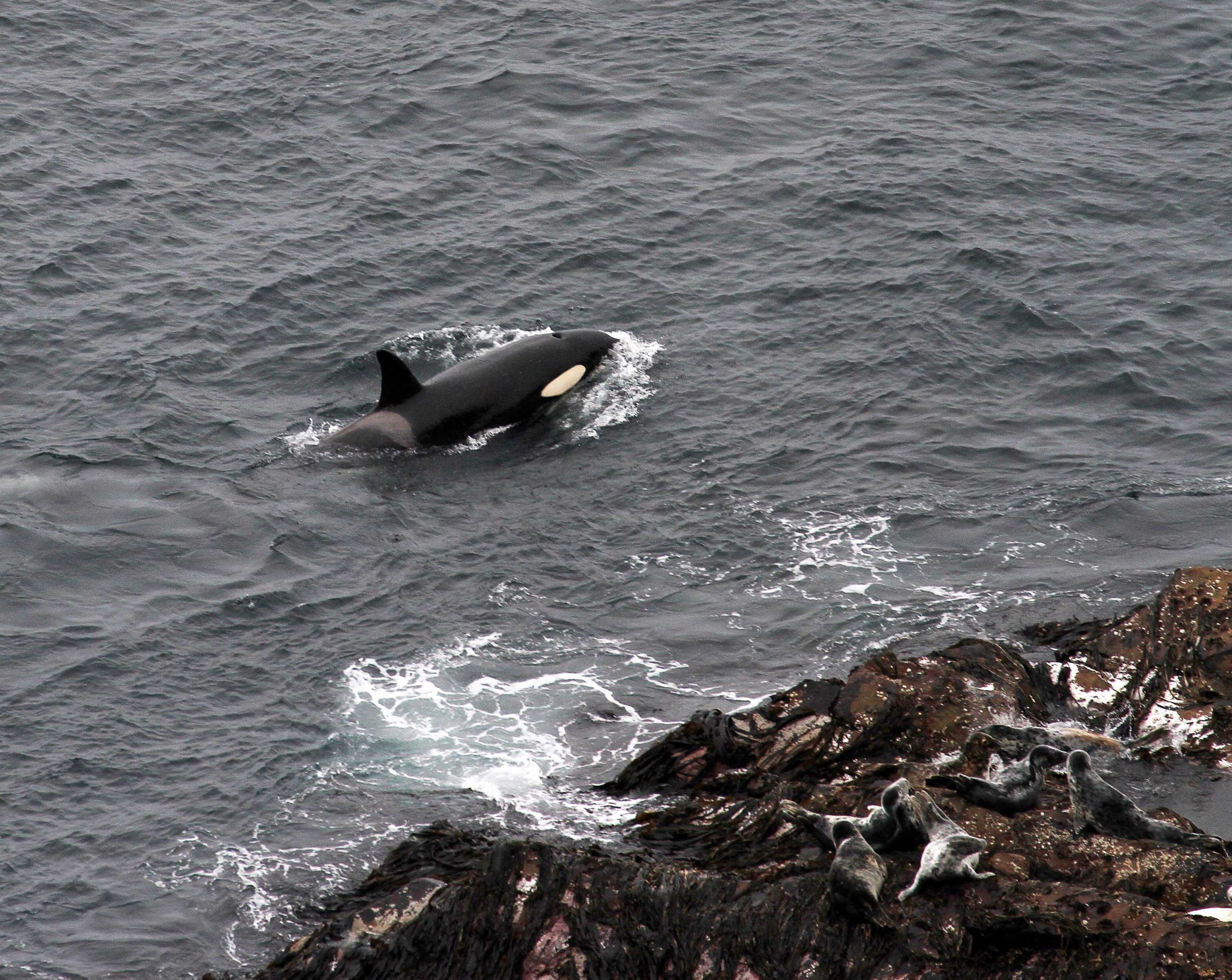
Killer Whales
Photo credit: Colin Bird
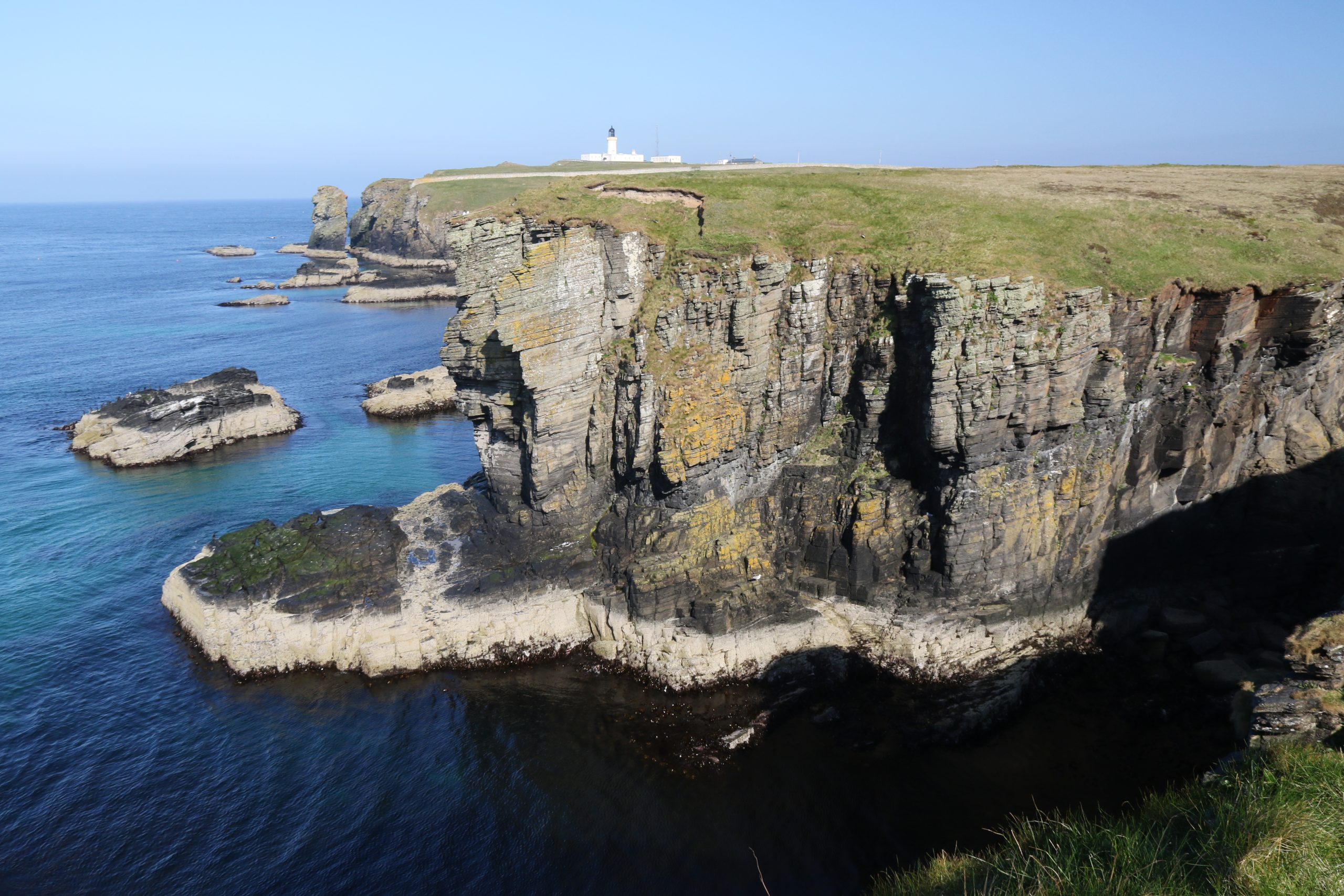
Orca Watch survey point
Photo credit: Peter Evans
History of Orca Watch
Our former Regional Co-ordinator for northeast Scotland, Colin Bird, started organising this annual national recording event in 2012 and we have continued ever since …
The idea for the event originated from the possibility of underwater tidal turbines being installed in the Pentland Firth. This possibility initiated the first seasonal watch to gather information on how killer whales used this area and what might be the consequences of such an installation. Since then, the event has increased public awareness of how and when orcas utilise waters of the Pentland Firth during the summer months. Orca Watch also highlights the need for conservation, protection and continued research into the status, distribution, and abundance of this iconic species around the UK. Killer whales (orcas) are rare in the British Isles but can be observed mainly in northern Britain, around the Hebrides and the Northern Isles (Orkney and Shetland). Those from the Northern Isles derive from a population whose range extends across the seas between Norway, Iceland and the Faroes, visiting the northernmost North Sea in the winter to feed upon herring or mackerel, and then coming closer to shore particularly between May and August, where they can be observed chasing seals. Nowadays, some can be seen in the region at any time of year.
FAQs
Below is a list of FAQs about Orca Watch that will help give an idea about what to expect if you are planning to attend, interested in more information about what happens during the event, or would like to know what you might see in the North of Scotland.
What is Orca Watch?
Orca Watch is an annual citizen science event organised by the Sea Watch Foundation, where volunteers and scientists collaborate to observe and record sightings of orcas and other cetaceans around the coast of northern Scotland. This event raises awareness of cetacean conservation and contributes to scientific research on their movements, behaviour, and population trends.
Why did Orca Watch start?
Orca Watch was started by the Sea Watch Foundation, in collaboration with our former Regional Co-ordinator Colin Bird, in 2012 to monitor the movements and presence of orcas and other cetaceans in the waters around northern Scotland. The event originated from concerns over the potential installation of underwater turbines in the Pentland Firth. The first seasonal watch was organised to gather crucial information on how orca used the area and to assess the potential impacts of such an installation on orca populations. Since then, Orca Watch has grown in scope and public participation, raising awareness of how and when orcas utilise the waters of the Pentland Firth during the summer months. The event now serves as a vital platform for highlighting the need for continued conservation, protection, and research into the status, distribution, and abundance of orcas around the UK.
When does Orca Watch take place?
Official Dates: Saturday 23rd to Sunday 31st May 2026
Orca Watch typically takes place in late May or early June each year. The event lasts for nine days. Check our social media and website for regular updates!
Where does Orca Watch take place?
Orca Watch primarily takes place along the northern coast of Scotland, particularly around the Pentland Firth, which is a key area for observing orcas during their seasonal movements closer to shore. In addition to this, observations are also made from the Orkney and Shetland Islands, where orcas are frequently sighted during the summer months. These areas are important for tracking the movement of orcas as they hunt seals and follow other prey along the coastlines of northern Scotland.
The ‘Orca Hub’ is situated in John o’ Groats, with information and merchandise available inside.
What might I see?
During Orca Watch, the main attraction is, of course, orcas (killer whales), but you may also spot a variety of other marine wildlife. Common sightings include harbour porpoises, minke whales, and dolphins such as Risso’s, white-beaked and common dolphins. Seals and a wide range of seabirds, including puffins, gannets, and razorbills, are also frequently seen in the area. Additionally, there’s the occasional chance to spot larger whale species like fin and humpback whales, making Orca Watch a fantastic opportunity to observe a broad array of marine life in northern Scotland.
How can I get involved?
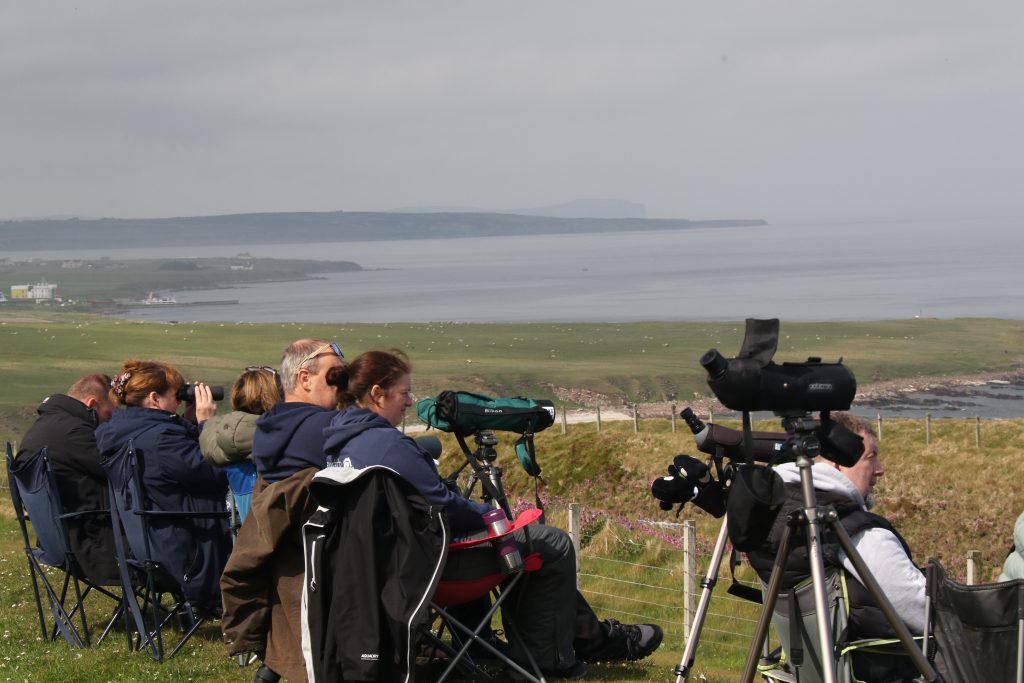
You can get involved in Orca Watch by participating as a citizen scientist, and one of the best ways to contribute is through the Sea Watch Foundation’s volunteer scheme. Volunteers are provided with training to ensure they can accurately monitor and report sightings of orcas and other cetaceans. You’ll be positioned at designated observation sites along the northern coast of Scotland, including the Pentland Firth, Orkney, and Shetland, where you’ll gather valuable data on cetacean movements and behaviour.
Applications for 2026 have now closed.
Are there any boat-based surveys?
Orca Watch 2026 is partnering with Pentland Ferries, allowing our volunteers to conduct surveys whilst travelling from Gills Bay on the mainland to St Margaret’s Hope in Orkney.
Do I need to buy a ticket or register to attend?
While the main Orca Watch event is open to the public and free to attend, there are some ticketed events throughout the week, such as Evenings of Talks and workshops, where experts discuss cetacean conservation, research, and other marine topics. These are fantastic opportunities to deepen your knowledge and engage with the wider community.
For those interested in volunteering, you will need to apply through the Sea Watch Foundation’s volunteer scheme, where there is a small fee to pay. Volunteers play an essential role in monitoring and reporting sightings, and training is provided.
APPLICATIONS FOR 2026 HAVE NOW CLOSED.
What events happen during Orca Watch?
For volunteers, landwatches will be conducted daily with one day dedicated to the ferry.
Other events will include two Evenings of Talks, a welcome night, and much more to be announced closer to the time.
Where can I find out what has been sighted?
You’ll be able to view recent sightings on this website – they will be updated as soon as possible during Orca Watch.
You’ll also be able to view sightings submitted on our App and map viewer.
To find out about previous years, watch our online roundups!
2025 2024
Can children get involved?
Yes, children can absolutely get involved with Orca Watch! The event is family-friendly, and young people are encouraged to participate in land-based watches and report any sightings they may observe. It’s a great opportunity for children to learn about marine life and conservation in a hands-on way.
While some of the more specialised volunteer roles are for adults, children can still play an important part by engaging with the event, attending workshops, and taking part in the educational activities that run alongside Orca Watch.
What do official volunteers do?
Official volunteers for Orca Watch play a crucial role in monitoring and recording cetacean sightings along the northern coast of Scotland, including the Pentland Firth, Orkney, and Shetland. Their responsibilities include scanning the waters for sightings, recording detailed data on species observed, behaviour, and location, as well as environmental data, and submitting this data to contribute to ongoing research by the Sea Watch Foundation. Volunteers also engage with the public at observation sites, answering questions and raising awareness about marine conservation.
How do I become an official volunteer?
To become an official volunteer for Orca Watch, you will need to apply through the Sea Watch Foundation’s volunteer scheme. Applications are now closed.
For 2027, please check back in November for more information.
I still have a question about Orca Watch, who do I contact?
Please get in touch with orcawatch@seawatchfoundation.org.uk with any Orca Watch related questions, and we’ll be happy to help out!
Please note, this inbox is not monitored regularly over winter. If the matter is urgent, please contact info@seawatchfoundation.org.uk.
Not sure if Orca Watch is for you? Check out what our previous volunteers had to say!
Mike Robinson
Last year was my first Orca Watch and it was a fantastic experience.
From arriving and picking up my hoodie, to meeting my watch team and taking part in the all the weeks activities, Orca Watch is such a great, welcoming community.
You learn so much and get to experience so many new things, it really does ignite a passion to do more to benefit wildlife generally.
If you’re in two minds or worried whether you’ll know enough or be able to contribute, stop right now. Be brave and take the plunge, fill out the form and do it. It’s such a great experience, you’ll definitely be there the following year.
And you never know, you may even see an Orca!
Emma Mander
10 days volunteering last year gave me time with like minded people, time to improve my camera skills, knowledge of the sea watch foundation and the training to help me contribute to the citizen science work they do.
Wave watching is so mindful and being part of nature a privilege. You can’t be guaranteed to see an Orca but you will have the very best time and make new and special friendship.
Diane Macdonald
I was a little unsure about applying for Orcawatch25 as I was going on my own and hadn’t done it before.
Well…..even although the cetaceans weren’t forthcoming (at all) I loved my week!
Everyone was so friendly & welcoming and you never did a watch on your own.
If you like the outdoors & wildlife watching, in all weathers, and are happy to stand/sit for a few hours watching the sea then do this – I’ve applied for the 2026 watch & can’t wait!!

Orca Watch
2024
Orca Watch
2023
Orca Watch
2022
Orca Watch
2021
Accommodation Partners 2026
We have just launched our Official Accommodation Scheme for Orca Watch 2026 (23rd – 31st May). The following businesses are generously supporting Orca Watch, joining our Sponsorship Scheme by making a donation. If you are thinking of staying in the Orca Watch area during 2026, they will welcome you with open arms. We will publish the details of more businesses as they sign up to the scheme.

Pentland Lodge House
“Situated near the centre of Thurso, it is convenient for exploring the North Coast being about 20 miles from John O’Groats (to the East). We are delighted that guests come to sample our area and love if they linger longer so if you stay for 3 nights or more we offer a 5% discount on all double rooms.”
“Our area is beautiful and to help explore we have prepared lots of information with favourite walks and tours. We particularly like the coast, the rocks, the sea and the birds. Favourites are the Oyster Catchers along the shore and the diving Cormorants. We are very interested in promoting “Natural Tourism” such as sky-watching (& Aurora), walking, and nature watching because it’s what we like to do ourselves, hence our support for Orca Watch.”

John o’ Groats Campsite
“We are a family run caravan and camping site also with 2 self catering caravans in the heart of John O’Groats. Our Campsite has panoramic sea views of the Pentland Firth and across to the Orkney Islands. We have a well stocked campsite shop with souvenir’s, supplies and a hot drinks machine, Duncansby Head is a short drive or walk away.”
“Our visitors are very lucky having had lots of sightings of orca and bottlenose dolphins in the past, hopefully we will be as lucky this year!”

Ferry View Camping
Ferry View is a small, friendly, family run, eco campsite in the far north of Scotland. Open all year & just 4.5 miles from John O’Groats, the site is just off the A836 at Gills Bay, between Thurso and John O’Groats. On site we have:
- Hardstanding and a generous grass area on all motorhome/campervan pitches;
- Large, all grass tent pitches with parking for 1 vehicle;
- Electric Hook Up available on all pitches;
- Motorhome waste and water points (for those on site and passing through);
- Showers and toilets on site (available to those not staying on site between 10am & 5pm);
- Communal outdoor games area with giant jenga, swingball and more;
- Woodland walk (watch out for the fairies!);
- Viewing Point with views over the Pentland Firth;
- On site takeaway and cafe – Mr Eddy’s, for those on site and passing through with seating in Our Bus;
- Converted bus for sitting, eating, relaxing or playing board games (we even have Highlands and Islands Monopoly!) with a pellet stove for those cooler evenings;
- Communal firepit area.
- 10% discount to official Orca Watch Volunteers!

Little Croft Highlands
- We’re a small, independent campsite and airigh on Caithness’ beautiful north coast. Visit our croft for a peaceful rural break, with open views of the countryside, just a short walk from Scarfskerry harbour with Ocra watching opportunities!
- You can also meet our friendly farm animals!
- We have pitches for five campervans/ motorhomes with electric hook-up available. We can also accommodate tents
- On-site toilets, shower, washing up and communal area with Wi-Fi