
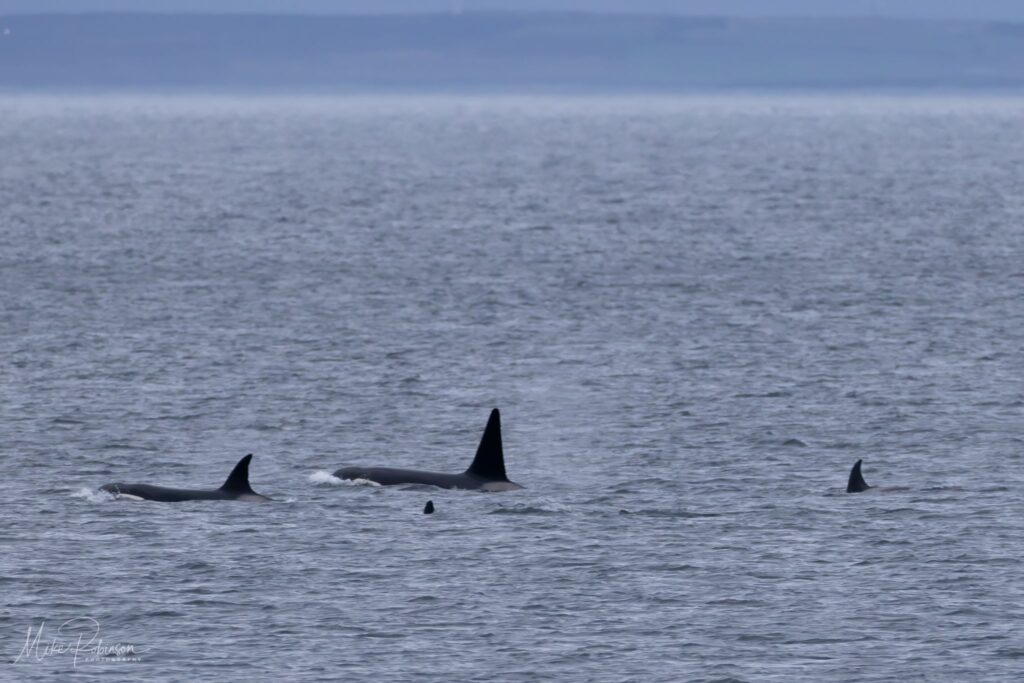
A remarkable and potentially unprecedented orca hunting event was recorded off the coast of Oban on the final day of Scotland’s largest annual cetacean monitoring event, Orca Watch.
At approximately 4pm on Sunday 31st May, a wildlife excursion operated by Hebrides Cruises departed aboard a CalMac ferry when head guide Lynsey Bland spotted a group of five orcas, including a young calf, actively hunting common dolphins.
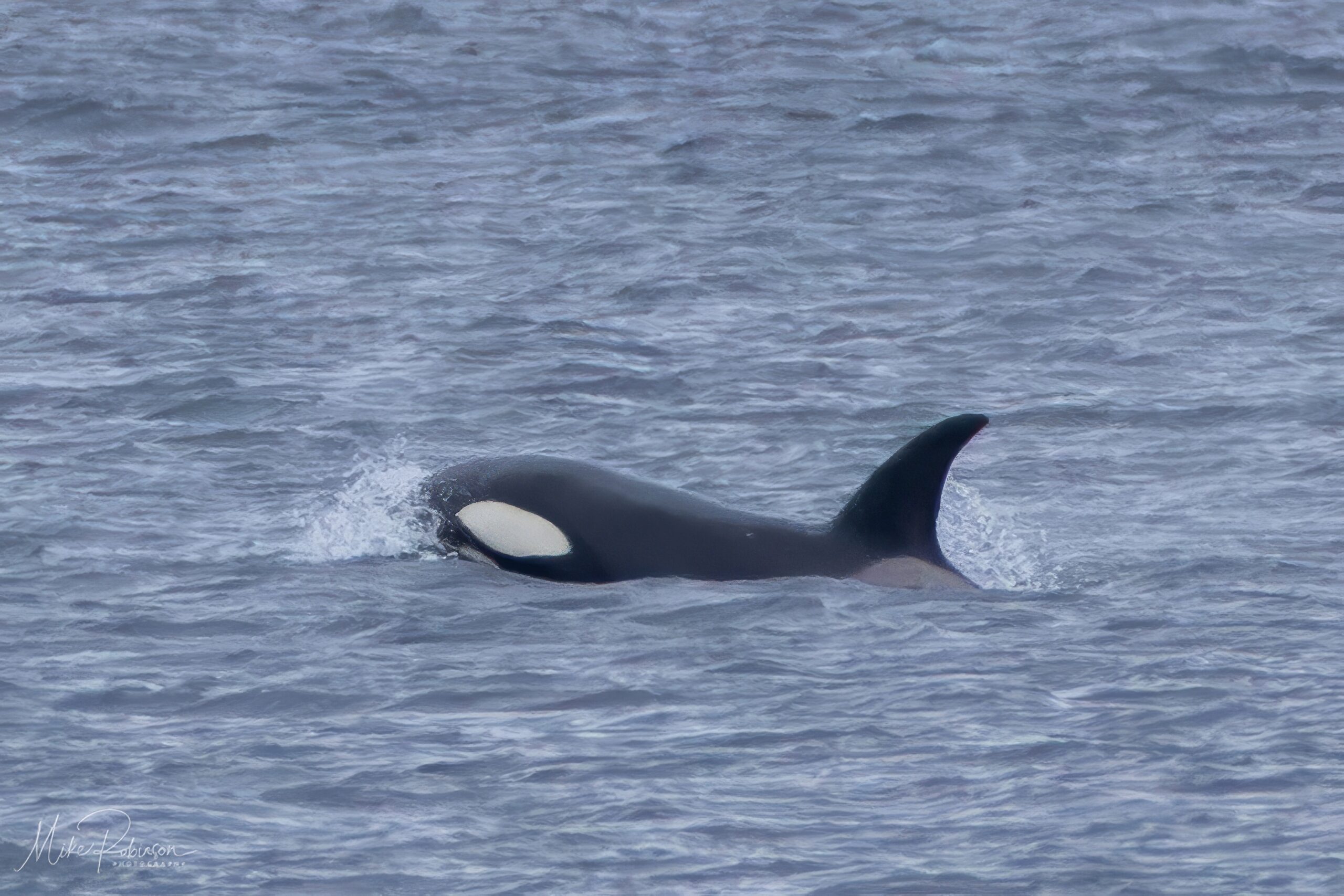
Killer whale, identified as “Braegha” the matriarch of the 12s pod, from John o’ Groats during Orca Watch 2026.
Photo taken by Mike Robinson/Sea Watch Foundation
Initial observations revealed the orcas circling their prey and creating significant surface disturbance, making it difficult to determine exactly what was taking place. However, upon further investigation and analysis of photographs taken during the encounter, it was confirmed that the pod was aggressively throwing the dolphins through the water — a behaviour rarely documented and, to current knowledge, never before recorded within Hebridean inshore waters.
Further sightings occurred as the pod was followed over two days travelling from Firth of Lorn, Isle of Mull to Ardnamurchan, revealing six animals that included a male, three females, one juvenile and a calf.
The identity of the pod remains unknown, adding further intrigue to the sighting. Researchers from the Hebridean Whale and Dolphin Trust are now working alongside colleagues across Scotland and other countries to identify the individuals, comparing photographs against existing catalogues and investigating potential matches.
Hebrides Cruises stated that they are “unaware of any records” of similar behaviour occurring within the Hebrides’ inshore waters.
While the purpose and significance of prey-tossing behaviour in orcas is not yet fully understood, observations such as these provide valuable insights into hunting strategies, social dynamics within pods, and predator-prey interactions involving common dolphins.
Sightings officer, Simone Evans, of the Sea Watch Foundation stated “ While we have established resident populations in Scottish waters that travel, we are increasingly documenting rare visits from international pods. Recently, groups have been confirmed moving between Scottish and Norwegian waters, with a first ID match, and last year marked the first-ever sighting of the Iberian Vega pod off the Isles of Scilly. It is an incredibly exciting time for these marine ‘firsts,’ and we are eagerly anticipating whether this newly sighted pod is a local development or a journeying group from distant waters.”
This rare and dramatic sighting, offers a striking real-world glimpse into how sharply distinct these apex predators are from one another globally. While this newly documented pod, demonstrated the high-speed marine mammal hunting tactics typical of certain transient populations, such behavior represents only one facet of the species. Globally, killer whales (Orcinus orca) are divided into distinct cultural “ecotypes” that maintain strict boundaries in what they choose to eat. In the Pacific Northwest, for instance, the endangered Southern Resident ecotype lives directly alongside mammal-hunting groups but remains a strict “gastronomic specialist,” feeding entirely on fish, predominantly Chinook salmon. Similarly, North Atlantic “Type 1” populations specialize in schooling herring, while groups off New Zealand focus exclusively on sharks and rays. While the resident Scottish “West Coast Community” (now reduced to just two mammal-eating individuals) is well known, witnessing an entirely different, unmapped pod hunting cetaceans in these inshore waters underscores the complex, shifting cultural boundaries of global orca populations.
The sighting highlights the importance of long-term marine wildlife monitoring initiatives such as Orca Watch and demonstrates how citizen science and wildlife tourism can contribute to our understanding of Scotland’s marine mammals.

Killer whale spotted from the pier at the John O’ Groats base during Orca Watch 2024. This group were actively hunting a seal.
Photo taken by Claudia Afeltra/Sea Watch Foundation
Orca Watch is a nine-day event highlighting the need for conservation, protection and continued research into the status, distribution, and abundance of this iconic species around the UK. Killer whales (orcas) are rare in the British Isles but can be observed mainly in northern Britain, around the Hebrides and the Northern Isles (Orkney and Shetland). Though Orca Watch has ended, that doesn’t mark the end of Sea Watch Foundations’ monitoring efforts. National Whale and Dolphin Watch (celebrating 25 years) is another nine-day event held across the UK, creating a snapshot of marine life. The goal is to record sightings of whales, dolphins, and porpoises, with the collected data being vital in developing a clearer understanding of the distribution and movements of these species around the UK. The public are encouraged to hold their own watches and events. With registration now open for 2026 (25th July to 2nd August), click here to register.
